

Are Scallops In Season? Here's The Best Time To Eat Them
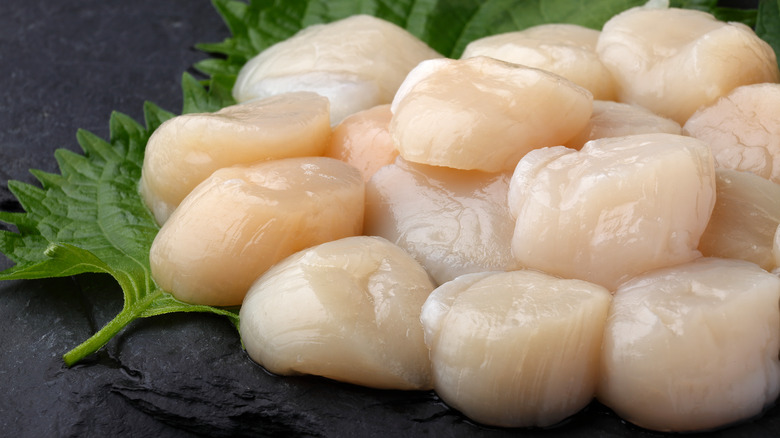
Buttery, briny, and mildly sweet, scallops are widely appreciated for their soft, melt-in-your-mouth texture and their unique taste. Whether pan-seared until they're perfectly golden brown, added to a bright lemon and garlic pasta, or coated in a marinade and tossed onto the grill, they're always a fan-favorite. However, one of the most common mistakes you're probably making when cooking scallops is perhaps preparing them when they're out of season.
That timing matters greatly when it comes to North Atlantic scallops (Placopecten magellanicus), which are harvested in deep offshore waters along the East Coast. These scallops account for nearly all fresh scallops consumed in the United States. Their peak harvest season runs from October through March, after the end of their spawning period, and before warmer water temperatures affect their quality. This is when their texture is beautifully firm and moist.
In contrast to North Atlantic scallops, Pacific varieties, such as Alaska's plump and buttery Weathervane scallops (Patinopecten caurinus), which are the world's largest scallops, in addition to Japan's deliciously juicy Hokkaido scallops (Patinopecten yessoensis), are typically harvested from late summer through early fall. However, the season can sometimes last until February. This is why knowing the best season to buy scallops makes it easier to find high-quality fresh scallops that are more flavorful and beautifully delicate.
The hidden risks behind eating scallops outside their season
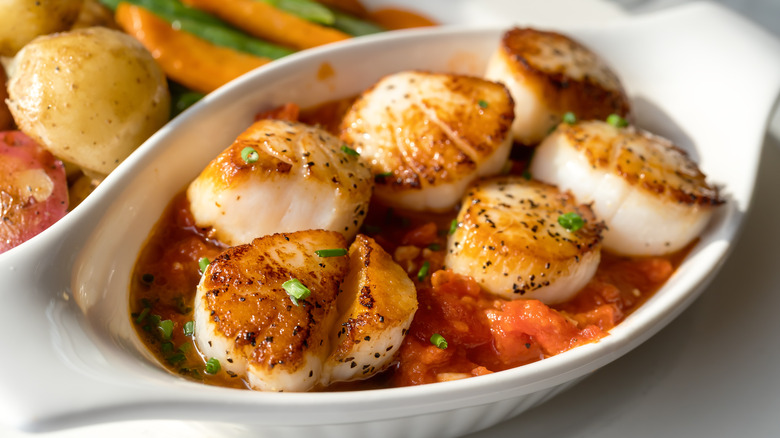
Before you attempt the prep for the hands down best grilled scallops, there are a few safety rules to keep in mind. Consuming fresh scallops should usually be avoided during the spring and summer months, as higher temperatures can promote bacterial growth and increase the risk of toxin buildup. Scallops are bivalve mollusks. This means that their inner muscle is enclosed by two shells. As filter feeders, they capture large quantities of water and prey in a single mouthful and can also, as a result, accumulate pollutants. Hence, they should only be eaten raw if sourced from a trusted supplier within 24 hours after harvest.
Fresh scallops typically last a couple of days in a cold refrigerator maintained at 40 degrees Fahrenheit or below. If, however, you're uncertain about their harvest date, it's best to eat them within two days of purchase. Newly harvested scallops should smell clean and ocean-like. A pungent or ammonia-like odor is a clear sign they're no longer safe to eat and should be discarded.
Frozen scallops can be found throughout the year. When properly flash-frozen, their flavor remains largely unchanged compared to fresh ones. However, they lack the same richness and creaminess because they're often treated with preservatives such as phosphates. While these do extend their shelf life, they can leave behind a soapy aftertaste that's difficult to get rid of later. Frozen scallops are safe to consume, but they also lose moisture and some of their nutrients.