

This Underrated Countertop Material Handles Heat, Scratches, And Spills
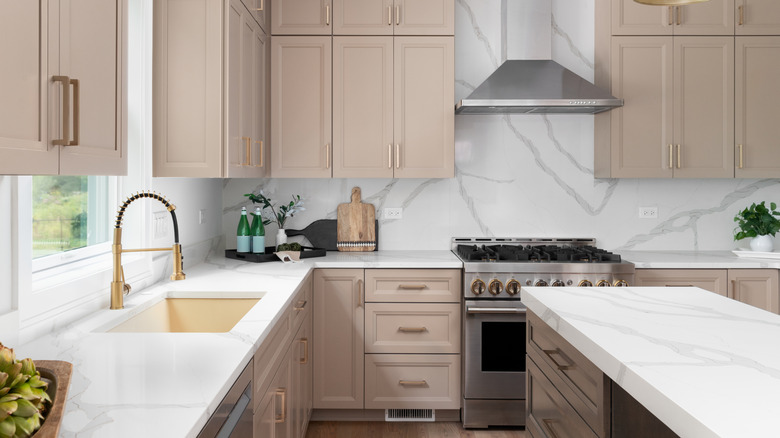
Replacing countertops is a big decision, and there are many factors to consider. Look, price, durability and even home resale value are big ones. If you're someone who spends a lot of time in the kitchen and wants a durable countertop material that lasts ages, consider purchasing porcelain.
Porcelain countertops are a relatively common choice for bathroom vanities. They're non-porous and stain-resistant, so you don't have to worry about water damaging the material, which also makes sense for the kitchen. Plus, the countertops have strong heat resistance and are scratch-proof — other qualities that makes them long-lasting. When compared to other countertop materials, such as granite and quartz, porcelain wins in just about every category because other materials don't have all the same qualities. Granite, for example, isn't fade-resistant or non-porous while quartz has limited heat resistance. Design-wise, there's good news: Porcelain has a wide variety of styles, so if you want to choose a specific countertop color or style, you can likely find a look that fits your vision.
Porcelain countertops are a safe choice
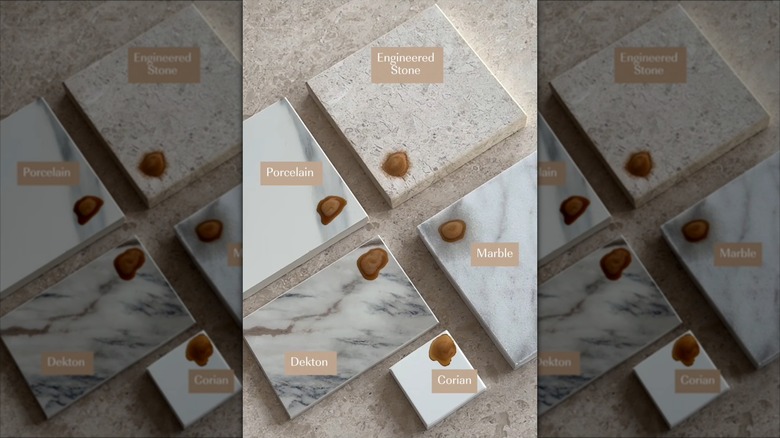
Porcelain is not a natural stone; it's made from a combination of materials such as silica, clay, and feldspar, which are fired together at ultra-high heat. This is what creates that non-porous material. When a countertop is non-porous, it's harder for bacteria and mold to grow, meaning all you need is a paper towel and mild kitchen cleaner to ensure the space remains clean. This helps contribute to its low maintenance and is great for helping reduce any potentially harmful bacteria that could land on your kitchen counters. While some other countertop materials, such as quartz, are also non-porous, they still lack in other areas; for example, don't put a hot pot on a quartz countertop.
Porcelain countertops can be expensive, which is a downside for some. On average, porcelain costs between $55 and $120 per square foot — it falls in a similar range to quartz, but is substantially more expensive than granite, which generally falls between $40 and $60 per square foot. It's possible to mix and match materials to save money, too. If you do the bulk of kitchen work at your island, consider porcelain for that, but granite for the wall countertops. Ultimately, the countertop you choose depends on your household's needs — but it's worth adding porcelain to the short list.