

How To Choose The Best Egg Wash Depending On Your Recipe
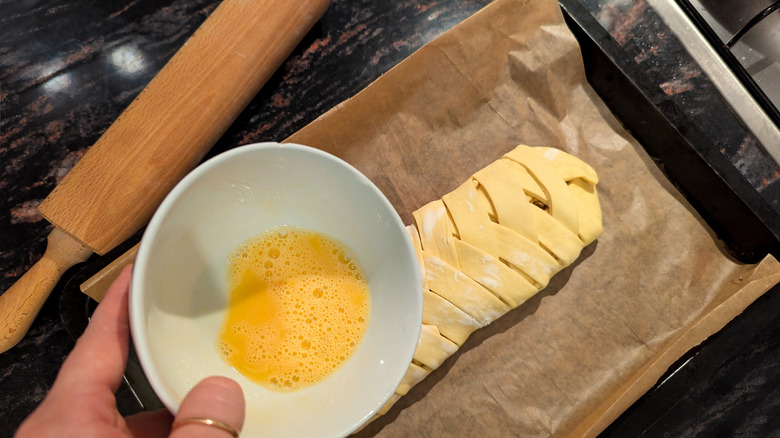
Applying egg wash to your baked goods may seem like a small, meaningless step, but it's actually much more important than it appears. Egg wash is something that gives pastries a bakery-level finish, crispier, crunchier crust, and better structure by sealing the edges. However, whether you decide to use a whole egg or add heavy cream, milk, or water can absolutely make or break your recipe.
Katherine Sprung, pastry chef and founder of New York City's Squish Marshmallows, shared in an exclusive that an egg wash should always be adjusted to the specific recipe you're following. "The thing to know is that the two parts of the egg (the white and the yolk) are doing and lending two different things," Sprung told Chowhound. "Together they'll add some nice structure and color and shine to your baked goods, like enriched doughs."
However, according to Sprung, knowing when to use a whole egg, or either the white or yolk, is crucial for the final product. Crackers and certain cookies greatly benefit from a wash containing only egg whites, as they boost the shine without affecting color. "Yolks only are good for certain breads, like a challah, where you want a really rich color," she explained. She added that mixing yolks with milk or heavy cream will keep the browning under control, while still deepening the dough's color. "Adding water helps to dilute the egg a bit but also helps it become more fluid and easier to brush on," she noted.
Choosing the right egg wash for your baked goods
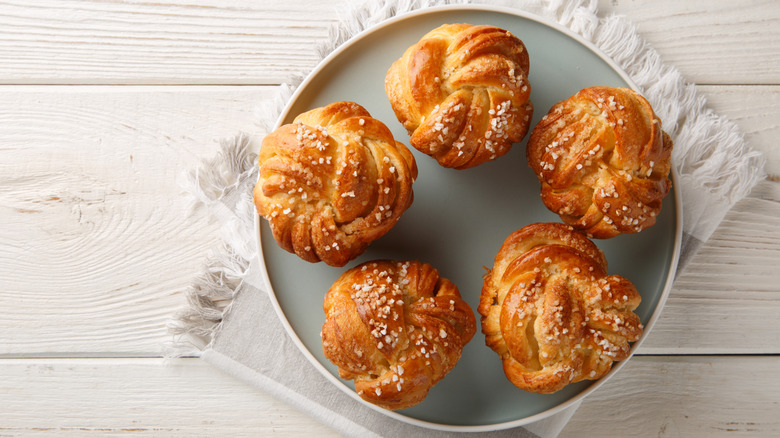
Unless you're baking in a professional kitchen or preparing a huge batch of dough, Katherine Sprung said a thin layer of egg wash is all you need to elevate your baked goods. "You'll likely only need one egg, and often times, if it's just one loaf, you'll have leftover," Sprung explained, joking you could use the leftovers to make a teeny tiny omelette. But breakfast casseroles, frittatas, or scrambled eggs are great ways to use up leftover egg wash. On the other hand, if you plan to use the wash later, you can safely store it in the fridge for a couple of days. Just make sure to keep it in a tightly sealed container.
Knowing how each part of the egg and any additions affect the dough is essential for choosing the right kind of wash. While egg yolks are rich in fat and provide a beautiful golden finish, egg whites are protein-based and lighter. However, they're also more difficult to apply. Seasoning your wash with salt can help break the protein down and make the wash easier to work with. "Additions of milk and water will help dilute and slow browning, yolks give a nice shine. But my No.1 tip I always give is, if you're using and following a recipe, follow the directions of that recipe," Sprung said, adding that if the specific type of egg wash isn't listed, then choose the one that will give you the best results.
Your brushing technique makes all the difference
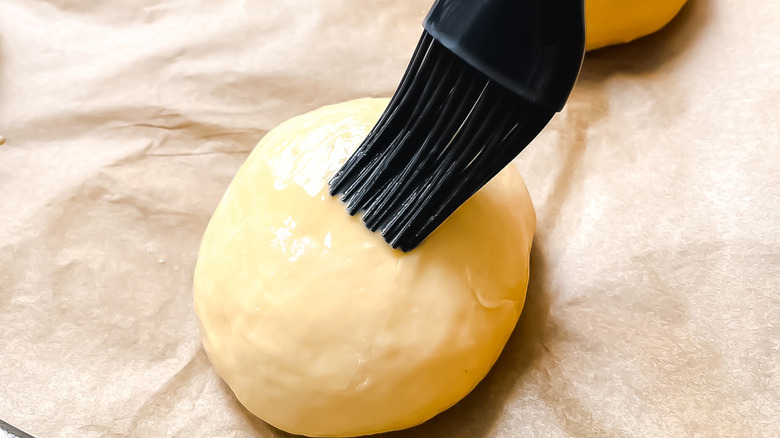
Applying egg wash usually requires a pastry brush to help spread it evenly. Silicone brushes are particularly handy and often better than natural ones because they're more durable, heat-resistant, and easier to maintain. "And I'd recommend not using a stiff pastry brush, which can make things streaky," Katherine Sprung said. "I love using a silicone brush — no fibers falling out, heat resistant, and easy to clean." Nevertheless, there are creative ways to apply egg wash when you don't have a pastry brush at home.
Whether streaks, bubbles, or dull patches have to do with the egg wash itself or the technique, Sprung noted it's typically an application issue. She emphasized a plain beaten egg with no additions can be too thick. "You want it to be a bit more fluid, so, depending on the result you want, diluting it a bit with a splash of water, milk, or cream will make it easier to apply evenly," she concluded. "You also don't want to over-beat the egg since that can make it foamy, and if those little bubbles make it on, they'll likely stick and bake that way."
That said, if you're following a plant-based diet and you can't use eggs or dairy, it doesn't mean you're out of options. There are some great vegan egg wash alternatives you should try on your baked goods. Plant-based milk, olive or coconut oil, fruit preserves, and maple syrup are just some of the many simple swaps you could try out.