

9 Hungarian Dishes Everyone Needs To Try At Least Once

Hungarian cuisine has a rich culinary history shaped by centuries of tradition, geographic location, and cultural exchange across Central Europe. Oftentimes, when people learn I'm part Hungarian, they have no clue where the country even is on a map; but growing up in the United States, where most people have a rich ancestral tapestry, this sort of unfamiliarity with a specific country's unique culture and regional traditions isn't uncommon.
If there is one unifier amongst every person and people, it's comfort food. The warm, always-on-your-mind dishes that have a way of feeling like home with every mouthful. And if there is one word I'd use to describe Hungarian food, it's comforting. It's about time people start to learn what Hungarian cuisine is all about, from hearty, paprika-spiced stews to layered cakes topped with crunchy caramel garnish. These dishes reflect a passion for innovative and warm flavors with a cuisine shaped by its herdsman culture and heavy reliance on spices. In my opinion, Hungarian is one of Europe's most influential cuisines — spreading its paprika-spiced recipes throughout the globe and leaving an undeniable impression on the cuisines of neighboring countries and beyond. Join me and discover nine Hungarian dishes I believe you should try at least once.
1. Gulyás
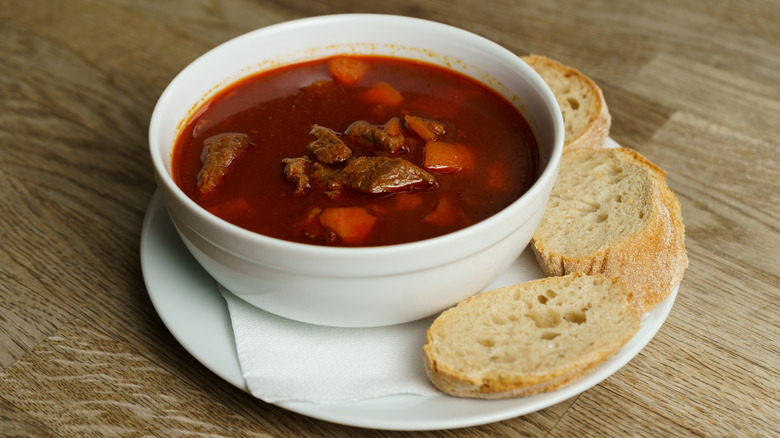
Gulyás, or Hungarian goulash, is an iconic stew featuring tender chunks of beef (typically either chuck, sirloin, or shin), slow-simmered with onions, garlic, tomatoes, bell peppers, potatoes, carrots, caraway seeds, and most importantly, paprika. The beef and medley of vegetables provide the goulash with a deep, savory, umami flavor, with paprika being the star spice of the dish, adding a rich, earthy-sweet taste and vibrant red hue. Its bright red color and slightly smoky aroma from the paprika are what distinguish Hungarian goulash from other European beef stews. The dish is often described as being between a soup and a stew, with a broth-based consistency and subtle thickness.
Beyond its scrumptious flavor, Hungarian goulash is filled with a rich history, deriving from Magyar herdsmen in the 9th century who would slow-cook meat with onions and caraway seeds, dry it in the sun, then pack it in sheep stomachs for a long journey. At mealtime, they would rehydrate the mixture with water and set it to boil over an open fire. Since its creation, this stew has become an unofficial cultural ambassador for Hungarian culture and cuisine. Its simple and adaptable flavor profile has also made it a staple dish across Europe, with different countries including Germany, Austria, and Czechia making their own variation of goulash by incorporating local ingredients to suit regional taste preferences.
2. Csirkepaprikás
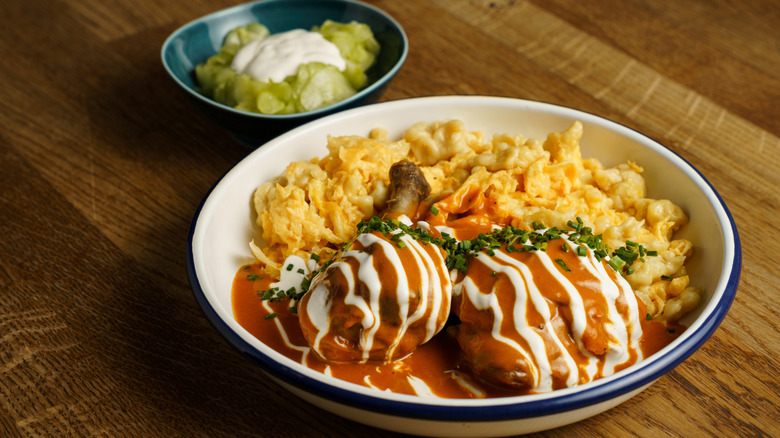
Csirkepaprikás, also known in English as chicken paprikash, is another beloved stew, consisting of slow-cooked bone-in, skin-on chicken legs and thighs with onions, bell peppers, paprika, and a sour cream sauce. The stew is thickened with flour and typically braised for around two to three hours until the chicken is completely fork-tender and falls off the bone. Unlike its cousin goulash, this stew has a much lighter paprika flavor and a thicker, saucier consistency.
This simple dish relies heavily on high-quality Hungarian paprika for its earthy, warm flavor and distinctive red color, so be sure to use a fresh bottle that hasn't been sitting in the spice cabinet for years, as its flavor diminishes over time. It's traditionally served over curly egg noodles, boiled potatoes, or with chewy Hungarian dumplings called nokedli, which are similar to spaetzle. Like many Hungarian dishes, csirkepaprikás is always garnished with a dollop of sour cream and a handful of chopped dill to help cut through the richness of the stew.
3. Pörkölt
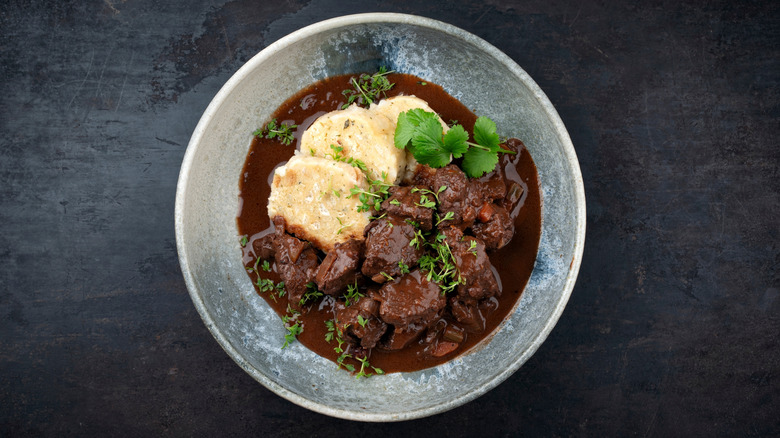
Pörkölt, or simply known as Hungarian stew, is a darker, intensely flavored meat stew that uses Hungarian paprika a bit more generously than goulash, creating a deeper red color and intense savory, earthy flavor that will surely make any mouth water. Its unique name, "pörkölt," means "roasted" in Hungarian, referencing the initial browning of the meat.
The dish consists of cubed meat that's been slow-simmered with onions, garlic, tomatoes, bell peppers, herbs, stock, and Hungarian paprika until the meat is fork-tender and the sauce is a deep red color. It has a much thicker, saucier consistency compared to goulash with minimal liquid broth and is traditionally served with egg noodles, Hungarian dumplings, or fluffy bread-based dumplings called zsemlegombóc. Different regions across Hungary make their own variations with local ingredients that are often named after the main meat used. You can find a beef version called marhapörkölt, a pork one called sertés pörkölt, and even one made from tripe (cow's stomach lining) called pacalpörkölt.
4. Dobos torte
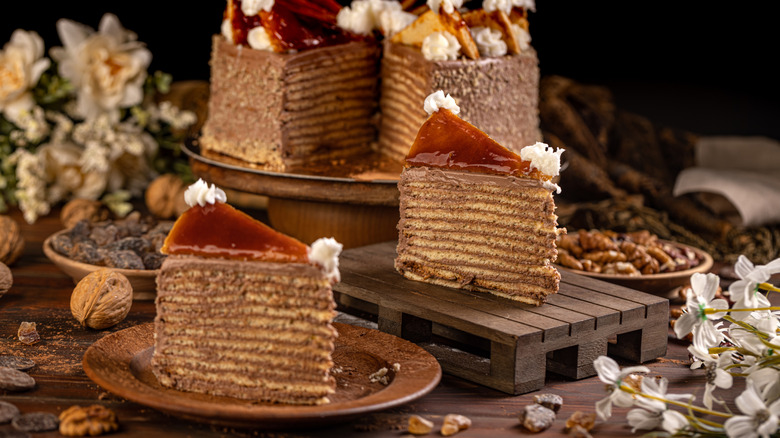
Dobos torte is an elegant Hungarian layered cake, featuring thin sponge cake layers separated by a rich dark chocolate buttercream and topped with a signature, crispy caramel glaze. It has a delightful balance of tender sponge, chocolate buttercream, and crunchy caramel that brings the whole cake together. It's known for its 11 distinct layers of cake and intense caramel flavor with notes of nuttiness and espresso that keep it from tasting overly sweet. It's often viewed as the pinnacle of Hungarian confectionery creations and has been a popular sweet treat in Europe since the Austro-Hungarian Empire.
The cake was created by the Hungarian confectioner József C. Dobos in 1884, who introduced it to the world stage at the 1885 National Budapest Exhibition, where it was sampled by Emperor Franz Joseph I and Empress Elizabeth, who gave it their royal approval. Dobos later became a pastry purveyor to the Austro-Hungarian royal court and was granted the royal warrant to sell. As its popularity grew, Dobos began shipping the cake in wooden boxes across Europe. You might be wondering, "Wait, it's only the 1880s — how in the world did they keep the cake from getting spoiled?" Well, the chocolate buttercream and the crispy caramel topping actually allowed for significantly extended shelf life, which meant Dobos could ship and send the cake throughout the continent, spreading its fame and establishing its presence as Hungary's most prized dessert.
5. Kürtőskalács
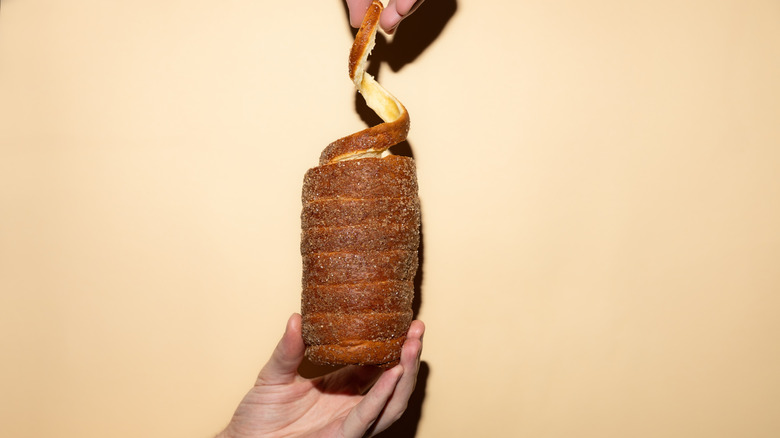
Another popular Hungarian sweet treat you definitely need to try is kürtőskalács, also known as chimney cake. The pastry is a sweet yeasted dough spiral that is coated with cinnamon, sugar, and sometimes chopped hazelnuts. It's baked on a rotating skewer until it's a deep golden brown and perfectly crispy on the outside while remaining fluffy and chewy on the inside. Unlike what you expect from most pastries, it's uniquely hollow, which is formed by wrapping the dough around a cylindrical mold.
You can find this delightful pastry in food and farmers' markets across Hungary and Eastern Europe, where it's sold in wooden stalls and sometimes filled with pastry cream, ice cream, chocolate ganache, or raspberry jam. While the origins are disputed, the first written recipe for kürtőskalács was in Countess Mária Mikes of Zabola's 1784 Transylvanian cookbook. By the late 18th century, it became popular in Hungarian royal and noble courts, evolving from its sugary glaze topping to include ingredients like chopped nuts and chocolate.
6. Somlói galuska
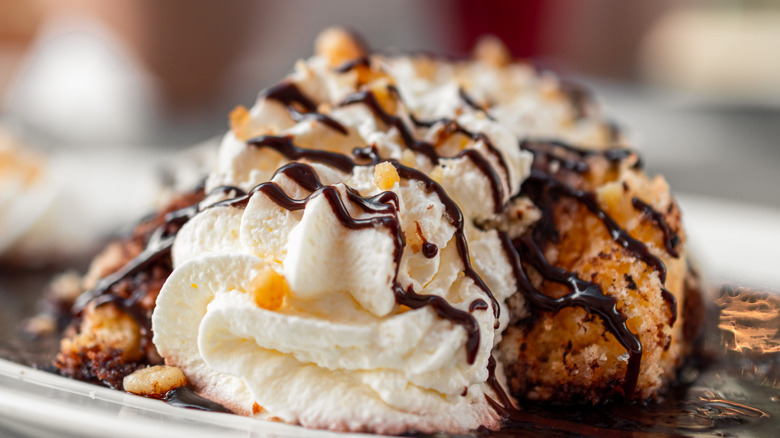
Somlói galuska, known to local Budapesters as somló dumplings, is a dessert from the tiny region of Somló that layers vanilla sponge cake, chocolate ganache, chopped walnuts, and whipped cream, all crowned with an extra drizzle of chocolate ganache — and no, it doesn't actually contain any dumplings. Somlói galuska is considered a trifle; however, because its chocolate-soaked sponge cake pieces are scooped into irregular round balls shaped like dumplings, it has been granted the nickname of somló dumplings.
The dessert is well-known for its rich taste and its mouthwatering blend of sweet, creamy, and nutty flavors with varied textures from the chewy sponge cake to crunchy roasted walnuts. It also has a distinct warmth and slightly boozy taste from raisins soaked in the sweet Hungarian wine, tokaji aszú, that infuses the cake with its delicious flavor. You can find it being served at restaurants and pastry shops across Hungary, with some places creating their own versions, adding in extra fruit, chocolate, and nuts.
7. Lángos
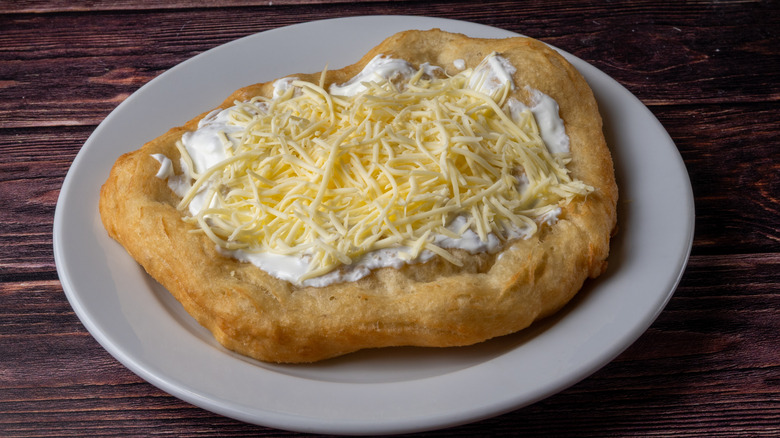
Lángos is a popular Hungarian street food consisting of a deep-fried flatbread that's crispy and golden brown on the exterior with a soft, fluffy interior. Often referred to as Hungary's deep-fried pizza, lángos has a relatively neutral flavor with a slightly yeasted taste that's the perfect blank canvas for piling on toppings.
It can be served plain, straight out of the fryer, or with various toppings like bacon, ham, caramelized onions, cheese, and mushrooms. The most popular combination is when it's topped with minced garlic, a generous dollop of sour cream, fresh dill, and grated Hungarian cheese called kajmak. It's served hot with the cheese and sour cream completely melted over it — perfect for enjoying while strolling the ancient streets of Budapest. It's typically served at food stalls, Christmas markets, festivals, and late-night diners across the city. Lángos is one of the most iconic Hungarian dishes, and definitely a dish you need to try at least once if you're ever visiting Budapest.
8. Töltött káposzta
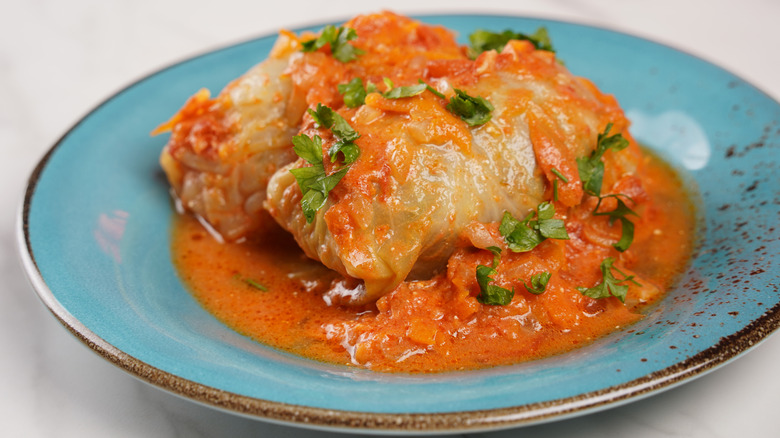
Töltött káposzta, known as Hungarian stuffed cabbage rolls in English, is one of Hungary and Eastern Europe's most popular dishes, beloved for its comforting simplicity and affordability. If you haven't had it before, töltött káposzta (or any cabbage roll recipe) features boiled cabbage leaves rolled around a filling of ground meat (typically either beef, pork, or lamb), cooked rice, herbs, and paprika, that's baked in a savory tomato and sauerkraut sauce until everything is bubbling and melded together.
Hungarian cabbage rolls are known for their incredibly rich flavor with generous amounts of paprika, adding a lovely warmth, while the sauerkraut lends a sour, fermented tang that wraps the whole dish together. The cabbage rolls are typically garnished with a dollop of sour cream and chopped dill to help cut through the richness, adding a cool, tangy, creamy element. It's absolutely irresistible on a cold winter day, and should definitely be on your bucket list of Hungarian dishes to try.
9. Hortobágyi palacsinta
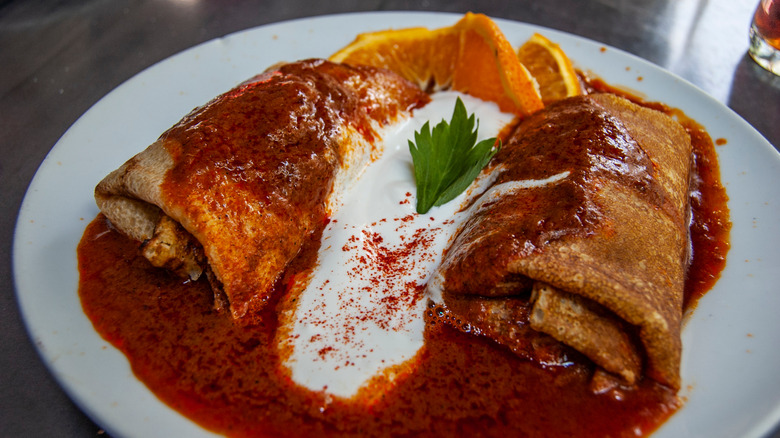
Did you know that crêpes aren't exclusively French? Hungary claims its own crêpe tradition with hortobágyi palacsinta — crêpes filled with rich, savory meat stew similar to paprikash and pörkölt, that's crowned with a velvety paprika and sour cream sauce. The meat filling is typically made out of ground beef, pork, or chicken, slow-cooked with onions, garlic, tomatoes, spices, and, of course, a generous amount of Hungarian paprika. The luxurious, mouthwatering sauce is made by combining the leftover braised liquid with flour and sour cream to make a gravy, then it's poured over the filled crêpes before it's placed in the oven to bake until bubbling and slightly golden.
The dish was named after the Hortobágy plains, which are famous for their history of herdsmen and paprika-filled dishes; however, this dish wasn't actually created in the Hortobágy region. Hortobágyi palacsinta was created by Károly Gundel for the 1958 Brussels World Fair, who wanted to represent and showcase Hungarian gastronomy on the world stage.