

Not Every Part Of A Lobster Is Edible And Many People Learn Too Late
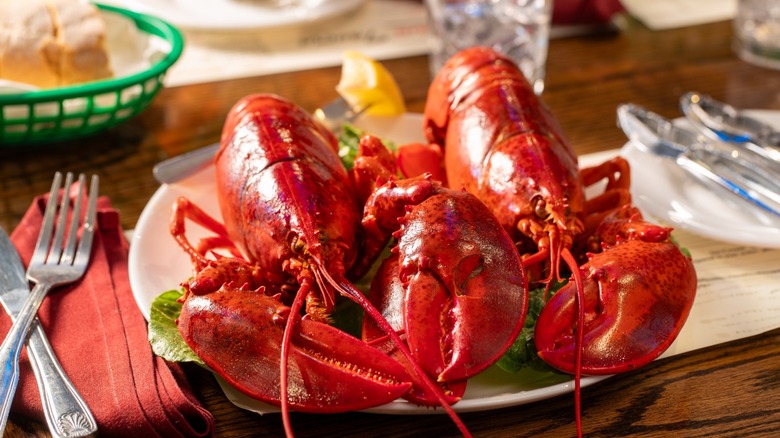
There's a famous scene in the 1984 movie, "Splash," where Darryl Hannah's character, Madison, picks up a cooked lobster and tears into it like it's a sandwich, chowing down shell and all to the horror of her date and fellow restaurant goers. Madison's excuse, of course, is that she's secretly a mermaid totally unfamiliar with lobster-eating etiquette. But when it's your first time eating lobster — a whole lobster, not just the tail — it can be tough to know how to go about it. While Madison the mermaid could eat the whole lobster thanks to her aquatic biology, humans can't eat every part. Now, not eating the shell should be obvious (though you can use the shells to enhance your favorite seafood stock recipe). But not everything beneath the lobster shell is edible, and the truth is some people don't learn this until after they've already eaten the parts you shouldn't touch.
It all starts with understanding how to crack open a lobster and what to look for within. Aside from crab, (here's what you need to know about buying, preparing, and cooking it), there aren't really any other meals that require a level of hands-on dissection like lobster. While you're pulling out that succulent, white lobster meat from the shell, you'll want to avoid the gills (those feathery structures), the vein (the dark stripe down the tail), the stomach, and the tomalley, aka the lobster liver and pancreas. All are considered inedible, albeit for different reasons.
Inedible lobster parts that are hazardous versus the ones that just taste bad
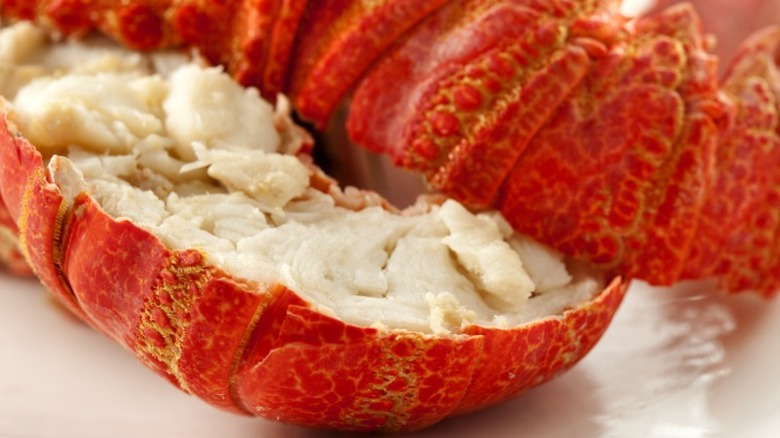
Some lobster parts may not outright harm you if you eat them, but they just don't taste great. For instance, the vein is actually the lobster's intestinal tract, and although unlikely to harm you in any way, the whole reason it's considered inedible is because it tends to contain a bitter taste and grainy texture that detracts from the delicious meat around it. Fortunately, you can easily cut the vein out before diving into the tail. Other lobster parts carry more obvious risk; the lobster stomach can contain inedible substances like sand or shell pieces, while the lobster shell itself, of course, poses a choking hazard and could also damage your own digestive tract if swallowed. The gills are tough to eat, and they can contain harmful microplastics from the environment.
The tomalley is where things really get controversial. While there are people who consider it a delicacy, the reality is that it's not the best idea. Since this part encompasses the lobster's liver and pancreas, it may contain toxins that could be hazardous to your health. As government health officials have also warned, this part can also contain high levels of pollutants, depending on where the lobster is sourced. If this sounds too tricky to navigate, consider starting with just the lobster tail. Of course, you don't even need to eat the whole lobster when you have some great sides to go with it.