

Fast Food Chains Aren't Actually Cheap — They Just Use The 'Decoy Effect'
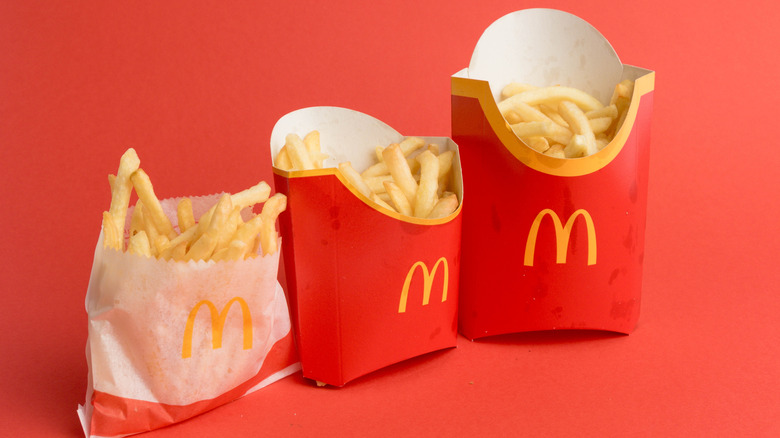
If you're looking for a cheap, quick meal, you may default to your nearest fast food chain. But part of why that McDonald's or Burger King meal sticks in your mind as the "cheap" option may have to do with a pricing trick that many chains deploy, making things feel like a bargain without necessarily saving you money.
That trick is called the decoy effect. Rooted in behavioral economics, in a restaurant setting it describes a menu setup offering three options, with the cheaper one deliberately presented as less attractive in order to nudge consumers toward a more expensive choice. The classic fast food example of the decoy effect occurs when a menu has small, medium, and large options. The medium item is priced close to the large one, making the latter appear to offer the best value. For example, a large order of fries might cost $5 compared to a medium priced at $4.70, leading customers toward the large. Or a restaurant might use another sneaky pricing tactic and sell the large for $4.99.
The same strategy is used in combo meal deals, like adding fries and a drink to a burger. The burger's individual price is listed alongside a combo price which is only slightly higher, making the standalone item look like a poor value and encouraging customers to trade up. That approach benefits restaurants since fries – and especially fountain sodas with the unique fast-food restaurant taste – are cheap to produce and carry high profit margins.
How the decoy effect shapes fast food pricing
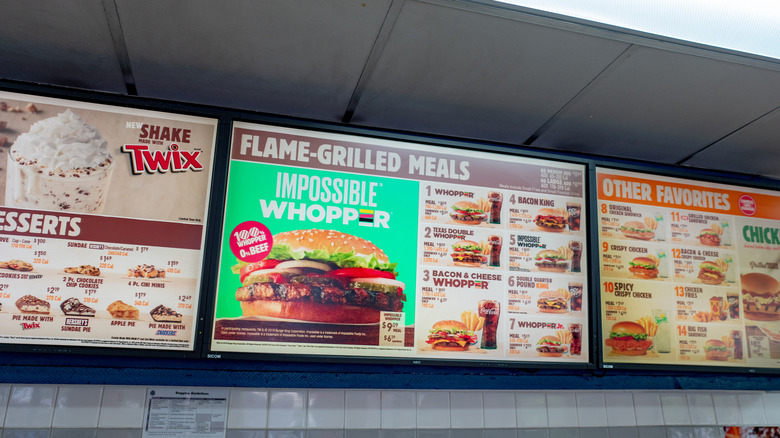
Without being able to sit in the rooms where fast food companies determine their prices, it's hard to say whether this pricing model is always deliberate. Still, considering that the decoy effect is reasonably well-known in the economics and marketing worlds, chances are that fast food chains factor it into their pricing.
The effect was formally identified in the 1980s, when economists Joel Huber, John Payne, and Christopher Puto found that strategically adding an inferior option, like an overpriced medium drink, could shift consumer preferences toward a higher-priced product. Since then, behavioral economists have developed a theory of why the decoy effect works. People rarely evaluate prices in isolation; instead, they compare options relative to one another.
When pricing fast food menus, companies are betting on customers making this comparison, often between the medium and large sizes, to imply that the large offers the best value. Restaurants benefit because the cost of increasing a portion size is low. Tactics like these are among the fast food red flags that explain why a meal can feel like a bargain at the counter.