

Martha Stewart's Snazzy Hack For A Fluffier Baked Potato

There are plenty of opinions floating around about how to make a baked potato — foil or no foil, oil or no oil — but trust Martha Stewart to have an approach that focuses on something most people completely ignore: what happens after the potato comes out of the oven. According to Stewart, the secret to an ultra-fluffy interior is quite physical. Once the potato is fully baked and piping hot, she recommends grabbing it with a clean kitchen towel and banging it down firmly on the counter just once to break up the interior flesh.
The logic here is simple: baking causes steam to build up inside the potato, softening the starches. A quick, controlled impact will help separate that interior without tearing the skin, creating a lighter, more aerated texture. It's the kind of low-effort technique that feels almost too obvious once you hear it and yet most home cooks never think to do it. This isn't just a rouge idea, either — the technique has made its way onto the menu at Stewart's Las Vegas restaurant, The Bedford, where baked potatoes are treated as something more than a background side, with servers smashing them at the table. So if you're looking to upgrade basic baked potatoes without changing your usual topping routine, then this single extra step delivers noticeable results.
This small move makes a big texture change
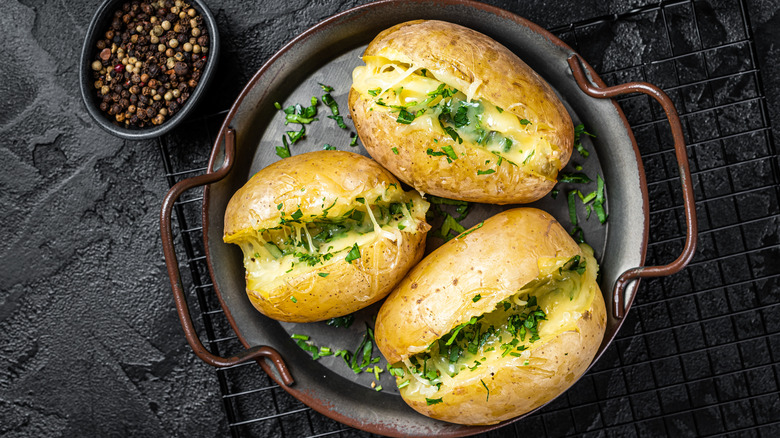
What makes this trick especially appealing is how accessible it is: you don't need special equipment, unusual ingredients, or extra prep, just bit of confidence. The key is doing it while the potato is still extremely hot, which is probably why Martha Stewart recommends using a towel to hold the spud as it will be too steamy to handle. Once you let it cool and the starches set, the interior will become denser and less responsive to the impact.
Then, after the potato is fluffed, you can split it open as usual and season generously with your favorite baked potato toppings (at her restaurant, Stewart tops the smashed baked potato with crispy bacon lardons, crème fraîche, and fresh chopped chives). This method works particularly well with classic Russet potatoes, which have are high in starch and are already ideal for baking, but would also work with other high starch potatoes like Idaho, Maris Piper, or even sweet potatoes. Basically, if you want to learn how to cook like Martha Stewart, then paying attention to finishing touches like this is part of the deal; it's not flashy, it's just smart and very effective.