

How To Tell If You're Sipping On High-Quality Matcha
Matcha's popularity has skyrocketed in recent years, making it difficult for Japanese producers to meet the global demand. To maintain a steady supply, some have begun blending first-harvest matcha (ichibancha), which has a superior quality, with lower-quality grades. This is exactly why, if you're new to matcha, checking the quality of tea you're buying is one of the crucial things to know before you drink it for the first time.
Elle Liu, founder of Theoró, a New-York company that sells premium teas, revealed in an exclusive conversation that brands willing to share more information about their product are far more likely to be selling high-quality matcha. "Look for ceremonial-grade, stone-milled, and shade-grown," Liu told Chowhound, adding that matcha labeled as coming from Uji, Yame, or Nishio, Japan's top matcha-producing regions, is generally associated with superior flavor. "Even better if it specifies first harvest or 'ichibancha,' which means the leaves were picked in early spring, when amino acids (sweetness and umami) are at their peak," Liu continued.
Brands that specify the cultivar, such as Samidori, Asahi, or Okumidori, which produce richer, more vibrant green matcha, usually produce top-quality matcha. "When a brand gets that specific, it usually means they're serious," Liu noted. She pointed out that proper packaging is another detail worth paying attention to. "Matcha should come in a sealed foil pouch, often inside a tin, ideally with an oxygen absorber," she said. "If it's in a clear bag or jar on a bright shelf, I'd skip it."
A few simple checks can help you evaluate a matcha brand
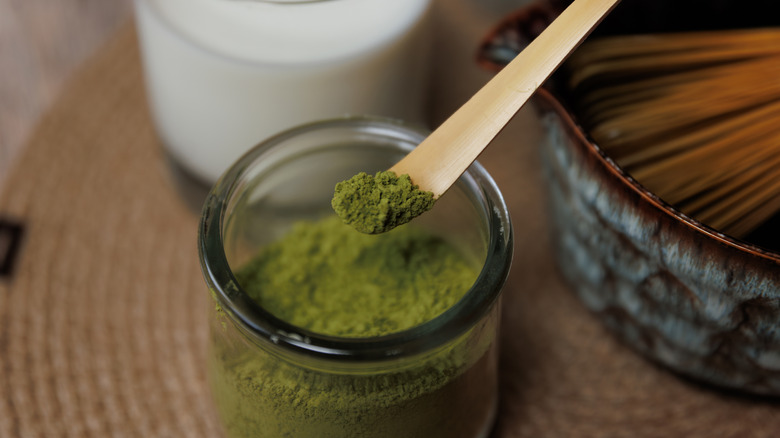
To end up with a superior product and make the best matcha latte that tastes like sipping spring, take a quick look at the brand's website or social media account; this can help you find out whether a brand is transparent about its sourcing and production. "I also look closely at photos of the powder," Elle Liu added. "High-quality matcha should be vivid, electric green, if it looks dull, yellowish, or olive-toned, it's either low-grade or no longer fresh." She also noted that while reviews can be unreliable, simple, minimal packaging usually points to quality over branding.
Color is a clear indicator of whether your matcha is fresh, or if it has oxidized or gone stale. Once oxidation (a chemical process triggered by exposure to light, heat, or air) takes place, the matcha loses its vibrant color and taste. "Fresh matcha is bright green," Liu said. "Oxidized matcha starts to look flat, grayish, or yellow-green."
The aroma of your matcha can also tell you a lot about its state. If it isn't fresh, creamy, mildly sweet, grassy, and slightly nutty, then it's most likely not worth keeping as it can't be fixed once it goes bad. "If it smells like hay, paper, or nothing at all, it's past its prime," Liu said. Ultimately, if all other parameters look fine, then its flavor will give you the clearest answer about how good it is. "Stale matcha tastes hollow, sharp, and overly bitter, without sweetness or depth," Liu told us.
Improper brewing can ruin the taste of good matcha
When asked about how to distinguish quality issues from brewing mistakes, Elle Liu said that the difference isn't always apparent at first. "Matcha is naturally a little bitter (it's a green tea, after all, packed with polyphenols), but high-quality matcha balances that bitterness with sweetness, umami, and a creamy texture," she pointed out.
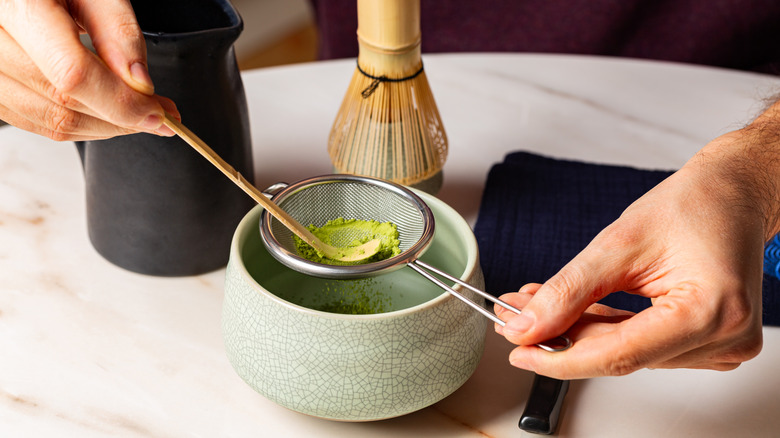
At the same time, the way you brew your matcha can have a huge impact on the final cup. For instance, not sifting your matcha before brewing it is the mistake that's making it a clumpy mess. This happens because clumps form pockets of concentrated bitterness that compromise matcha's soft, even consistency. "Even great matcha can taste flat or harsh if it's not prepared well," Liu noted. Some other pitfalls include using boiling water (it can burn the matcha and ruin its flavor), adding the wrong amount of matcha powder (too much will overpower the drink and make it muddy, while too little will result in a weak brew), and failing to whisk properly (which can leave the matcha chalky and dull).
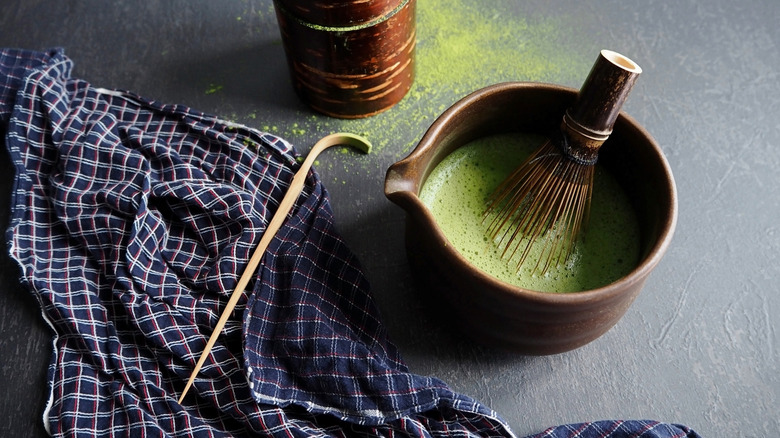
Liu's method for preparing matcha is to boil fresh spring or filtered water and then give it a moment to cool to about 175 to 180 degrees Fahrenheit. Her advice is to "Use 1.5 to 2 grams of sifted matcha with about 65 grams of water, and whisk briskly in a quick 'Z' motion until a fine foam forms." The result should be creamy and smooth matcha with structured (not sharp) bitterness that's balanced with nutty, umami, grassy, and sweet notes. "So if you've nailed the technique and it still tastes off (flat, aggressively bitter, or one-note) then it's probably a quality issue," she concluded.