

The Hands-Down Best Type Of Bread To Eat For Fiber
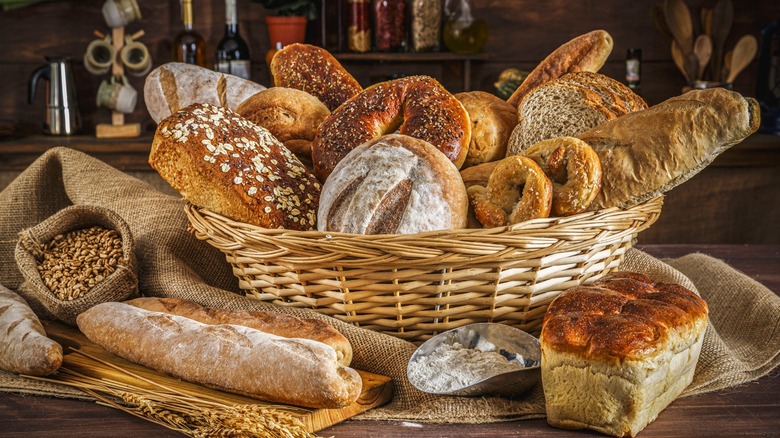
Along with adequate sleep and regular exercise, eating a well-balanced diet of protein, carbs, fat, and fiber promotes a healthy mind and body. However, eating enough daily fiber or roughage is difficult for many adults to achieve. While you can certainly attempt to prepare more delicious, high-fiber breakfasts like steel-cut oatmeal and chia seed pudding, you can start by upgrading your favorite everyday foods with more nutritious, fiber-rich options. For example, if you're used to consuming store-bought white bread on the regular, you can swap it out for high-fiber alternatives.
Sprouted-grain or whole-grain bread generally has the highest fiber content per serving. Most whole-grain and sprouted-grain breads contain between 3 and 4 grams of fiber per slice on average. Since most women should ideally consume approximately 25 grams of fiber per day and men, 38 grams, it's best to pick a bread that contains 20% of your daily fiber per serving.
Breads made with whole grains include all three parts of the grain, including the bran, endosperm, and germ. The bran, which is the hard outer shell of each grain, contains the most fiber. That being said, sprouted grains are simply whole grains that have begun to sprout. Oftentimes, this sprouting process results in a more nutrient-dense product that's easier to digest. While whole-grain bread may be your best option when it comes to fiber, there are still many more nutrient-rich options worth considering.
How to increase your fiber intake with bread
If you're new to consuming high-fiber breads, many whole-grain varieties can taste dense and overly nutritious. For an alternative that includes a decent amount of fiber and flavor, multi-seed breads made with flax and chia seeds are another great option. Multi-grain breads are another flavorful option that provide a consistent amount of fiber per serving. Better yet, aim to choose a variety that contains multiple grains besides wheat, such as millet, buckwheat, and quinoa.
Whichever variety of bread you choose, just make sure to read the nutrition label. For example, you may want to avoid some types of whole wheat bread because they're not labeled "100% whole wheat." This is particularly important if your primary objective is increased fiber intake. All in all, while breads with the highest fiber count are primarily composed of whole grains and sprouted grains, you can also pick a bread that contains slightly less fiber and pair it with more fiber-rich foods.
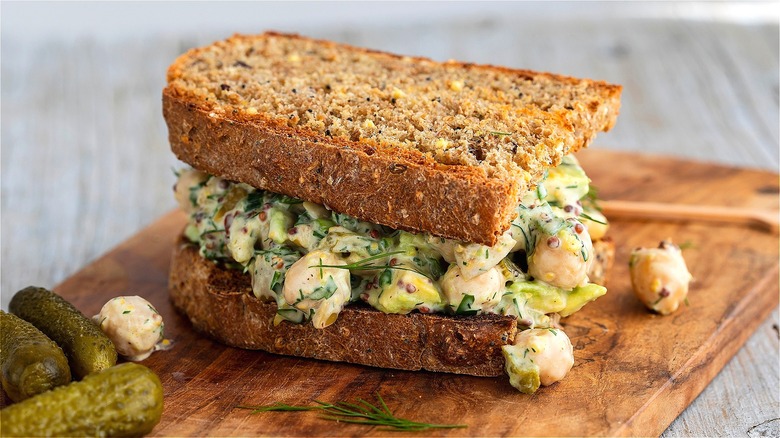
For example, if you enjoy rye or oat bread, which typically contain up to 3 grams of fiber per slice, top it with high-fiber foods like mashed avocado and sunflower seeds. You can also make a chickpea salad sandwich or a vegetable sandwich with grated carrots and edamame-based hummus. Or, for a sweeter, high-fiber filling, use skin-on apple slices and nut butter. Keep in mind that with high-fiber bread, you're guaranteed to get the most amount of fiber per meal.