

The Vintage Kitchen Appliance You Never See Anymore
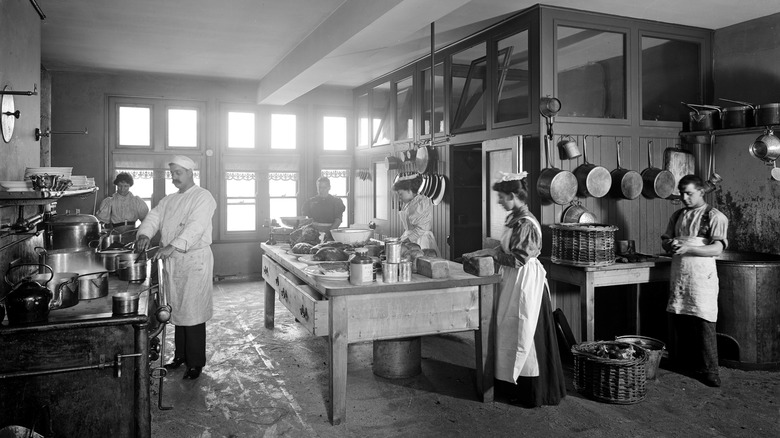
The conveniences of modern life have totally changed the way we cook, eat, and enjoy food. From air fryers to dishwashers to microwaves, it's hard to imagine spending time in a kitchen without the appliances we've come to take for granted. The refrigerator would be especially tough to live without — but it was just about a century ago that these indispensable appliances became common in homes. Before the fridge became commonplace, many homes used iceboxes to keep food cold.
Iceboxes looked like simple wooden cabinets, but they were essential to kitchen functioning. A quick history lesson is vital to understanding why the icebox was so important. The modern-day Agricultural Revolution took place between 1500 and 1850, and it transformed farming from a way to produce food for single families or neighborhoods to a lucrative business model for many. The Industrial Revolution got started toward the end of the Agricultural Revolution, circa 1830. Developments in transportation around this time allowed a change in distribution methods for perishable food businesses. In addition, predecessors to canning began in the early 1800s, followed by pasteurization just half a century later. Suddenly, people had access to foods from far away — not just what they could get from their own neighborhoods.
This meant that the days of going to the butcher or local farmer for a single piece of meat or a single bottle of milk were gone, and food storage became essential. During warmer parts of the year, placing items outside wasn't feasible, and the icebox — a chest that could keep food chilly — became vital.
How iceboxes worked back in the day — and why they were replaced with refrigerators
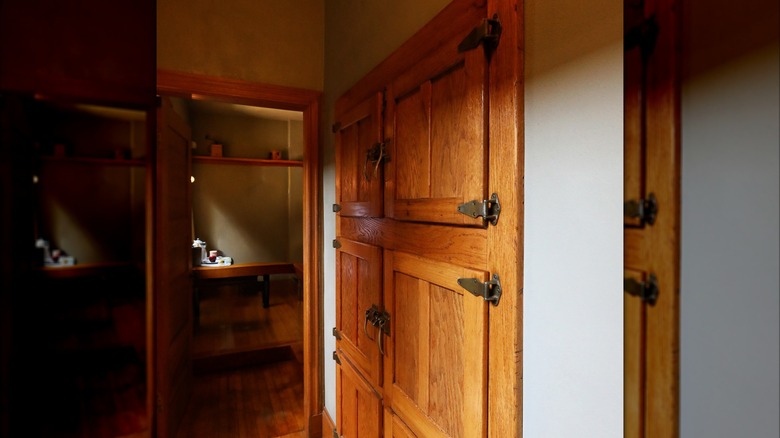
So, how exactly did ice get to iceboxes in warmer months? During the winter, ice was removed from rivers and lakes, then was stored in insulated units and packed with straw and sawdust to help stop it from melting. In the mid-to-late 19th century, however, reliance on natural ice began to fade as mechanical ice machines became common. In either case, much like milk men delivered glass bottles of milk to homes, ice men delivered blocks of ice to any house bearing an "ice" sign in a front window.
Iceboxes relied on convection to stay cool. The block of ice was placed near the top of the icebox. This created a self-sustaining cooling process (that didn't require mechanical or electrical energy). As warm air rose in the icebox, it was cooled, then sank back to the bottom. The process continued until the block of ice melted and was replaced with a new one, creating the perfect environment for keeping food cold (and even chilling icebox cakes).
For many, replacing an icebox with a modern refrigerator was an easy choice. Temperature was more easily controlled, and there was no need to pay or rely on someone else to bring ice to the home. While modern fridges aren't perfect (they certainly aren't foolproof against human-error storage mistakes that end up ruining your food), our ancestors would likely struggle to imagine that keeping food chilled today is as simple as plugging a machine into a wall.