

Want That Extra-Crispy Steak Sear? Here's How To Ensure Your Oil Is Hot Enough
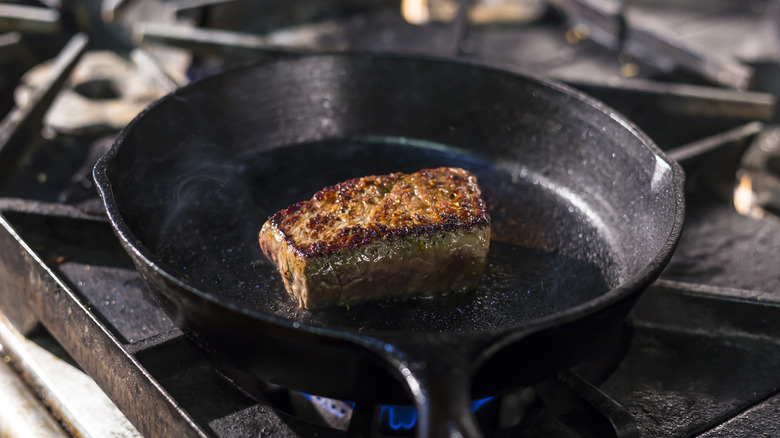
For many home chefs, the perfect steak is a holy grail. The balance between tender, blushing pink meat and a great crust, with beautifully rendered fat and deep, rich flavor is difficult to achieve, and making truly great steak isn't as simple as following a recipe. It's a combination of experience, knowledge, and focus. One common meat searing mistake concerns temperature — specifically, the temperature of the oil in the pan. Trying to sear your steak before the oil has had time to come up to temperature can result in overcooked, uneven meat, and an underdeveloped crust.
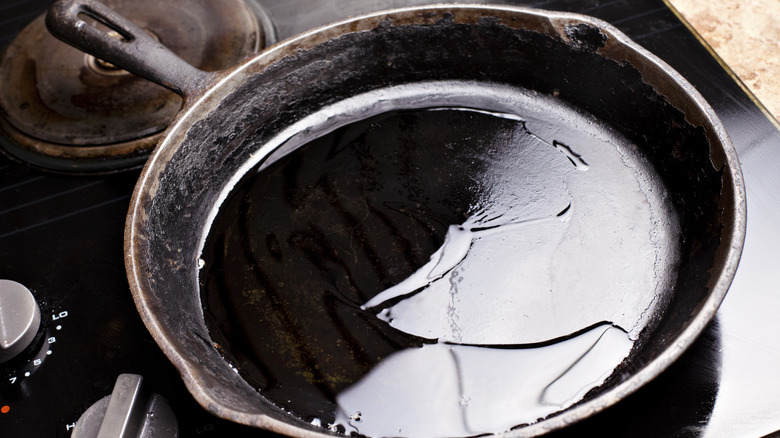
Ideally, you want the oil to reach just below its smoke point (around 400 degrees Fahrenheit or more, depending on the oil) which will give you enough heat to achieve a restaurant-quality crust and a perfect medium-rare interior. But how can you tell when the oil has come up to temperature? The easiest method is to keep a close eye on it — once the oil is hot enough, it'll shimmer, almost vibrating, with lines across its surface. It'll loosen up, too: When you tilt the pan, it should run quickly across the surface. When meat hits the oil, it should sizzle vigorously, and ideally not stick to the pan, developing a crispy sear in just a couple minutes.
Why oil temperature matters, and what oil to choose
Oil temperature is a crucial element in achieving an excellent crust on steak. Hot oil helps form a crust on the steak quickly, which prevents any excess moisture from steaming your steak. Meat releases moisture as it cooks, thanks to the contraction of proteins expelling liquids inside the steak. If the oil is too cool, the meat releases those proteins faster than the pan can superheat (and in turn evaporate) it. This will stop a crust from forming, so by the time your oil has gotten up to temperature your meat will already be partially cooked, resulting in grey, rubbery meat.
The type of oil you choose is also important when it comes to achieving the right temperature. Certain oils have higher smoke points than others, and as a general rule, these oils are what you want to use when cooking steak. Grapeseed, canola, or peanut oil, for example, are all great choices because of their neutral flavors and ability to withstand high temperatures (around 400 degrees Fahrenheit or more). Olive oil, on the other hand, has a lower smoke point, so while you can sear steak with it, you'd better pray you've got a great extractor fan! For the best flavor, use rendered beef fat, or tallow. This can withstand high heat, but also has a gloriously beefy flavor, which will add richness and savory depth to your steak while facilitating a great crust.
How to nail the timing and temperature of your steak every time
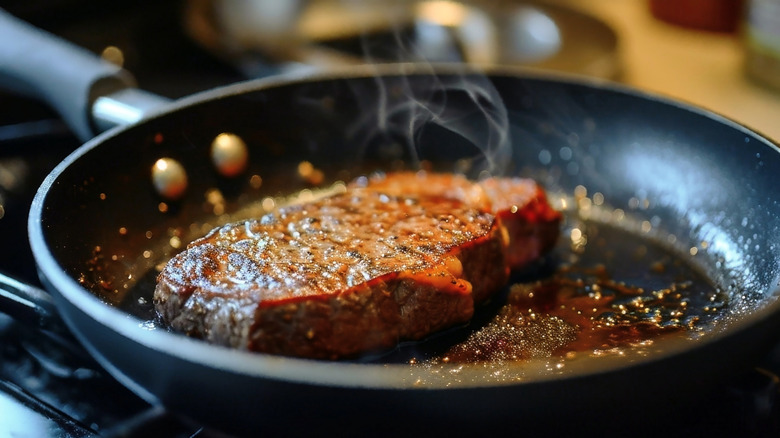
There's a simple method that you can follow to make sure that, even if you're a novice when it comes to cooking steak, you can get a great sear and perfect doneness with a super high degree of consistency. Getting your oil temperature right starts with pre-heating your pan. For a great steak, you'll want a heavy-bottomed pan (cast iron or stainless steel are your best bets) which will help to evenly cook the steak and give you excellent heat retention. Once the pan is ripping hot (you can test this by dripping a little water onto the surface — if it beads up and rolls around easily, you'll know it's ready and your steak won't stick to your stainless steel) get your oil, and wait until it gives you that telltale shimmer. The oil will transfer that heat directly from the pan to the meat.
Make sure to pat your steak dry thoroughly before you sear it off. Moisture is the enemy of crispiness (surface moisture will evaporate, dropping the oil temperature) so to form the best crust imaginable, ensure you remove as much of it as possible. You might be tempted to move your steak around constantly — but trust the process. It'll take a minute or two for a crust to form, and once it has the steak will release itself naturally from the pan. If your oil starts to heavily smoke, drop the heat slightly — you want to keep the temperature just below the smoke point, not fill your kitchen with smog!