

The Science Behind Your Favorite Latte Art

Latte art adds a pleasant finesse to your morning routine, causing a little burst of joy when a barista serves your favorite milk-based coffee drink. Beginning home baristas can make latte art by learning a few expert tips including the right pouring speed, proper placement of the cup and pourer, and how to steam milk to the perfect level of frothiness. To help accomplish this, it helps to know the science behind heating milk that's used to make latte art.
The secret to latte art lies in the quality of your milk foam, which depends on how the milk's components react to heat and agitation. Baristas typically heat milk using a steam wand on an espresso machine, which shoots pressurized water vapor into the milk and swirls the milk in a vortex. This process creates microfoam as the proteins in the milk unfold from the heat and cling to the air bubbles, creating frothiness.
Choosing the right milk for making latte art relies on knowing how to balance the right amount of fat. Fat helps form the structure of your latte art, but too much fat makes the foam too dense. You want just enough so the proteins can surround air bubbles and create foam that holds its shape while remaining light enough to pour detailed designs.
Factors to consider when creating latte art
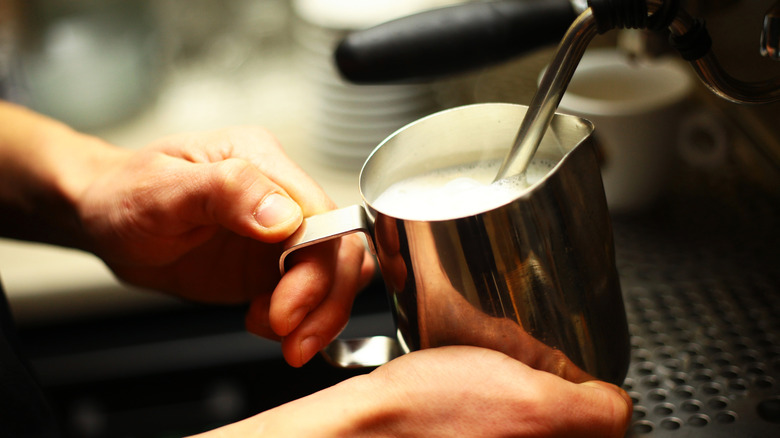
Skim milk is a good choice for lighter foam, though some people prefer to use whole milk as it's creamier, but it can be slightly more difficult to shape well and may collapse because of the weight of its higher fat content. If you're interested in nondairy milk, barista-blend plant-based milks are created specifically for use in coffee drinks and lattes. They will often foam similarly to dairy milk using the same principles, though it can be more difficult to achieve the perfect foam and you might notice a difference in texture.
To create the best microfoam for latte art, dairy milk should be heated to between 140 and 150 degrees Fahrenheit, as too much heat will cause the foam to disintegrate and may burn the milk. Plant-based milks usually perform best when heated to between 130 and 160 degrees Fahrenheit.
Steamed milk is different from boiled milk, so the way you heat the milk has an influence on the quality of your foam. Using a steam wand the proper way affects whether your milk forms microfoam or just becomes hot. Keeping the steam wand at the milk's surface for too long will create bubbles that are too big and harder to pour, but placing the wand deep in the milk pitcher will merely heat the milk without making it foam. Heating the surface just long enough to introduce air bubbles and then submerging the wand into the milk creates the ideal level of heat and microfoam to use in latte art.