

3 Spots In Your Kitchen You Should Be Cleaning With Shampoo
Cleaning the kitchen can feel like a total nightmare, leaving you wandering through the supermarket aisles for hours in search of the perfect cleaning product. But before you make a trip to the store, take a quick look in your bathroom because your shampoo bottle could be all you need. Shampoo isn't just a one-purpose product, but an underrated, eco-friendly cleaning solution, especially when it comes to dealing with particularly overlooked kitchen challenges like grease, sinks, and tile floors.
While there are plenty of natural ways to tackle soap scum in the kitchen, shampoo works especially well thanks to its surfactants — the same grease-cutting compounds found in dish soap and many common household cleaners. This helps substances like oil and water mix, dissolving grime into smaller particles that can be easily washed away. Shampoo also works well at breaking down oils that stick to kitchen surfaces. Just a couple of drops are enough to tackle the greasy buildup on your stovetops, microwaves, and countertops, simply apply a small amount to a damp cloth or paper towel and wipe the grease away. Another positive aspect of using shampoo is that it will loosen the oily residue without leaving scratches, while avoiding the strong chemical smells often left by traditional cleaners.
The best kind of shampoo to use to clean your kitchen sinks and floors
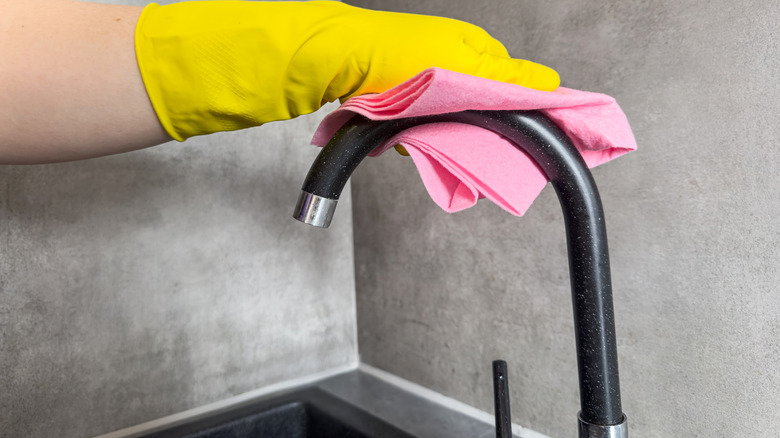
Shampoo can also be used to clean stainless steel sinks and chrome faucets that tend to collect fingerprints, water spots, and grease. All you need to do is apply a drop or two of shampoo to a sponge, gently scrub the surface, and rinse thoroughly with warm water. This quick hack will help lift the stubborn residue and leave the sink looking clean, shiny, and polished.
And if your kitchen has tile or linoleum floors (even if it's the worst kitchen flooring you can choose because it's a nightmare to clean), shampoo can be a very effective substitute for harsh chemicals and other unreliable DIY alternatives. Just combine the shampoo with lukewarm water in a bucket to create a mild cleaning solution, grab a mop, and wring out the excess liquid until it's damp before you swipe that tile floor clean.
With that in mind, if you're planning to use shampoo on these kitchen spots, choosing the right one matters. Even though most shampoos will do the trick, baby shampoo is often regarded as the best choice for a wide range of kitchen tasks because of its mild formula. Baby shampoo contains plant-derived surfactants such as cocamidopropyl betaine (CAPB) and decyl glucoside. It's also free of synthetic dyes and fragrances, so it won't stain or damage your kitchen surfaces. That's why, while shampoo is designed for your hair, it can also be surprisingly useful for cleaning a few of the most overlooked spots in your kitchen.