

Robert Irvine's Tip For Turning Inexpensive Steak Cuts Into Restaurant-Quality Bites
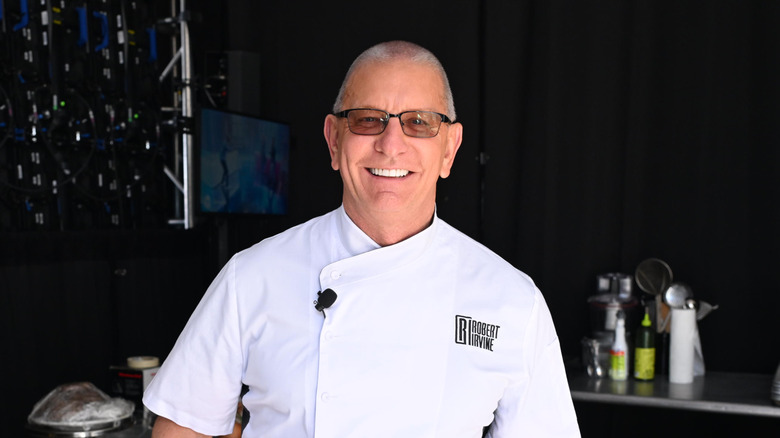
In today's tough economic times, we're all trying to save where we can — and that includes at the grocery store. If you're craving steak but don't want to shell out for higher-end cuts like beef tenderloin, we've got you. From slicing your steak correctly to using marinades to tenderize tough cuts, celebrity chef Robert Irvine has a few tips and tricks that can help you make the most of less expensive cuts.
Not all steaks are the same, and it's important to understand common steak cuts and how to cook them. In a YouTube video, Irvine talked about how you can elevate an inexpensive cut of flank steak to a restaurant-quality dish. Flank steak comes from a cow's abdomen, and is one of the tougher cuts of beef, but what it lacks in tenderness, it makes up for in flavor. Marinating flank steak can help to break down some of the toughness by changing the structure of the protein (a process known as denaturization). Both acids and salt play a role in the science behind marinade magic, so you'll want to be sure to include them both in your recipe. Irvine makes two different flank steak marinades — one with balsamic vinegar and mustard, and one with lemon juice and jalapeño. You can marinate your steak for a day or two before you cook it, though it's not always better to marinate food for longer.
Cook, slice, garnish: Transforming budget steak into a gourmet dish
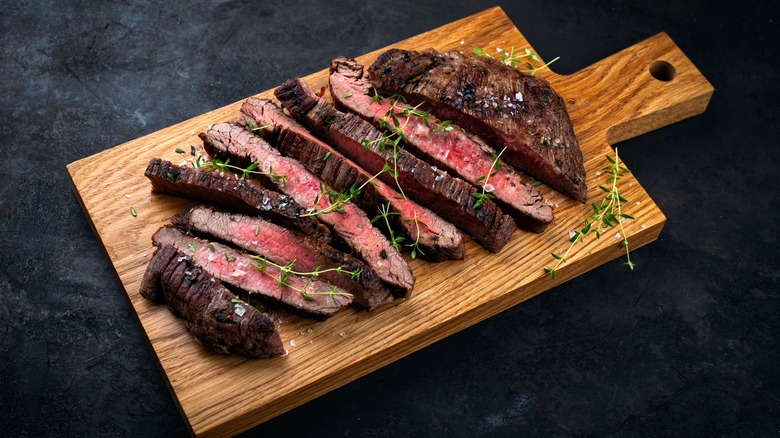
After you've marinated your steak, it's time for it to hit the grill or a stovetop pan. Chef Robert Irvine prefers his steaks done medium-rare, which can help the steak to retain moisture. He's not alone in his preference — medium-rare is considered the go-to steak preference for many culinary professionals, and it makes sense. A medium-rare cook means that you're getting a great sear on the outside of your steak while still retaining flavor and moisture on the inside. Paired with a salty, acidic marinade, the perfect cooking temperature can transform flank steak from a tough cut to a tender, juicy steak that tastes like you ordered it at a steakhouse.
After you've cooked your marinated flank steak medium-rare (130 to 140 degrees Fahrenheit, with a center that's warm, but still a deep pink color), Irvine recommends slicing it on a bias. The technique is simple: Angle your knife at about 45 degrees and slice against the steak's grain. This allows you to cut through the muscle's toughness, further creating a tender dish. Finally, Irvine recommends finishing off your dish with some fresh herbs, like a few basil leaves, to add flavor and complement your hard work.