

For Fluffy And Tender Cookies, Swap Out Butter For This Vintage Ingredient
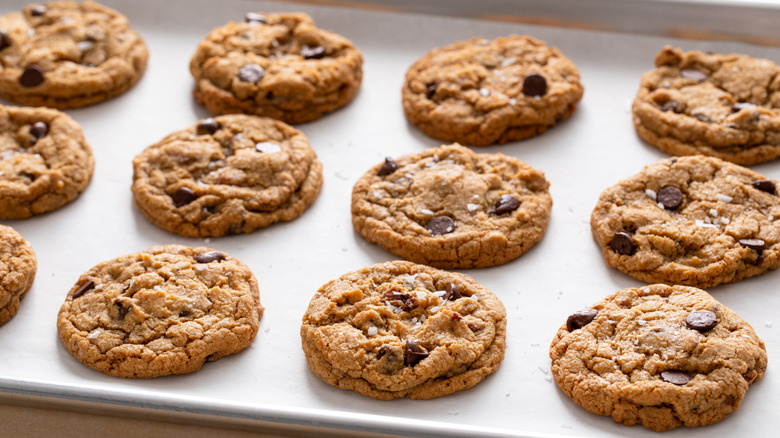
Those of us millennial-age and older remember something in our mothers' pantries that is rarely seen in today's kitchens: shortening. While the stuff was vilified for containing trans fats, there's no doubt about it — shortening made a really, really good cookie. Today, trans fats are banned in the United States, so you can find some healthier (albeit still highly processed) versions of the stuff on grocery store shelves. While you might not want to make it a permanent swap, using shortening instead of butter in your favorite cookie recipe can create a softer, chewier cookie that will keep you coming back for more.
There are a few reasons why cookies made with shortening taste a little different than those made with butter. First, shortening is just fat — unlike butter, which contains some water. This means shortening can lend a richer, deeper flavor to baked goods. Secondly, these solid fats are called shortening for a reason. They coat flour and prevent it from mixing with water, which prevents the formation of gluten — literally "shortening" its fibers. This can create a more tender, soft, crumbly cookie (think: shortbread) than recipes made with butter, as butter contains water and is more conducive to the formation of gluten. You'll likely also notice that your cookies are a bit taller, as cookies made with shortening won't spread as much as those made with butter.
How to include shortening in a cookie recipe that calls for butter
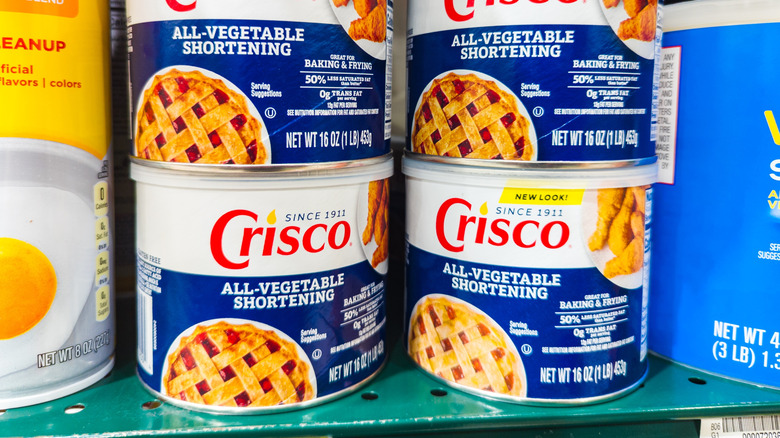
Ready to try out your favorite cookie recipe with shortening instead of butter? Good news: you won't have to do a whole lot of adjusting to give shortening a try. You can usually do a 1:1 swap. Using shortening instead of butter may seriously change the taste and texture of your recipe, so you might want to try using Christina Tosi's rule of half butter and half shortening; the Pioneer Woman Ree Drummond is also a fan of using both shortening and butter in her perfect pie crust. You may need to adjust the ratio to get your preferred texture, flavor, and lift level.
Whether it makes sense to swap shortening in and butter out may depend on what you're baking — and your goals for the end result. If you're purely looking for a show-stopping visual result, shortening may provide you with an even bake and great lift (which can be ideal for cookies you're planning to decorate later). If you're trying to create the best taste possible, it makes sense to stick with butter. Shortening can also work well to take the place of butter in frosting, especially if you're taking decorated cupcakes, cookies, or cakes to an outdoor event where heat is a concern. The bottom line: While choosing between butter and shortening comes down to a matter of personal preference, butter generally wins out in the flavor department, while shortening takes the prize for creating the most visually stunning baked goods.