

How To Keep Plastic Dishware From Melting In The Dishwasher
When Josephine Cochrane first invented and patented the dishwasher in the late 19th century, she probably had no idea it would completely change everyday kitchen life. According to the U.S. Energy Information Administration, more than 80 million American households own a dishwasher today, which makes this kitchen appliance a staple in modern homes. Still, regardless of how indispensable dishwashers are, they do have their downsides, especially when it comes to plastic dishware.
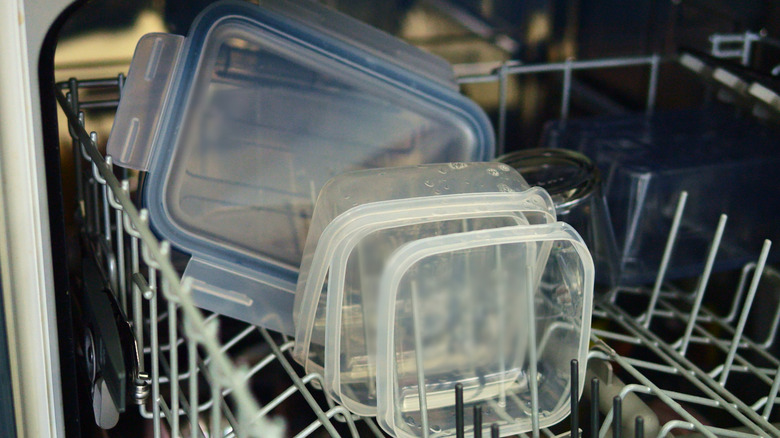
Plastic items are best washed by hand, unless they're clearly classified as dishwasher-safe. Reusable plastic containers, as well as plastic tableware and cutlery, usually fall into this category. Disposable plastics, on the other hand, are labeled that way for a reason and should never go in the dishwasher. But even with plastics suitable for the dishwasher, how and where you put them matters more than you think. Placing plastic objects anywhere other than on the top rack is one of the mistakes everyone makes while loading a dishwasher, and it is how they often end up warped or melted.
The reason this happens is because the heating element in most dishwashers is usually located on the bottom of the tub. The heating element heats the water during washing cycles and warms the air during the drying cycles (sometimes even up to 155 degrees Fahrenheit). While hard plastic items have higher melting points and can usually tolerate this heat, most plastics in general retain heat less efficiently than metal or glass. Placing plastic dishware on the bottom rack, closer to the heating element, increases the risk of warping.
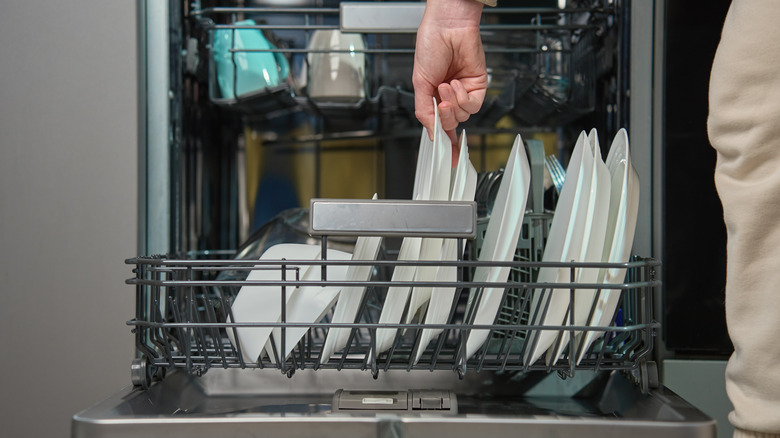
Save your dishwasher's bottom racks for pots, pans, and glassware
So, if by any chance you've placed a plastic food container on the bottom rack and it came out soft, bent, or melted, it's a clear sign it's time to throw it out. High temperatures can break down the chemical bonds in plastic dishware and cause toxic substances to migrate from the material into your food. This not only impacts the quality of the food, but it can also pose long-term health risks.
While some types of plastic, such as polypropylene (PP), polycarbonate (PC), melamine resin (MF), and acrylic (PMMA), are generally considered dishwasher-safe, even these materials can degrade over time after repeated exposure to heat. Since most dishwashers are designed with two or three racks, it's best to reserve the bottom rack(s) for items made from more resilient and durable materials, which will better withstand higher heat and stronger water pressure.
Dishware made from stainless steel, glass, or ceramic can safely be cleaned in the dishwasher. The same applies to certain silicone items. Keep in mind that you should avoid rinsing your dishes before placing them in the dishwasher, because most modern machines are capable of detecting food residues and actually work best when some particles are left on the dishes. Ultimately, when in doubt about which rack to use, the most important thing to do is check the manufacturer's label to make sure a certain item is suitable for dishwasher cleaning. And if that still doesn't convince you, you can always do it the old-fashioned way and wash your plastic dishes by hand.