

Here's Why Your Dishwasher Tablet Is Not Dissolving (And What To Do About It)
Most of the time, we don't think much about dishwasher tablets. Other than deciding which brand to buy, they're one of those products that you set and forget; you pop one into the dishwasher and expect it to work every time. So when the day comes that you open the door after a cleaning cycle to find crusty residue and an undissolved tablet sticking to the inside of the detergent compartment, it's a problem. The good news, however, is that it's probably an easy fix within the dishwasher itself, not a failure of the tablet.
There are a few common dishwasher issues that can prevent dish detergent from dissolving, but the underlying culprit is almost always a lack of water or heat (or both). Dishwasher tablets and detergent packs are designed to dissolve only when they're exposed to hot, circulating water, and they're tested in multiple machines before they go on the market. So instead of wasting time and money trying a new detergent, look inward to the machine itself. A clogged spray arm, dirty filter, or faulty water inlet valve can all disrupt water flow and prevent the detergent compartment from filling properly. The problem can also be as easy as a malfunction with the detergent dispenser, or even just overloading the machine with too many dishes.
Easy-to-fix problems
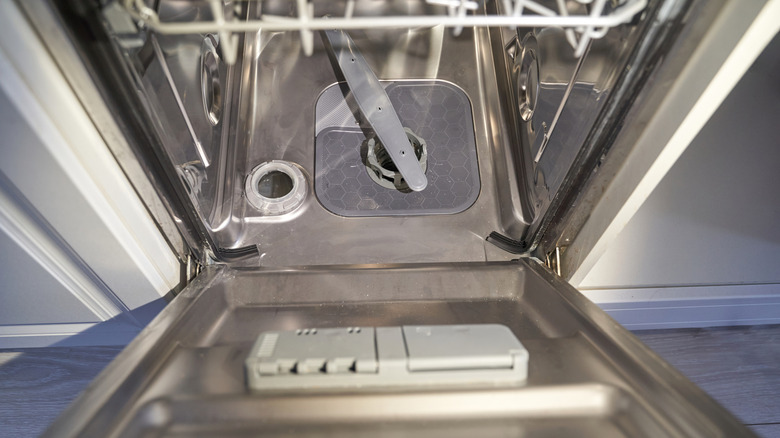
The first place to look is at the holes in the dishwasher's spray arms. These are the primary means for the machine to spread water throughout the cleaning space; if some of the holes are clogged, water won't be able to reach the detergent tablet. Take them out of the machine (they usually twist or pop off, but check the manual to be safe), then use a toothpick or small brush to remove any buildup from the holes. While you're inside the machine, you can also grab the filter and give it a rinse in your sink, as a dirty filter will also restrict water flow.
The problem could also be the latch to the detergent compartment. Take a look around the locking mechanism for sticky residue and clean the whole compartment and door with warm water, some vinegar and baking soda, and a wet rag. It's also important to make sure that the water in the machine is hot enough to dissolve the tablet. Before starting a cycle, try running the tap closest to the dishwasher until the water gets hot. This ensures the machine will fill with hot water right from the start, which will help dissolve the detergent.
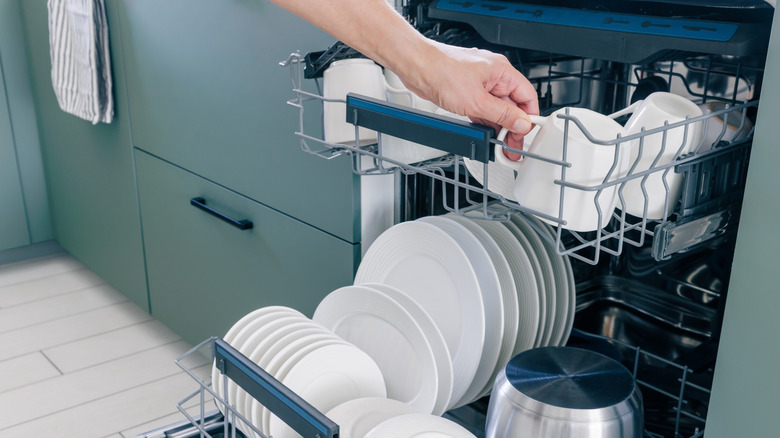
The way the dishwasher is loaded can also prevent the detergent dispenser from opening properly. Try not to place tall items in front of the compartment and avoid overloading in general, which can restrict the flow of water from the sprayer arms.
When to call a professional
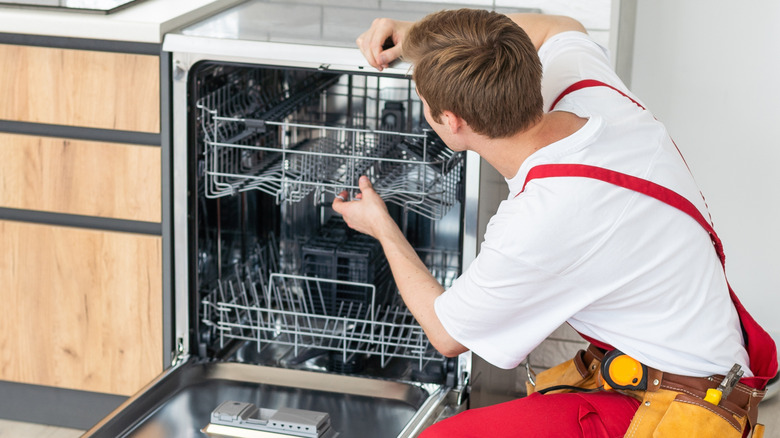
If you've gone through the list of easy fixes and the detergent tablet still isn't dissolving, it might be time to call a technician. Dishwashers are the silent workhorses of the kitchen, and parts tend to break over time thanks to the repetitive use. When internal components like the circulation pump, heating element, or water inlet valve fail, the problem of undissolved detergent is no longer a DIY situation (unless you're a mechanic). Only a trained professional will be able to replace certain parts or have the expertise to tell you if the machine needs to be replaced.
Think of an undissolved dishwasher tablet as the canary in the coal mine for dishwasher maintenance. It's often one of the first (and only) visible signs that something's going wrong inside the machine, even if the dishes seem to be coming out clean. Addressing the issue early, when the solution might be something as easy as unclogging a sprayer arm or filling the machine with a few less dishes, can save you a lot of frustration and prevent minor issues from turning into more expensive repairs. You'll also save the technician a lot of time going down that list if they need to diagnose a more serious problem. But with a little regular maintenance, like running the machine empty every few months, your dishwasher should continue to get the job done for at least 12 years or more.