

This Is Where Costco Lobster Tails Actually Come From
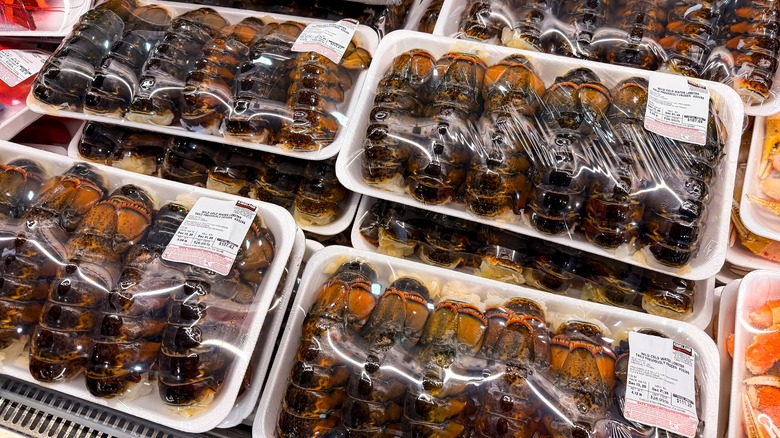
Costco has a good number of fancy finds on its shelves, including 35-ounce tins of Golden Osetra Caviar, $500 bottles of wine, and a bougie Costco cooking oil developed especially for the North American palate. The brand's frozen seafood section is no different, with lobster tails being one of the many eye-catching options available to members. Lobster aficionados might be happy to know that the frozen tails you can buy from Costco's website are sourced from the icy cold waters of the North Atlantic — specifically, from Maine and Canada.
That's not to say that all of Costco's lobster tails are from those two locations, however. Costco sources its seafood from a wide variety of partners, including Island Queen, which uses lobsters from the Bahamas for its lobster tails. In fact, if you pay close attention to the stickers on each package, you'll find that Costco's lobster tails can also be products of the Dominican Republic, Brazil, Honduras, and Nicaragua, to name a few. While this doesn't necessarily mean that the lobsters were caught off the coasts of these countries specifically, it's safe to assume they come from nearby waters.
Even though Costco gets its lobster tails from multiple international partners, all of the brand's seafood is sourced from suppliers that meet strict sustainability standards. No matter where it's from, you can at least be sure that the lobster tails you're eating were caught with minimal environmental impact.
Why the source really matters
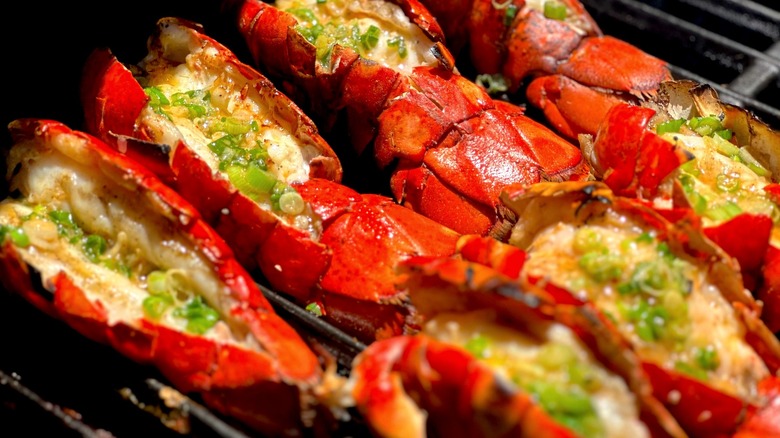
Lobster tails can taste wildly different depending on where they're sourced. One of the biggest determinants of a lobster's quality is the temperature of the water it's caught in. Cold-water lobsters, like the ones from Maine, have a firm yet tender texture to their meat, and a mild sweetness in their flavor profile. Warm-water lobsters, like those from Brazil, tend to have a mushier texture and fishier taste. Because of this, you'll need to cook cold and warm water lobster in different ways; the latter, for example, is better for grilling.
There can also be differences between same-temperature lobster tails from different locations. While Maine and Canadian lobsters are both cold-water varieties, Maine lobsters tend to be sweeter than the ones from Canada, while Canadian lobsters have denser flesh.
One more thing you want to look out for is how the lobsters are harvested. Wild-caught seafood tends to taste better than farmed because the fish are healthier and enjoy a more robust diet. Many of Costco's frozen lobster tails, including the massive 12-pack you can buy on the Costco website, are wild-caught — just like its special king crab legs — so you can be sure you're getting quality seafood. If the lobster tails are just a touch too pricey for your budget, you can try the wild langostino tails instead. While they aren't actually made of lobster, they're a good enough substitute to count among the can't-skip items in Costco's seafood department.