

Bird's Nest Soup Is The Chinese Delicacy With A Main Ingredient That Comes With A Hefty Price
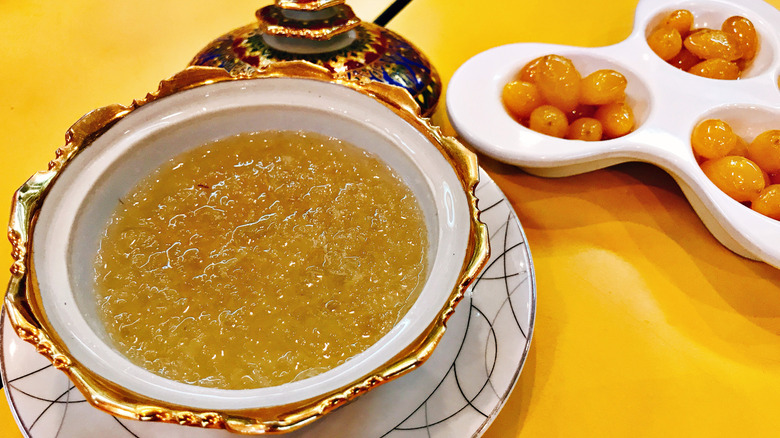
Bird's nest soup is a luxury dish in Chinese cuisine, in large part because of its key ingredient: Bird's nests. However, this isn't just any old nest made with leaves and twigs. The soup specifically uses the nests of swiftlets — small birds that build their nests almost entirely from hardened saliva. These nests are harvested mainly in Southeast Asia, especially Indonesia, Malaysia, Vietnam, and Thailand, with tropical climates that allow swiftlets to thrive. Part of the reason the nests are so prized is the labor-intensive collection process, which often involves dangerously scaling cave walls where the birds live or crafting special nesting houses. Once cleaned and cooked, the nests soften into a gelatinous texture (a quality that made it one of Anthony Bourdain's least favorite dishes).
In traditional Chinese medicine, bird's nest soup is believed to support respiratory health and improve skin quality, which also contributes to its reputation as a high-status food. Modern scientific evidence for some of these claims is limited, although there are benefits associated with the glycoproteins and amino acids in the dish. Bird's nest may be a rare ingredient worth trying — if you have the budget. High-quality nests can sell for thousands of dollars per pound, making the soup a luxury product and by extension, a status symbol for those who can afford it.
The rarity of bird's nest soup
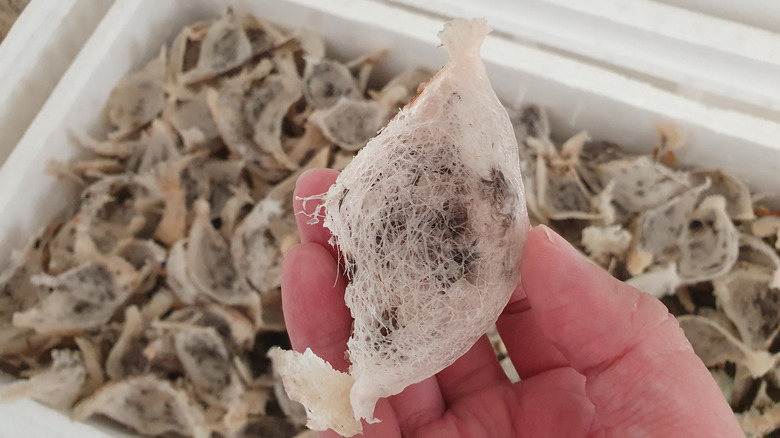
In some locations, swiftlets are considered to be a threatened or endangered species, and the growing market for bird's nest soup means that the species is considered to be in decline, even in places where it's not yet endangered. Conservationists have raised concerns that overharvesting the nests can disrupt the birds' breeding cycles, especially when eggs or chicks are present, as they could be abandoned. There are swiftlet nest farms that pride themselves on cruelty-free harvesting, but overall standards can vary by country.
Beyond harvesting practices, bird's nest soup is often off the menu in the United States. International travelers can't simply buy nests and bring them in, because they may carry avian diseases. However, companies that meet certain standards have special import permits. While it's not banned per se, you'll still pay a high price: Single nests in the U.S. start in the three-figure range for as little as 8 ounces, and larger or higher-quality packages can stretch toward $2,000.
Unlike other Chinese delicacies, such as century eggs, bird's nest has no pronounced flavor. It's more of a textural agent for holding the flavors of other ingredients, such as ginger, broth, ham, or sugar and coconut (for desserts). You may be able to get a similar taste and texture by using glass noodles or snow fungus instead, which are easier to find at Asian grocery stores like H Mart. The appeal of bird's nest soup arguably stems more from its texture, symbolism, and potential health benefits than from any bold flavor.