

The Flavorful Street Food Rick Steves Says You Should Try When In Europe
When it comes to traveling smart, and especially doing it on a tight budget, Rick Steves is a veritable font of wisdom. And if you're headed to Europe, he has one multi-purpose dining tip that can get you tasty meals without spending more than 10 euros: Eat a kebab.
Kebab shops are generally easy to find in European cities (with the notable exception of Venice), offering a filling meal, often at all hours of the day. It's a no-frills food made of seasoned meat, often sliced off a spit and stuffed into bread. The bread varies — Turkish kebab shops will be a thicker "pide," while Syrian or Lebanese-owned shawarma places often use thinner pita bread. There's usually salad and sauces to round things out, and portions can be hefty. Depending on your eating habits, you might get two meals out of a single kebab.
The idea of going to France or Italy to eat kebabs may seem odd, but Steves notes that immigrant-influenced that is deeply integrated into everyday European eating habits, and gives travelers an insight into a different aspect of food culture. Steves probably isn't recommending an all-kebab travel diet: You can head to a traditional trattoria or brasserie, too.
Kebabs reflect local flavors across Europe
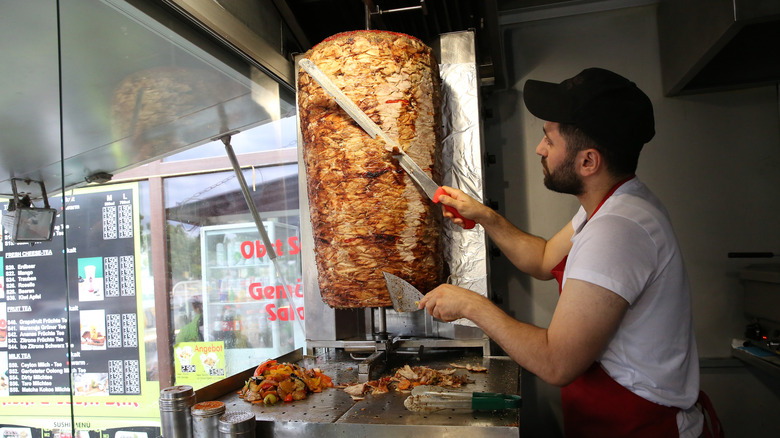
Relying on kebabs doesn't mean committing to repetition. Especially if you're bouncing between countries, you'll notice variations between locations. In Germany, for example, you'll often find döner kebab, which was popularized by Turkish immigrants in Berlin, yet it's different to what you'll get in Turkey. The German-Turkish döner evolved over time into a full meal in bread with salad and veggies, sometimes called "gemüse kebap." Kebabs are one of Germany's most popular dishes, and they're more common than German street foods like currywurst.
Meanwhile, in Greece, you'll get gyro or souvlaki, which use lamb, pork or chicken seasoned with herbs and served in pita with tzatziki, tomatoes, and onions. These versions emphasize fewer sauces and brighter flavors, reflecting Greek preferences for olive oil, yogurt, and herbs. Turkey, meanwhile, offers a wider variety, from döner on bread to skewered kebabs grilled over charcoal and eaten with rice or flatbread.
Other European countries also have unique quirks, too: In France, chicken tikka or tandoori kebabs, were introduced by immigrants from the Indian subcontinent. There are also meaty, cheesy French tacos, which were purportedly invented by a kebab shop owner and are sold at kebab restaurants. Plus, in countries like France or Spain, kebab shops aren't beholden to traditional business hours, which are often limited. So, you've got convenience, variety, affordability, and a less-conventional sample of local tastes, all in one meal.