

The Rice Water Trick For Removing Odors From Plastic Food Containers
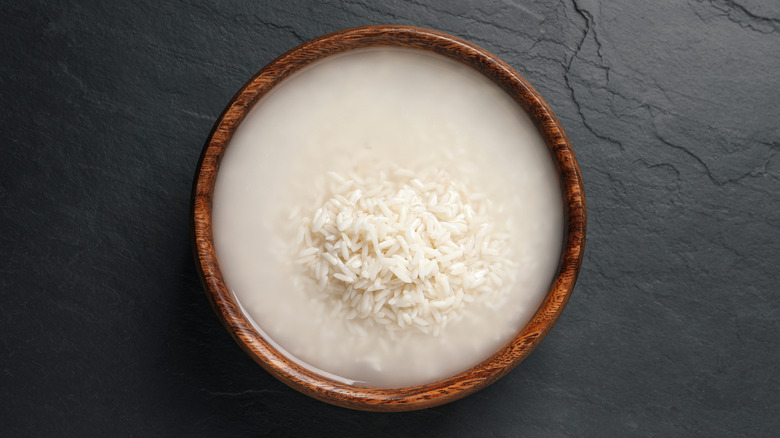
Plastic food containers are extremely convenient. Not only are they cheap and lightweight, but they're also perfect for storing leftovers after you've cooked enough food to feed an entire army. However, if there's one downside to them, it's probably their habit of holding onto odors long after the food is gone (which might leave you wondering whether it's time to throw them out). Still, before you decide to give up on a perfectly usable container just because it appears impossible to clean, there's one simple, yet incredibly effective hack that could totally change your perspective: soak your food container in rice water.
Of course, rinsing is the step you shouldn't skip for fluffy rice. But what might surprise you is that the leftover liquid from the process doesn't have to go down the sink. This cloudy water can actually work wonders at removing those stubborn odors from your plastic food containers.
The reason rice water works so well is because it's rich in starch, a complex carbohydrate made of long glucose chains. The starch particles possess great abrasive properties due to their hardness. In addition, their uniform shape and size, along with their ability to break down naturally, can help tackle not only lingering odors but also grease and stuck-on food residue.
Just pour the rice water into your food plastic container!
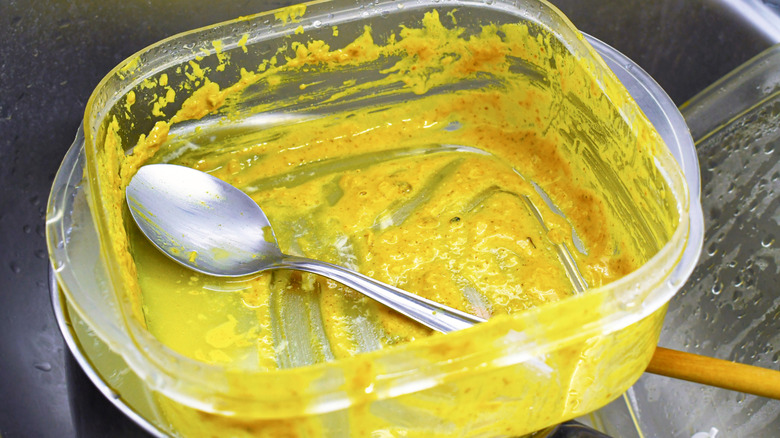
The next time you decide to prepare a classic Spanish paella or a rich and savory Italian risotto, measure the amount of rice you need and place it in a large bowl. However, instead of discarding the water as you rinse the rice, save it and pour it directly into any plastic food container you want to deodorize. Then, simply leave it for about half an hour to help remove the lingering smells. When the time is up, rinse the container with warm water and dish soap, then scrub it lightly with a sponge and let it drain before using it again.
This should completely remove the odors, but if necessary, don't hesitate to repeat the process. Keep in mind that long-grain rice varieties like basmati or jasmine may be less effective than short-grain ones such as Arborio, carnaroli, vialone nano, or bomba. The reason for this is that they contain more amylopectin, one of starch's two dominant components (along with amylose), which makes the grains cling together. Naturally sticky, these varieties release more starch into the water, making it more concentrated.
If you don't have rice at home to test the method, there are plenty of other simple ways to get rid of those lingering odors for good. For instance, you can restore your plastic food containers using lemons. Sprinkling baking soda inside the container, letting it sit for a while, and then rinsing thoroughly is another great alternative. Ultimately, the same steps work just as well with white vinegar.