

It Turns Out You Don't Need To Use More Coffee Beans To Get Stronger Coffee
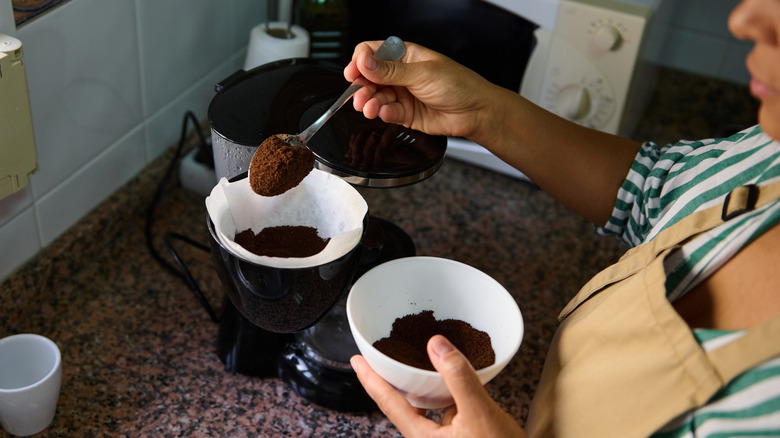
If your coffee keeps coming out weaker than you want, the first thing you probably think to do is add more grounds, but a 2025 study from the American Institute of Physics suggests that's not always the best move. Researchers found that with pour-over coffee, strength can come down to how you pour the water rather than how much coffee you use. Pouring from a gooseneck kettle from as high as you can above the coffee bed — while keeping the stream steady — creates more movement in the grounds, which helps pull out more flavor.
According to the research, it works because the water hits the coffee with force, which stirs things up as it passes through the filter, and all that extra agitation improves extraction, giving you a stronger cup. Granted, it sounds like a brewing method for stronger coffee that is almost too simple, but not only does it work, it doesn't require new gear or fancy techniques — just a little adjustment to how you're already pouring your coffee. This trick also avoids some of the many downsides of adding more coffee beans, like making your cup too bitter or consuming too much caffeine. The goal of the high pour is to get more out of the coffee you're already making, allowing your daily brew to taste fuller and more balanced, without throwing more grounds in and hoping for the best.
Why stronger coffee doesn't always mean better beans

Coffee is consumed on a massive scale around the world, but as growing conditions become less predictable due to climate shifts, using less coffee is a small change that could add up. It's also a little bit better for your wallet, too. So rather than trying to source the beans that give you the strongest coffee, it could simply come down to your pouring technique.
Consistency improves when strength relies on technique rather than dose, making it easier to get the same results every day. This may change how you might think about which coffee beans are worth buying. Instead of paying extra for beans marketed purely around intensity or higher caffeine, or assuming that more expensive means a bolder cup, you can focus on freshness and the flavors you enjoy with the assurance that your brewing method will do a lot of the heavy lifting for you. With this trick, even cheaper and more everyday beans can taste more intense. The study's takeaway is pretty straightforward: a good, strong coffee isn't always about more beans or darker roasts; sometimes it's just about pouring a little higher and letting physics do the rest.