

This Is One Of The Biggest Mistakes You Can Make With Homemade Pie Dough
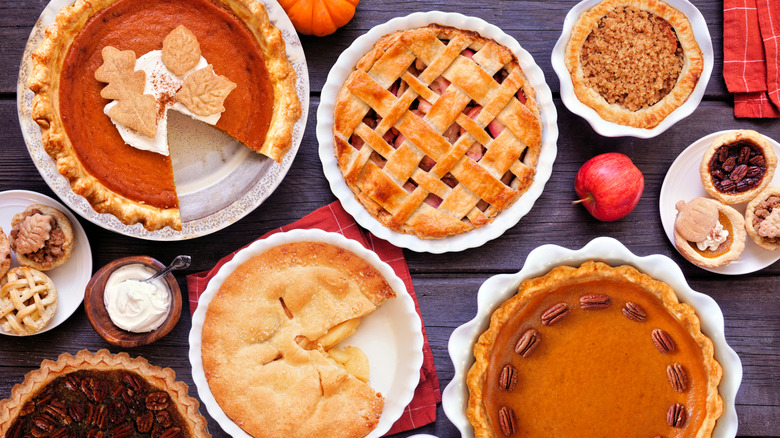
There are a ton of variables to consider when making pie crust from scratch. Your butter is supposed to be cold, but not too cold, to get a perfectly flaky result. You need to consider the moisture content of your filling, which can help you decide whether or not to parbake your crust (failing to do so is one of the most common pie crust mistakes, as it can result in a dreaded soggy bottom). There's one more issue to consider: how much you're kneading your pie crust. Overhandling can thwart your efforts by allowing excess gluten development, which can create a dense, chewy dough that's far from the delicate lamination that makes for bakery-quality crust.
When it comes to handling pie dough, less is more. It can be tempting to keep kneading your dough until it looks like all the butter is perfectly mixed in, but in this case, a smooth dough without flecks of butter is your enemy. You should work your pie dough until the ingredients are mixed enough that you can roll out your crust, not to the point where it takes on an appearance similar to that of sugar cookie dough. If you're still seeing little chunks of cold butter in your finished dough, but you're still able to roll it out, you don't need to keep kneading.
Keep ingredients cold to avoid overworking dough
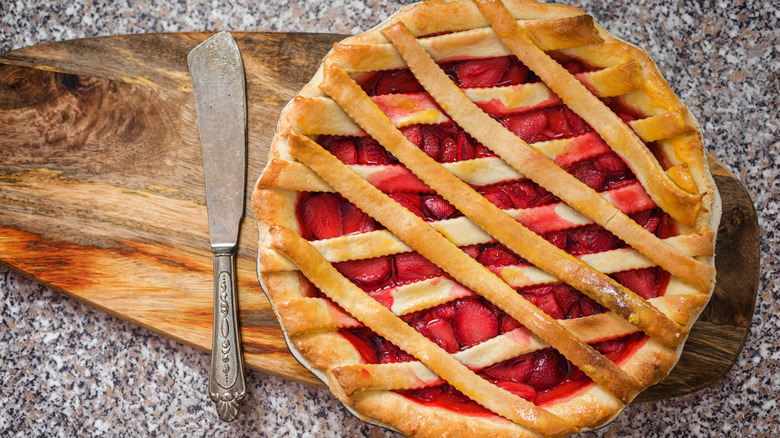
One way to avoid overworking your pie crust is to make sure your butter is very cold. Don't freeze your butter, but take it straight out of the fridge just moments before you start incorporating it into the dough. When your butter stays cold until it hits the oven, it's able to steam as it bakes, which creates the tender bites you want from your crust. Use high-quality butter and work quickly to ensure your butter doesn't melt before you get it into your pie pan.
In addition to using cold butter, use cold water to prevent the butter from melting. While you can't add ice cubes directly to the dough, you can pour from a cup of ice water when it's coming together. As you're incorporating water into the crust, avoid using your whole hand to mix. Stick with just the fingertips, as they'll transfer less warmth to the dough. Finally, if it's going to be a little while (more than a minute or two) before you roll out the dough and get it into a pie pan, wrap it up and pop it into the fridge. The dough can stay cold while the filling is prepared, and it'll last for up to a few days.