

Are Appetizers And Small Plates The Same Thing? It Depends
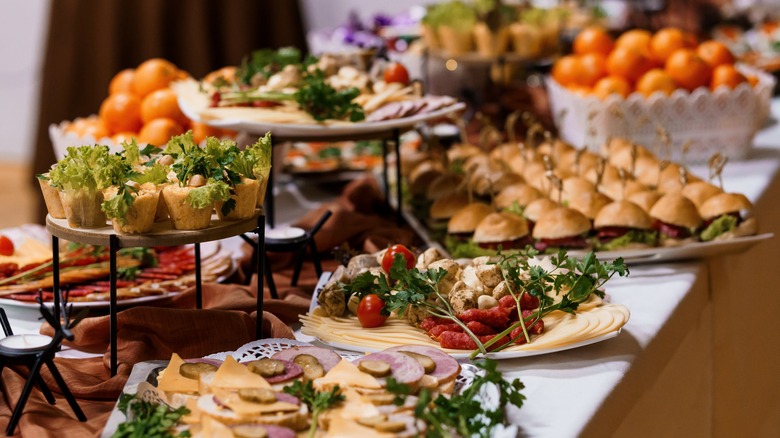
Whether dining out, it's common to start with smaller portions of food before getting to the entrees. In fact, some of these more diminutive dishes, like mozzarella sticks, have been around since Medieval times. They go by a number of different names, including "starters," "appetizers," or "small plates." While some restaurants use the terms interchangeably, there are actually subtle differences between these classifications.
Small plates are categorized as petite, composed dishes that are only meant to contain just a few bites — and, as a result, are ideally shared. They're larger than your typical amuse-bouche, which is usually a gratis small bite for just one person, enjoyed at the start of a meal. Appetizers, meanwhile, are more broadly defined as dishes that come before a main meal. Depending on the appetizer, they can be shared among larger table sizes and groups. You might find a wide range of dishes on a menu that are listed as appetizers that wouldn't qualify as small plates. A bowl of French onion soup, a plate of nachos, or even a basket of classic Buffalo wings are all common examples of starters that fall into the appetizer category but aren't considered small plates.
Appetizers can be broken down into multiple categories
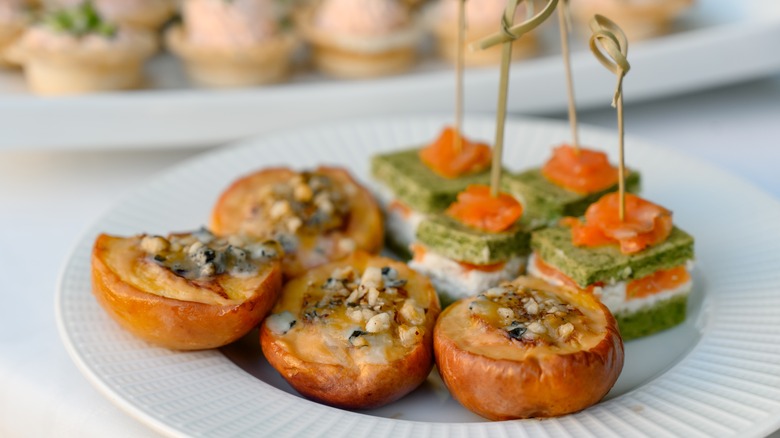
There is definitely some crossover between small plates and appetizers, though, as is apparent from the various appetizer categories: cocktails (used for dishes in reference to a cocktail hour), hors d'oeuvres, canapes, relishes and crudite, salads, soups and consommé, and chips and dip. Canapes, for example, are bite-sized dishes usually made with a bread or pastry base and a savory topping; depending on how they're served (individually or family-style), they can also qualify as small plates. Hors d'oeuvres are typically small bites that are eaten by hand, which means there's potential crossover between this appetizer category and small plates, too.
Ultimately, there is no hard-and-fast definition separating an appetizer from a small plate. However, there are characteristics that distinguish them. At restaurants, both categories serve as a kitchen's way of showcasing its creativity and innovation in a low-stakes way because they're not as much of a commitment for the chef or the consumer as a main course.