

The Forgotten Diner Breakfast That Once Paired Eggs With Jelly
These days, eggs stay pretty much in the savory food lane, leaving the sweet breakfast or brunch fare to the likes of pancakes, waffles, or even candied bacon. But, it wasn't that long ago that diners and homes across the country served up a dish that was perhaps ahead of its time in combining sweet and savory in the form of a jelly omelet.
Whether you spell it the American way (omelet) or the European way (omelette), it all comes down to fluffy scrambled egg goodness gently folded around assorted toppings. While cheese, vegetables, and even breakfast meats are most common as omelet fillings today, jelly omelets were referenced in "The Boston Cooking-School Cook Book" as far back as 1896. Whether it was about a simple dish with a hint of sweetness or a happy accident — perhaps the recipe originated with some jam happening upon some scrambled eggs on a plate — we'll never know. But perhaps it's time for a little revival.
Re-creating the jelly omelet
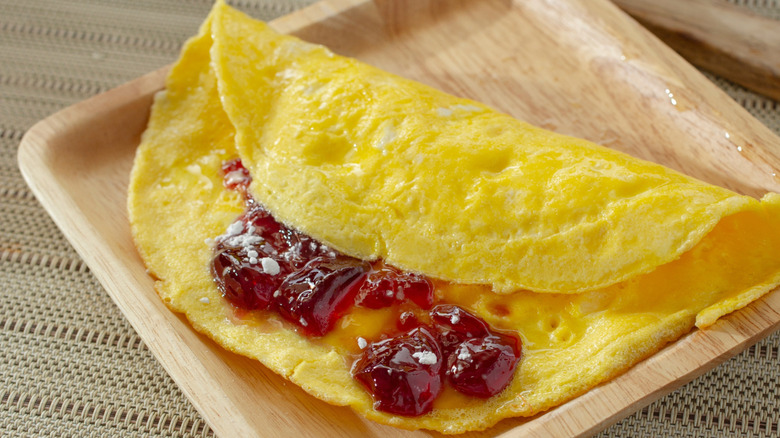
Making a solid omelet is an important life skill. It is simple to master, protein-forward, requires few ingredients, and is satisfying for just about any meal of the day. Tips for omelet success include using low heat and whisking with a fork to get just the right amount of air into the eggs. This holds true for any omelet, including a jelly one. While time-tested omelet guidance suggests using a pre-heated pan and making this eggy concoction with three eggs; it also suggests salting the eggs before cooking. For a jelly omelet, the original recipe indicates omitting the salt and instead adding a bit of sugar before cooking and then sandwiching around a sweet filling.
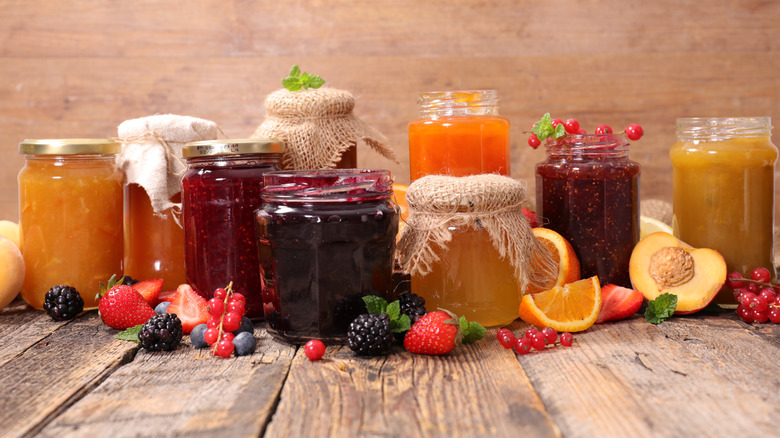
Though you could order a plain omelet at a place like Waffle House and doctor it up with a standard-issue plastic packet of grape jelly, making one at home will give you a wider range of sweet condiment options. "The Boston Cooking-School Cook Book" suggests a filling of your choice, whether jam, jelly, or marmalade, which might beg the question of how these gooey confections differ. While all are made from fruit and sugar, the preparations set them apart. Jelly is the most strained and homogenous, while jam has more fruit chunks, and preserves like marmalade use the entire citrus fruit from pulp to rind making it tart in flavor. Whichever one you fancy, give it a try with your eggs when your next brunch craving hits.