

Kitchen Cabinets Wear Down Faster When You Ignore This Common Appliance Mistake
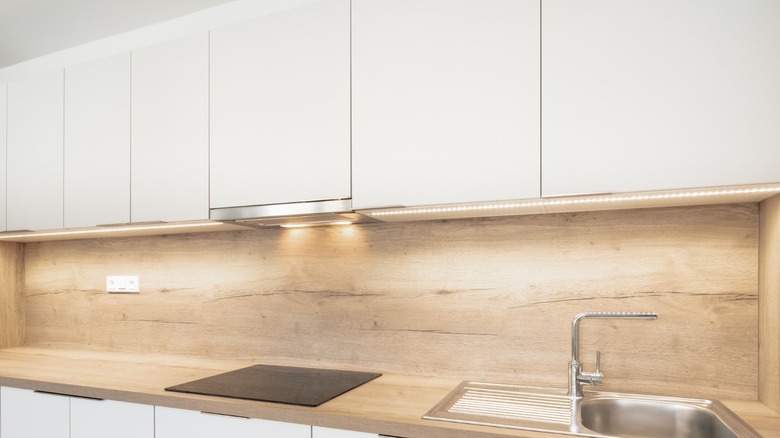
Whether you just put in newly upgraded kitchen cabinets or have some well-preserved ones, the last thing you probably want is to damage them and shorten their lifespan. But if you have various appliances sitting below or next to them, you might be doing just that without even realizing it. Heat and steam damage from kitchen appliances are a real risk for cabinets new and old, but too many people make the mistake of not taking any basic steps to prevent it. And, by the time they do, it may already be too lately to avoid expensive fixes. Some of the biggest offenders are appliances you might use on a regular basis: Toasters, coffeemakers, rice cookers, air fryers, Crock-Pots, and more can all cause major damage over time to kitchen cabinets, especially when placed and operated on countertops right beneath them.
Even dishwashers, stoves, and ovens can damage your cabinets, depending on how they're vented, and not just when you're actively using them for their intended purposes. Self-cleaning settings can create intense heat (and steam, in some cases), which can radiate out and affect the cabinets directly around these appliances. And while microwaves sitting above stovetops can seem like a good way to prevent heat from rising up into cabinets, they can be even worse culprits if they vent directly into the cabinets above them.
Signs your appliances are damaging your cabinets
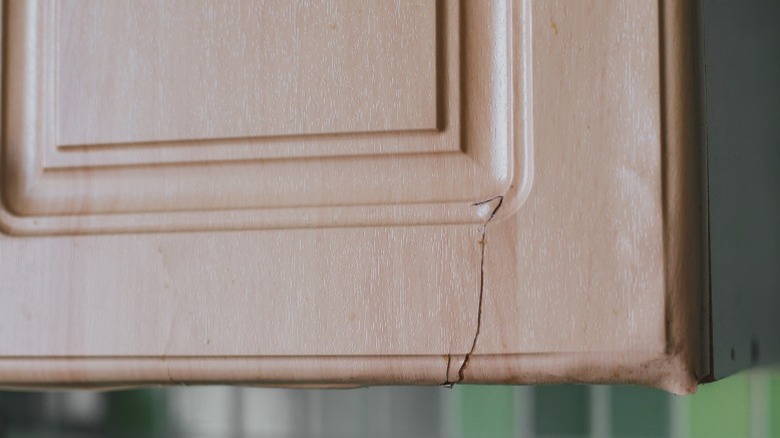
It can be tough to tell that damage is actively happening to your kitchen cabinets until it's already taken a toll. So, even if you haven't noticed anything obviously amiss just yet, you might want to go ahead and take a closer look. One of the first things you might spot is cabinet doors that look warped or swollen. Moisture causes wood and medium-density fiberboard (MDF) cabinets to expand, so the doors may be the first things to start bowing or stop lining up properly. Even if you don't see anything visually but have noticed that your doors are sticking or no longer closing smoothly, heat and moisture damage could be to blame.
But speaking of visuals, peeling paint or bubbling laminate is another common giveaway, since heat and steam can loosen finishes over time. If you spot any discoloration, that's also a clue, and not just with cabinets that have been scorched or otherwise affected by heat (though that's also totally a thing). If you see any yellowing, dark spots, or just uneven fading in general, this could be an indicator that an appliance keeps blasting your cabinets with a lot of steam. If damage has become particularly severe, especially from moisture, they may even start to feel soft or spongy in spots. Lean in and take a whiff too; any musty smells could mean moisture keeps getting trapped, putting your cabinets at risk of mold and mildew.
Tips for preventing heat and steam damage to cabinets
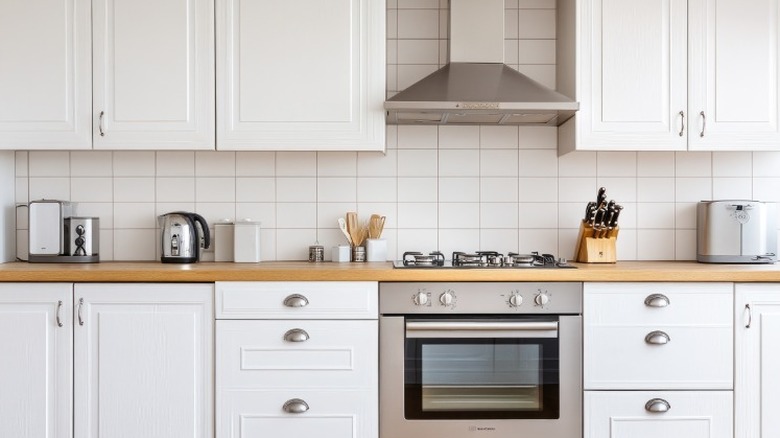
Fortunately, there are a few steps you can follow to help your cabinets and appliances coexist without damage. First and foremost, make sure your kitchen is ventilated properly. Always run the range fan while cooking, or open windows if you don't have one. You'll also want pull any countertop appliances out from underneath cabinets before using them. The last thing you want is heat and steam rising directly up into the underside of your cabinets, which can even damage the walls in some cases. With bulkier appliances like ovens, it's important to make sure they are installed properly and have adequate protection. All cabinets directly above and next to ovens should have heat shields built in, for instance.
Finally, you might want to reevaluate which appliances you actually use and which ones really aren't necessary, or at least don't need to sit out on the counter. That home barista setup? Sure, you make cool lattes with it from time to time, but do you really prefer it over a regular coffee pot and the occasional trip to your local coffee shop? These kinds of devices can put out a crazy amount of heat and steam, so, if you don't use it too often (and don't enjoy cleaning it), you might just want to save some trouble and get rid of it. A decluttered and organized kitchen is also an easier kitchen to keep clean, which is of course just another important step for prolonging the longevity of your cabinets.