

Costco Vs Sam's Club: Here's Which Has More Locations
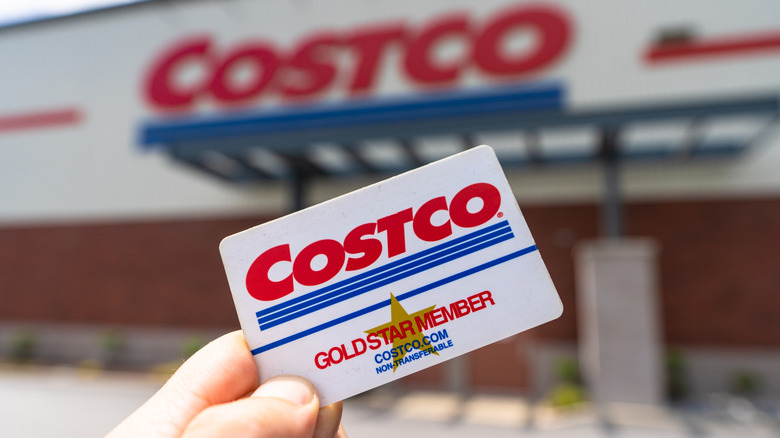
Costco and Sam's Club are similar warehouse-style, members-only clubs that sell everything from bulk groceries to electronics. Each chain has its own signature store brand too — Costco's Kirkland Signature and Sam's Club's Member's Mark. And as it turns out, each chain has nearly the same number of locations.
As of April 2025, Costco reportedly has 903 operating locations, with 617 in the United States and Puerto Rico, and the other nearly 300 spread among countries like Mexico, Japan, and the United Kingdom, to name a few. Sam's Club has almost the same number, with around 600 locations between the United States and Puerto Rico, 48 (as of 2023) locations in China, 58 in Brazil, and 174 in Mexico. That means the two are neck and neck in terms of which store has more brick-and-mortar spots, with Costco at just over 900 and Sam's Club estimated to be just under 900. Beyond the current numbers, these stores continue to expand.
Which brand is expanding faster?

Based on 2026 expansion — with Sam's Club planning to open at least six new stores in 2026 and Costco planning 30 new stores and five relocated stores — it seems that Costco is currently growing much more quickly than Sam's Club. Costco has expanded at a faster rate based on the past 30 years of growth too. Over the last three decades, since the original Costco merged with Price Club in 1993, the chain has increased its numbers from just over 200 to just over 900. Sam's Club, on the other hand, had 428 locations in 1991, and today, it has fewer than 900, suggesting its expansion has not occurred as quickly.
There is some speculation as to why Costco has seen faster growth than Sam's Club. Costco has a higher minimum membership cost than Sam's Club ($65 and $50 on their minimum tiers, respectively), but Costco might have stronger loyalty with consumers, who tend to choose it over Sam's Club because of its Kirkland Signature brand, flexible return policy, and iconic food court. Plus, Costco allows members to earn up to $750 more in cash rewards annually than Sam's Club, which could make a key impact on a consumer deciding which club to join.