

What To Do When Pot Roast Gravy Turns Out Too Thin
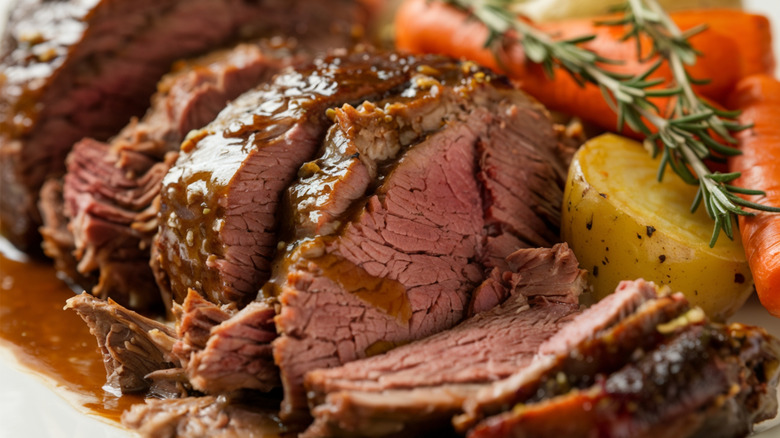
When cooking a pot roast there are many things to consider, like ensuring your meat cooks long enough in order to properly release from the bone and the veggies soften while still maintaining bite (nobody likes mushy carrots). The thickness of your gravy is another paramount factor for a well-executed pot roast, though it's important to steer clear of excess flour — one of many mistakes to avoid when making homemade gravy. It can be stressful if your gravy comes out too thin, but there's one reliable and simple solution: beurre manié.
You're likely wondering what beurre manié is exactly — it's actually a staple in French cuisine and means kneaded butter. It's simply made with softened butter and flour. It's an effective way to thicken many dishes, like sauce or soup, but in this case, it's also great for gravy. In order to make your own, press the two ingredients together to form small balls of paste. At this stage, the butter should completely coat the flour. Once formed, these thickening balls can be easily incorporated into any sauce, gravy, or soup. Beurre manié is meant to be added toward the end of the cooking process as a quick fix for thin sauce. Make sure you whisk consistently until it's evenly spread throughout your gravy in order for all components to be equally dispersed and incorporated. Otherwise, it may clump.
Expertly thicken your pot roast gravy
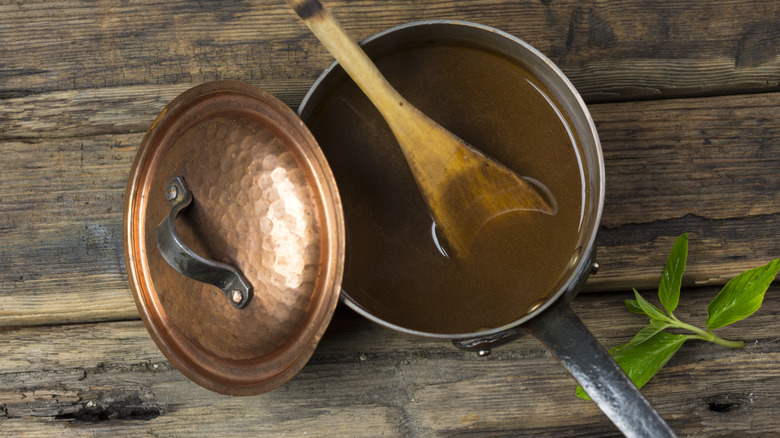
Perfecting your beurre manié technique can be intimidating at first, but rest assured the process is much simpler than it sounds. When you gather your ingredients, ensure you're using unsalted butter and all-purpose flour for the most consistent result. Additionally, you can pre-batch this thickening option and pop it in the freezer to have on hand the next time you need it.
If you want to get some other sauce thickening techniques under your belt, try a roux or slurry. Just ensure you avoid these flour mistakes that cause disappointing gravy when you make your next batch. A roux is made from butter and plain flour, which thickens over heat as it is whisked while it cooks. This technique is commonly used as the first step when making gravy. But, if necessary, you can still incorporate your roux later on during the cooking process (just add a little at a time).
You may also try using a slurry, which is a sauce thickening option that incorporates cornstarch or flour into cold water, as opposed to using heat. The slurry is then added into your sauce. This is a trustworthy way to remedy a too-thin gravy, especially if you're struggling to thicken it with the other methods. A slurry is a good way to prevent clumps dry flour can create, making it easy to incorporate at any point in the cooking process, giving you a silky-smooth gravy.