

How World War II Fish Camps Shaped How We Enjoy Seafood Today
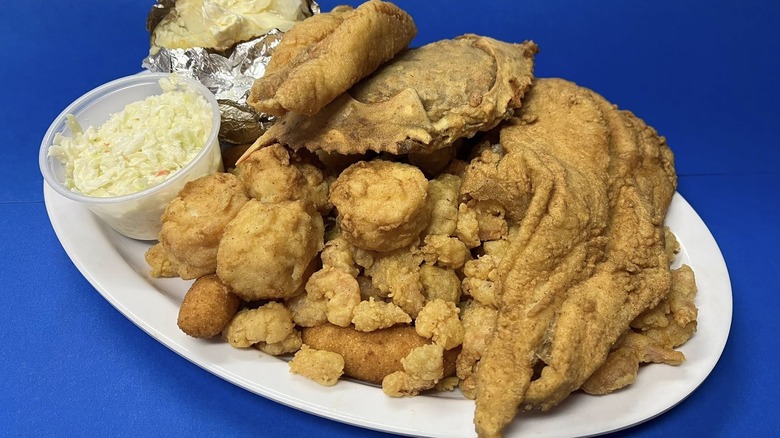
If you've ever visited the South (especially the Carolinas) and tucked into a plate of fried fish, hushpuppies, coleslaw, and fries, then you may have visited a unique type of restaurant called a fish camp, or at least one of its descendants. These casual seafood eateries, which are most prominent in North Carolina and particularly Gaston County (just west of Charlotte), trace their roots to simple waterside camps where fishermen and workers cooked up the day's catch. Early fish camps weren't exactly restaurants — they were basic kitchens or roadside sheds set up along rivers or lakes where fresh catfish would be fried up and shared with locals or passers-by, although some developed into more established restaurants as time went on.
They first surfaced in the 1930s, providing inexpensive, filling meals at times of economic hardship. They weren't just for those in the fishing industry: Workers in textile mills found fish camps convenient and affordable spots for weekend dinners. (And generally, fish camps opened for dinner, not lunch, to serve workers after they finished their shifts.) Their menus centered around hefty portions of fried freshwater fish like catfish, carp, and perch, plus hushpuppies (part of any good Southern fish fry) and simple sides like coleslaw. As transportation improved after World War II, fish camps began looking to the coast and serving saltwater seafood like flounder, shrimp, and oysters to menus, reflecting broader access to coastal seafood. So, over time, they evolved from slapped-together places to cook and sell freshly caught seafood, to a much-loved treat for industrial workers, to a bona fide North Carolina culinary tradition.
How fish camps changed over time
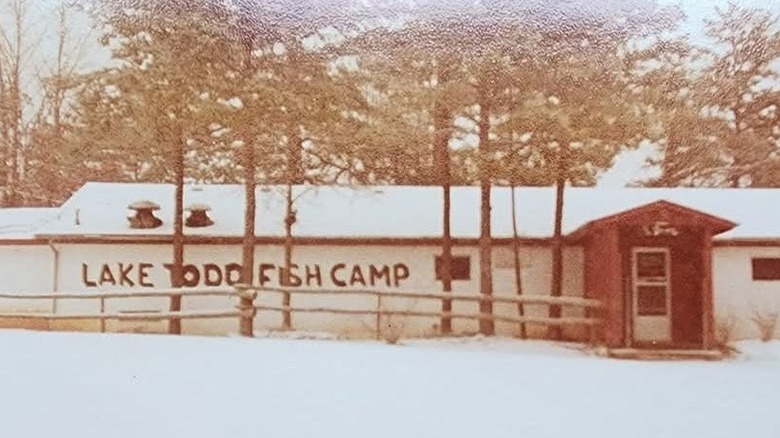
Fish camps' transition from improvised cookouts to established restaurants happened in the post-World War II decades. In Gaston County, for example, former mill worker Luther Lineberger began frying fish for friends and mill workers in the early 1940s before opening one of the region's first formal fish camp restaurants in 1948. By the 1960s, multiple fish camps thrived along stretches of the Catawba River.
If you visit a modern-day fish camp, don't hold out hope for grilled fish (although some may have a grilled option or two on the menu). The standard cooking style is battered and fried, with sauces like tartar, cocktail, ketchup, and hot sauce on the side. That said, there's some variation; for example, small fishing villages like Calabash (on the coast, rather than on a river) developed their own culinary identity, where fresh Atlantic seafood would skip the heavy batter and get more of a light flour or cornmeal dredge before being flash-fried. This is now known as Calabash style, and it's a bit lighter, with some praising it for letting the seafood's taste shine through.
Fish camps still remain part of North Carolina's culinary map, with some having operated continuously for decades. A few notable names include Catfish Cove and Twin Tops, both on the Catawba river. You can also find a few scattered around the South, in places like Florida and Georgia, too. While some argue that fish camps are dying, it's perhaps just the restaurants with this specific history that are vanishing. Fish fry-ups certainly live on — after all, it's not tough to find fried catfish and hushpuppies in North Carolina.