

How To Cover Your Rising Bread Dough Like A Pro Baker
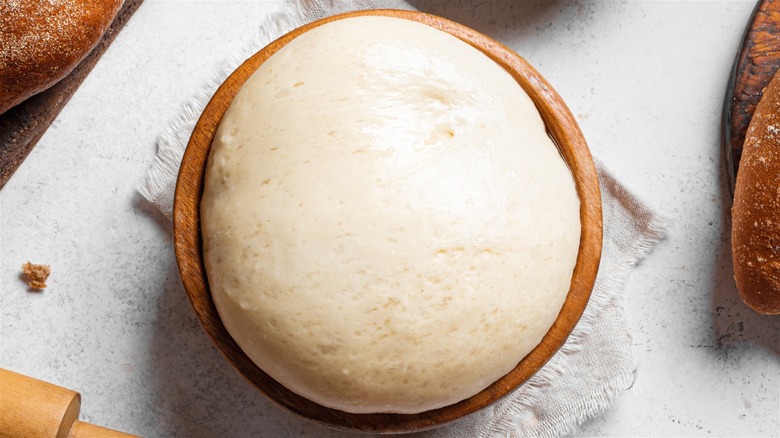
You can make the perfect dough, but all that hard work will go to waste if you make the mistake of cutting your bread's rise time short before baking it. The yeast needs time to form carbon dioxide, which stretches the gluten and makes your bread soft and airy instead of tough and chewy. While you're waiting for your loaf to rise, you want to protect the dough from environmental nuisances and physical damage by covering it.
Many bakers opt for an air-tight covering. Plastic wrap, reusable beeswax wrap, or even a shower cap can gently stretch and rise with the dough if needed. Covering the dough allows the yeast to retain its moisture and temperature during fermentation, so you want to avoid conditions that will dry it out too much. This is why the best place to proof in your kitchen is inside an inactive oven or microwave if you need a quicker rise.
Generally, the yeast fermentation process takes around two hours in the range of 75 degrees Fahrenheit. Different types of dough require different rise times, so it boils down to what environmental conditions you're baking in and the kind of yeast you're baking with. Quick-rise doughs like pizza dough tend to use instant active yeast, while sourdough tends to use a natural wild yeast, which needs a longer rise time.
Fancy, expensive options aren't necessary for a perfect rise
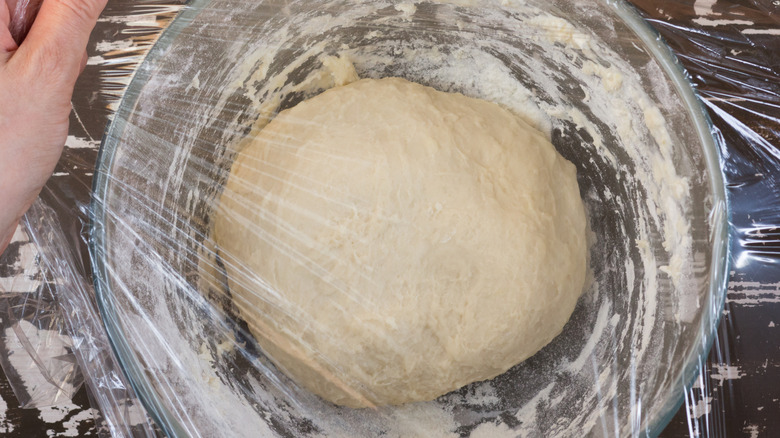
Covering the dough helps lock in enough heat and humidity for the yeast to actually work its magic. If the dough dries out during the rising stage, it might form a skin on top that can prevent the yeast from doing its thing, resulting in a disappointing loaf of bread. A simple cloth towel can do the trick if your kitchen isn't drafty. It only has to be big enough to keep the bread clean and not let the air in, which is great for a quick-rising pizza dough.
To be on the safe side, opt for a tighter seal. Some bowls come with a bowl cover that seals tightly, but in lieu of buying a fancy bowl just for bread, you can use a larger bowl inverted and placed on top. As long as it's bigger than the bowl the bread is in, it will create a decent seal and leave room for the dough to rise without sticking to the plastic. Similarly, plastic wrap has a nonporous surface, which will keep too much heat from escaping while the bread rises. This is a great choice for bread recipes that require a long rise time, such as sourdough.