

Why Are Bananas So Cheap? It's Complicated
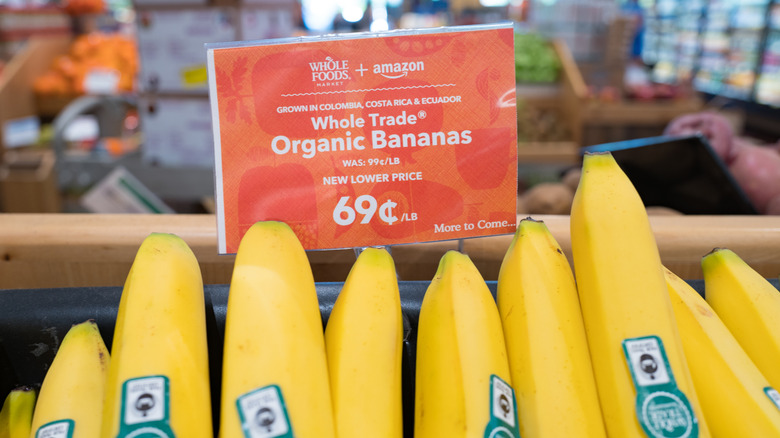
Bananas are one of the few foods in the United States that still feel stubbornly inexpensive: You probably can't think of a time they jumped in price like, say, eggs have since 1980, right? It's perhaps more surprising considering that you're also paying for them to travel a pretty long way to your fruit bowl, too. Aside from a minuscule volume grown in Florida and Hawaii, the U.S. grows almost no bananas, and almost all of them are imported from places like Guatemala, Ecuador, Costa Rica, and Honduras (not India, despite it being the world's biggest banana producer). Despite that distance, bananas stay cheap for a complex mix of reasons spread along the supply chain, from cheap farm labor to supermarkets' pricing strategies.
Let's start with labor: Banana production relies on low-wage agricultural labor in export countries, which keeps farming and packing costs far below what they would be in the U.S. It helps that large multinational companies like Dole, Del Monte, and Chiquita dominate the industry and control many steps of the growing and shipping process, allowing them to benefit from economies of scale with huge plantations.
It's also a big help that bananas ship easily. They're harvested green and shipped in refrigerated containers, then ripened closer to where they'll be sold. This reduces waste compared with fruits that must be picked ripe, so you're not paying for spoiled fruit that never makes it to store shelves. That controlled ripening process also helps retailers manage their inventory tightly.
Finally, bananas are cheap because stores want them to be. Supermarkets frequently use bananas as a so-called loss leader, pricing them at or near cost to lure customers, with profits coming from other supermarket items.
There are hidden costs, too
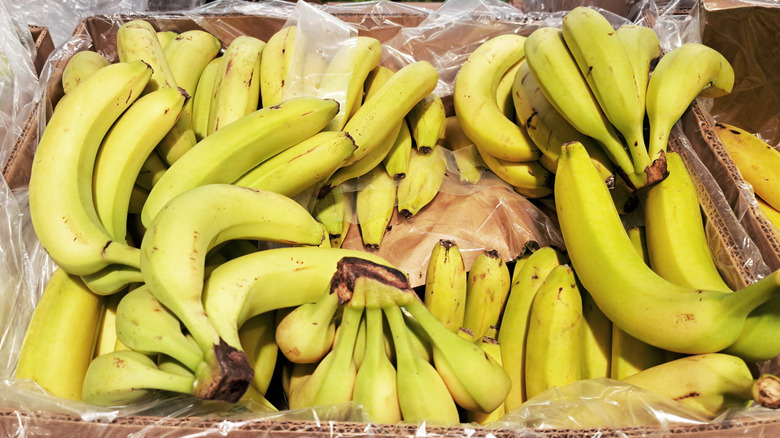
Unfortunately, bananas also stay cheap because many of their real costs don't show up on the price tag. It's the producing countries that have to deal with environmental damage from monoculture farming, pesticide use, and deforestation; economists describe this as an externalized cost. Plus, labor protections in the banana industry have historically been weak, keeping prices low in ways that wouldn't be possible under stricter wage and safety standards.
Trade policy also helps keep bananas affordable. The United States historically placed relatively low tariffs on banana imports compared with other agricultural goods, and while the Trump administration slapped tariffs on them earlier in 2025, they reversed course before the end of the year. Plus, one species of banana (the Cavendish) absolutely dominates the market, so shipping becomes even easier when producers don't need to worry about different conditions that different varieties might need.
All of this said, bananas staying cheap isn't a guarantee. Diseases like Tropical Race 4, which attacks Cavendish bananas, threaten plantations worldwide and could raise costs if crops are wiped out or new banana varieties are needed. Rising transportation costs and pressure for better labor or environmental standards may also make ultra-cheap bananas harder to sustain (the industry is often criticized for exploitative labor practices and heavy chemical use, for example). But for now, the fruit stays cheap because years of agricultural, economic, and retail systems have been designed to keep them that way.