

What Makes Hugely Popular Ilegal Mezcal Different From Other Brands
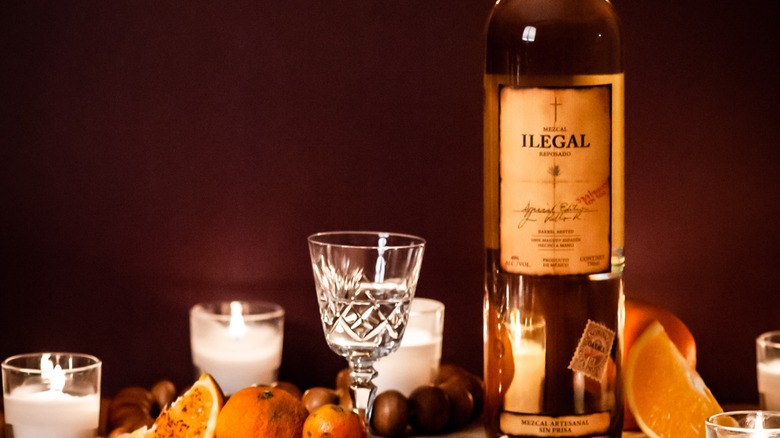
Ilegal Mezcal is one of the leading artisanal mezcal makers in the world, which it's achieved on its own terms by crafting spirits using traditional methods without additives or artificial ingredients. The brand began life in 2006 in a Guatemalan bar in the city of Antigua when expat New Yorker John Rexer created Ilegal Mezcal to supply his bar, Café No Sé, after about two years of smuggling the spirit from Mexico to Guatemala. Today, it's an award-winning brand owned by Bacardi (since 2023), but Ilegal remains true to its values and rebellious spirit even as it has scaled up its operations over two decades.
Its three core expressions — joven, reposado, and añejo — focus on the flavor of the espadín agave with a lot less smoky flavor than many mezcals. This isn't the only thing setting the brand apart. There's the in-your-face marketing and its support for organizations like Planned Parenthood, along with educational efforts in Guatemala and disaster relief. Rexer and his niece, CMO Kaylan Rexer, remain involved with the brand and help maintain the sensibilities that make Ilegal special, according to Gilbert Marquez, global brand ambassador for Ilegal Mezcal. "That comes through in our partnerships, our marketing, and the many social justice organizations we actively support," he told Chowhound in an exclusive interview. And at its heart are two brothers from Oaxaca, Armando and Álvaro Hernández, fourth-generation mezcaleros who are crafting these spirits.
A mezcal where the agave shines
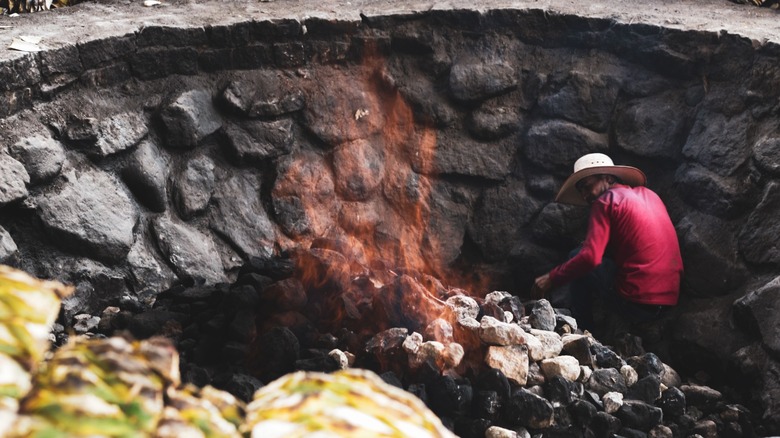
John Rexer has been working with Armando and Álvaro Hernández from the start of Ilegal Mezcal after Gilbert Marquez introduced them to Rexer. The two brothers learned their craft from their father, Silverio, and continue to produce mezcal at their distillery, Mal de Amor, using age-old techniques. These include hand-harvesting the agave's piñas, which are roasted in traditional stone-lined earthen pits, then crushed using a horse-drawn mill called a tahona, before being open-air fermented with airborne yeast, and then double-distilled in traditional copper stills. Ilegal Mezcal's signature flavor of roasted agave comes from being slow cooked in the pits, giving the final product a touch of smoke, according to Marquez.
"Unlike some mezcals that pick up a stronger smoky taste from the distillery environment, Ilegal keeps the smoke restrained to highlight the natural agave," he said. "Since it takes around 10 years for the agave to mature, our goal is for every sip to showcase the plant's rich, sweet flavor in the final mezcal." The reposado and anejo expressions are then aged in new and used charred American oak — six months for the reposado, and 13 months for the añejo. The results are mezcals that have tasting notes akin to tequila (tequila is a type of mezcal made from Blue Weber agave that isn't roasted in pits). Among the flavors are agave and vanilla in the reposado and dark chocolate in the añejo, with the smokiness still prevalent without ever being overwhelming.
A new era for Ilegal Mezcal
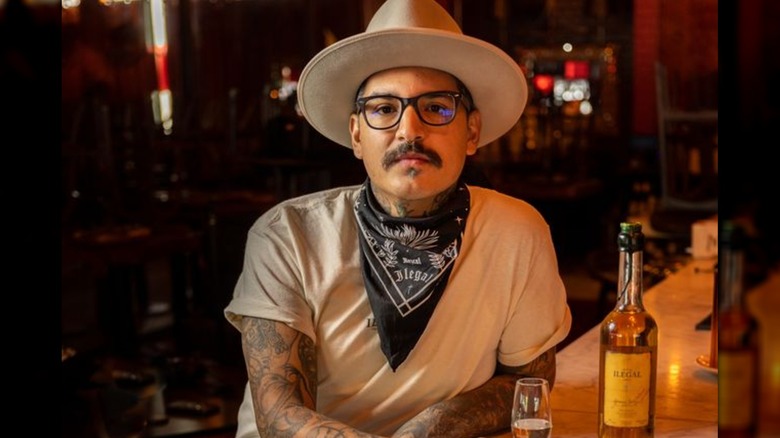
As Ilegal Mezcal has expanded, the brand has continued to produce its products artisanally, with the Hernández brothers finding ways to scale up while maintaining the traditional production techniques without shortcuts, according to Gilbert Marquez. "Even as we grow and demand rises, they continue to prioritize the traditional methods that were passed down from their father," he said.
Marquez, a first-generation Mexican American from Anaheim, California, with a deep knowledge of mezcal, said that the brand's identity has been wholly shaped by Mexican culture and that they continue to work closely with their partners in Mexico. Ilegal is also building community through numerous in-person experiences that often include live music and sometimes even tattooing. "Through these events, we are creating a memorable experience for consumers and educating them on mezcal — and Mexican culture at large," he said.
While Marquez suggests drinking Ilegal Mezcal neat (one traditional method includes accompanying it with an orange slice and worm salt), he also loves it in a spicy margarita. "If it's someone's first time trying mezcal, I usually steer them toward a cocktail they already love, like a margarita or a paloma," he said. "This way, they can get a feel for the spirit without all of the complexity at once." This brand with an unconventional backstory, unique tasting notes, and a rebellious attitude works in a variety of cocktails, from a mezcal Manhattan to an Oaxaca old fashioned.