

Do Vegetables Lose Nutritional Benefits When Cooked?
Though many of us develop an appreciation for vegetables as we grow from finicky children into adults with slightly more sophisticated palates, it's a truth universally acknowledged that most of us pile on the veggies mainly for their nutritional value. Not that simple butternut squash soup and creamy cauliflower mash aren't delicious, but they're arguably less delicious than, say, a bacon cheeseburger or devil's food chocolate cake. With this in mind, it's doubly important that we understand how cooking techniques and preparation methods may affect the nutrient density of our veggies so we can squeeze the most benefits from them as possible.
Near the turn of the 21st century, raw food diets were trendy among nutrition buffs because of rumors that heating plant-based foods destroyed their nutritional value. While this is mostly a myth, the rumor was likely fueled by the fact that water-soluble vitamins, such as vitamin C and vitamin B, can be broken down by heat and leach from veggies during the cooking process. This means that boiled and drained vegetables actually do contain fewer nutrients than those eaten in their raw form.
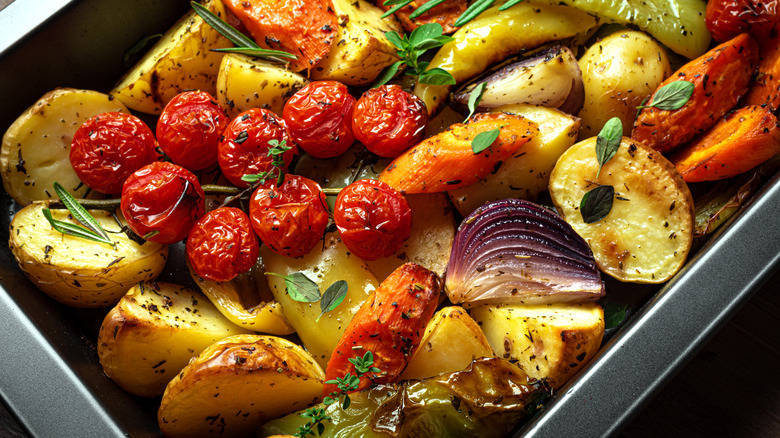
However, fat-soluble vitamins, such as A, D, E, and K, actually become more bio-available via the cooking process, especially if it involves roasting in butter or olive oil. These vitamins are largely unaffected by heat, remaining intact during roasting or boiling and becoming easier to digest when combined with healthy fats. This is great news considering fat is also a flavor-enhancing powerhouse.
Best cooking methods to preserve your veggies' nutrients
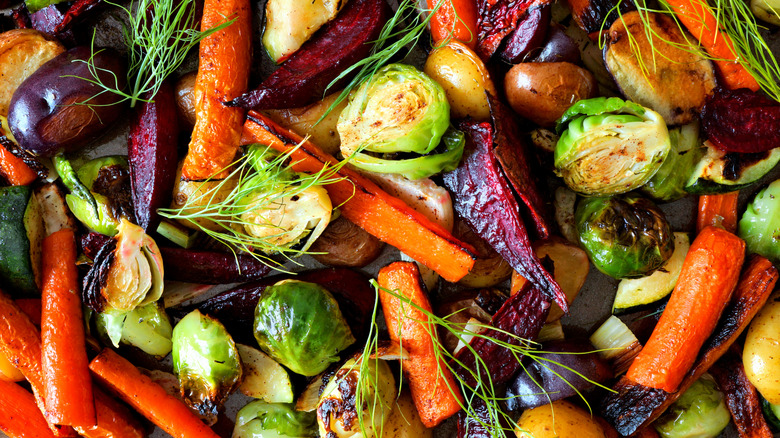
As with your diet in general, the best guideline to follow in terms of cooking your veggies versus eating them raw is variety. Eating a wide variety of foods cooked using different methods not only keeps our meals interesting, but also helps us ingest the widest variety of nutrients. For instance, you might enjoy a rotisserie chicken salad with bacon and raspberry dressing packed with water- and fat-soluble nutrients from raw spinach, roasted corn, blistered mini bell peppers, avocado, and cherry tomatoes (along with a host of delicious protein, fat, and iron from the dressing, chicken, and bacon). Plus, eating a huge variety of foods coated in tangy dressing is delicious.
The only cooking method you may want to avoid is boiling and draining your veggies since the vitamins leached out by heat go into the discarded water and reduce your food's nutritional value. Fortunately, this is also one of the least delicious ways to prepare veggies, so it's not hard to discard. The exception to this is boiled preparations that don't need to be drained, namely stews and soups such as fun and spooky Halloween pumpkin curry soup. In these recipes, the vitamin-rich water becomes the base for flavorful broth or thick sauce, meaning the end result is still very nutrient dense despite the need to boil or simmer the ingredients. The same goes for bisques where the water is blended back into the veggies to create a velvety texture.