

For Stronger, Creamier Coffee Try Making It Hong Kong-Style
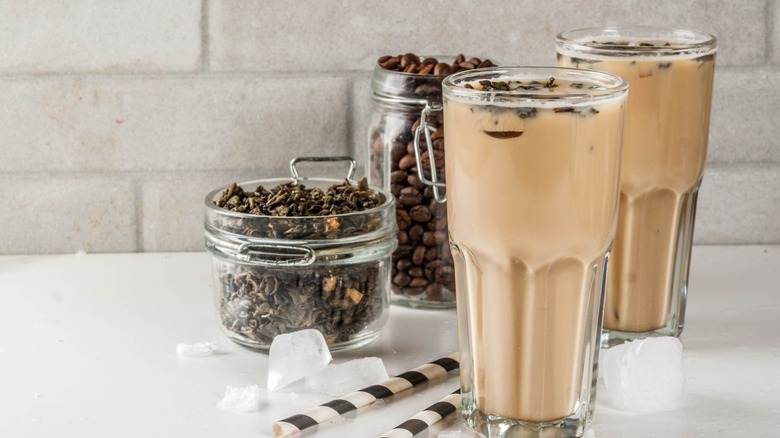
If your regular coffee isn't hitting as much as you hoped, Hong Kong's culinary canon has a solution for you. It's called yuenyeung (or yuanyang in Mandarin), and it mixes coffee and tea, typically blended with evaporated or condensed milk for richness — the term means "happy couple" and combines the symbols for male and female duck, which are traditionally believed to mate for life. The drink is a staple of cha chaan tengs, Hong Kong's classic tea cafés, where it's served hot or iced, and despite its popularity, it's not always listed on official menus.
One half of yuenyeung is usually Hong Kong-style milk tea, made by brewing strong black tea (often Ceylon) and smoothing it with evaporated milk, which makes the tea a bit richer and thicker. The coffee component is typically fairly pungent, using stronger-tasting dark roasts, to ensure the taste isn't drowned out by the tea. A Hong Kong tea café called Lan Fong Yuen claims to have invented yuenyeung in the '50s, although some sources say its origins are unclear and that it emerged organically from the introduction of international coffee culture into Chinese tea traditions. Yuenyeung has since traveled beyond Hong Kong and can now be found in cafés and home kitchens worldwide.
How it tastes and how to make it yourself
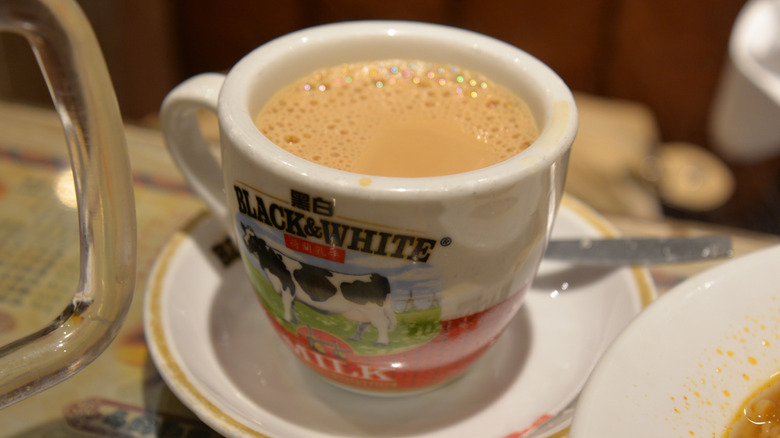
Flavor-wise, yuenyeung is known for a sweet, creamy flavor, thanks to the evaporated milk. It can also get a sugary kick from sweetened condensed milk, though it's not suggested in all recipes. The drink may also be served unsweetened, so you can adjust it to your own taste. Ideally, you should be able to taste both the smooth milky tea and an acidic kick from the coffee.
If you're planning to make it at home, the good news is that it's pretty straightforward. Most recipes recommend making your tea and coffee fairly strong. For the coffee, that can mean opting for an intense dark roast or using more grounds. For tea, resist the temptation to steep the leaves for longer than about five minutes, as this will give you a bitter brew; instead, use more tea leaves to create a bold flavor. There are actually two sets of ratios you need to think about when making this: milk-to-tea and milk tea-to-coffee. For the milk tea, aim for around three parts tea to one part milk; you can even make evaporated milk at home if you don't have a can on hand. The "official" combination of coffee to tea — which has the blessing of a cultural department of Hong Kong's government — mixes three parts of coffee with seven parts milky tea, though ratios vary, and a half-and-half mix is also common. No matter how you make it, the result is a balanced, sweet, and bold drink that's uniquely Hong Kong.