

The First Commercial Instant Coffee Was Invented In 1909 (Hint: It's Not Folgers)
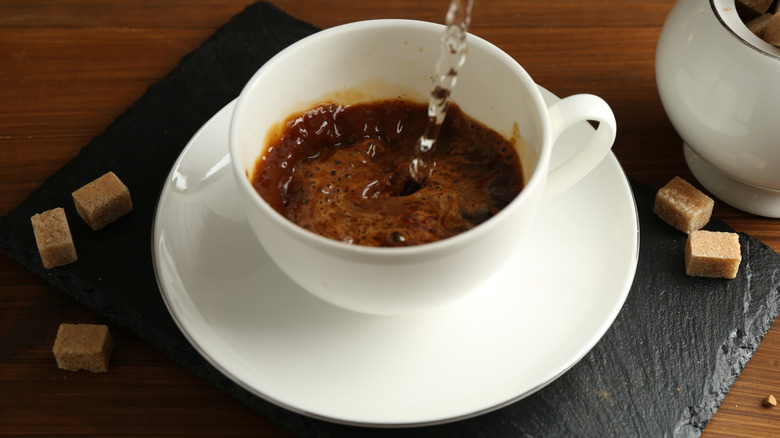
Just the mention of instant coffee might conjure thoughts of red plastic tubs, illustrated mountain sunrises, and enduringly catchy jingles. But despite the persistent association with the product, Folgers didn't release an instant coffee until the 1950s. Even similarly recognizable companies were relatively late to the game, with Nestlé launching Nescafé in the late 1930s and Maxwell House joining in shortly after World War II. By the time these brew brands were part of the world of soluble caffeine, instant coffee had already seen one world war and several decades of grocery store shelves — thanks, in part, to a man named George Washington.
No, not former U.S. President George Washington. This coffee-forward George Washington was born in Belgium and living in Guatemala City when he invented a dried instant coffee powder that began the same way as ground coffee beans — but one that would allow the drinker to simply add hot water to enjoy their cup of joe (no straining or brewing required). It took him about three years to perfect the process of creating dehydrated coffee crystals, and in 1909, the product was patented. Washington then launched the first widely available instant coffee for sale in 1910. Washington initially sold Red E Coffee shortly after patenting, but it wasn't mass-scaled until a year later when he founded the George Washington Coffee Refining Company and rebranded the instant coffee to the same name.
The history of instant coffee
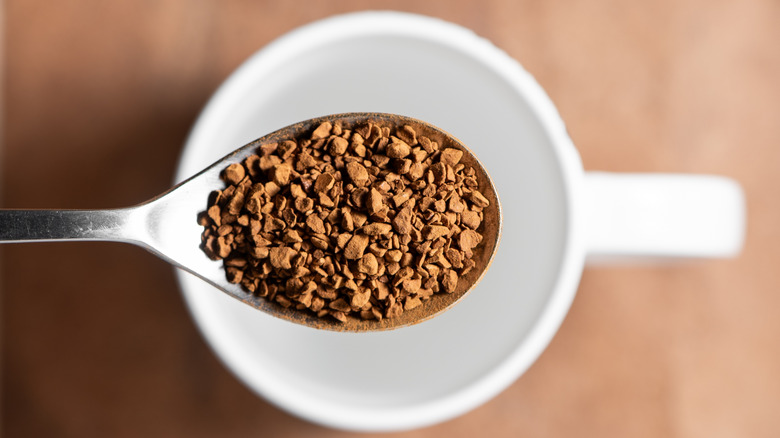
George Washington and his Red E Coffee first found commercial success, but it's worth noting Washington was not the true originator of instant coffee. Two decades earlier, David Strang received a patent for soluble coffee powder in New Zealand, being credited with its actual invention. A few years after Strang, Tokyo chemist Dr. Satori Kato, residing in Chicago, created an instant coffee based on methods he had already used for soluble tea. Kato Coffee Company presented the product at the Pan-American Exposition in 1901. Though Washington's instant coffee concept wasn't brand new, his methods allowed for mass production and turned instant coffee into the lucrative business we see today.
Many coffee companies would join this new market and put its own spin on production in attempt to preserve and improve the beverage's flavor. Nestlé introduced a new manufacturing method in 1938 in which brewed coffee is sprayed into extremely hot air, turning coffee droplets into dried crystals, resulting in its branded version, Nescafé. The company would make changes to the method over the years, improving the resulting flavor, and in the 1960s, Nestlé used a new processing technique — freeze drying — creating an even newer instant coffee. Both spray drying and freeze drying remain the most common ways to manufacture the product.
World Wars launched instant coffee's success
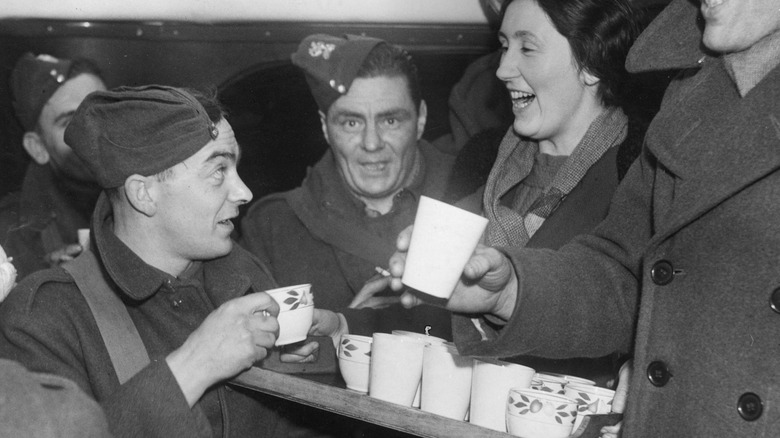
Instant coffee might not have endured, however, without the soldiers of the first World War. Not long after the war began, ¾ ounces of instant coffee, packed in an envelope, was added to each U.S. soldier's rations — and eventually, 42,500 pounds per day were required. Much of that coffee was manufactured by the George Washington Coffee Company, so some soldiers offered silent thanks to Washington as they sat in the trenches and made a "cup of George" over their heaters.
Regardless, the flavor still left much to be desired, and interest waned somewhat when military rations were no longer needed. Instant coffee gained another commercial boost, though, at the outbreak of hostilities in 1939. This time Nescafé was on the front lines of World War II, with the U.S. purchasing more than one million cases of the powder in a single year.
Military preferences may have switched to Nescafé and its flavor-preserving manufacturing process, but the George Washington Coffee Company persisted. Washington stayed at its helm until 1943, and the coffee brand existed (albeit under a new owner) until 1961. Despite the commercial originator's departure, though, instant coffee certainly hasn't disappeared in modernity. There are so many good instant coffee brands to stock up on, and you'll even find soluble solutions for smooth and refreshing iced coffee.