

Why Chicken Wing Prices Stayed Steady Even While The Price Of Eggs Skyrocketed
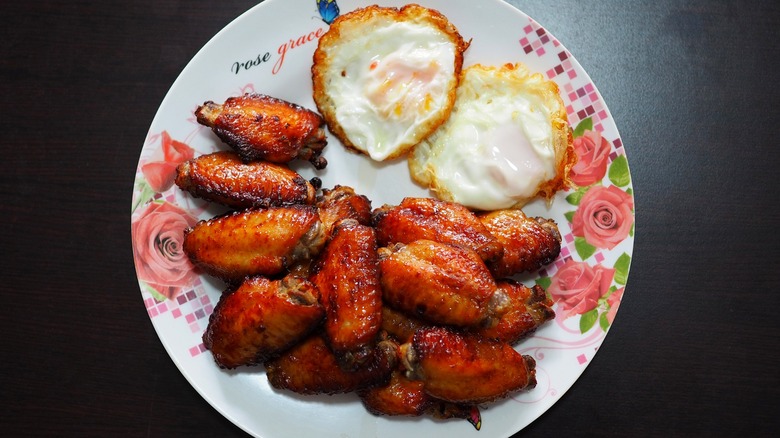
Remember when eggs were pretty much a luxury item? Prices soared to over $8 per dozen in the first quarter of 2025, and were the highest the United States had seen in a decade. According to research by Clarify Capital, 33% of all Americans had to stop buying eggs because of the cost, and would only go back to buying them once they dropped below $5 a dozen. While there are a lot of underrated breakfasts you can have without eggs, the mornings always felt a little emptier without the shelled staple.
If you were a big fan of wings, you probably also noticed something strange at that same time: chicken wing prices stayed relatively stable. Why would one product spike in pricing while another stayed the same, despite coming from the same animal? As restaurant technology platform Toast explained in its October 2025 Menu Price Monitor report, it's because they don't actually come from the same animal — at least, not technically.
Chicken wings come from meatier broiler chickens, which are a different breed from egg-laying hens. While an avian flu outbreak in 2024 decimated the egg-laying population, broiler numbers stayed afloat because of how quickly the breed reaches maturity. A broiler reaches processing age within six to eight weeks, whereas it takes an egg layer around 18 weeks to start producing eggs. This means that broiler chickens were less exposed to the avian flu virus. Since supply stayed steady, so did the prices of our chicken wings. The same, unfortunately, couldn't be said about eggs.
How egg-less breakfasts led to prices crashing back down
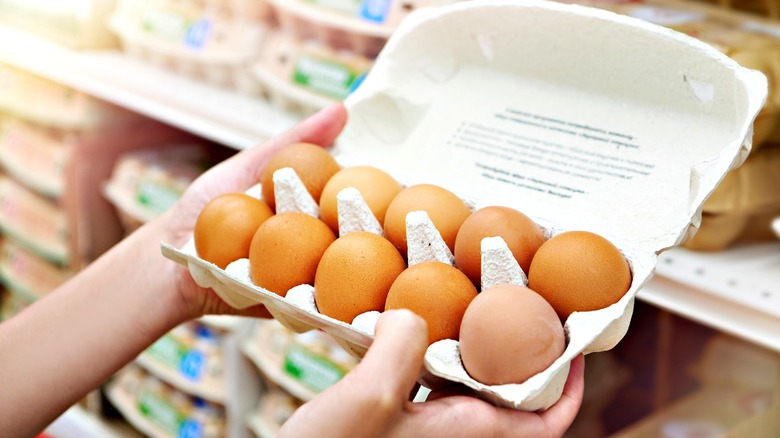
At the peak of the crisis, the price of eggs in the United States was higher than those in Switzerland, the country with the most expensive eggs in the world. As of December 2025, egg prices have cooled off to a much more reasonable $1.45 per dozen. It's still nowhere near the country with the world's cheapest eggs — India, at just 92 cents per dozen — but it's a dramatic improvement from March 2025. This recovery was driven in large part by the fact that a third of Americans simply just stopped buying them.
With more and more people getting by without eggs in the morning, demand plummeted and prices had to adjust accordingly, even if supply remained low. Egg production in the United States is still lower than anticipated, facing a 4.7% drop from 2024. The threat of avian flu isn't completely gone, especially since the outbreak has persisted since its beginnings in 2022. Since it was first detected, more than 168 million birds across the country have been affected by the virus, costing farmers $1.4 billion as of late 2024. Despite this, the massive drop in demand, coupled with the slowly recovering supply, has eggs at their lowest price since late 2023.
If you're one of the millions of Americans who said they'd swear off eggs until they cost less than $5 a dozen, now is probably the best time to buy some and get cooking. You can try to master the perfect scrambled eggs, upgrade your shakshuka breakfast, or make something new altogether, such as the Philippines' tortang talong, widely considered to be one of the best egg dishes in the world.