

The Simple Way To Tell If Your Red Wine Has Gone Bad
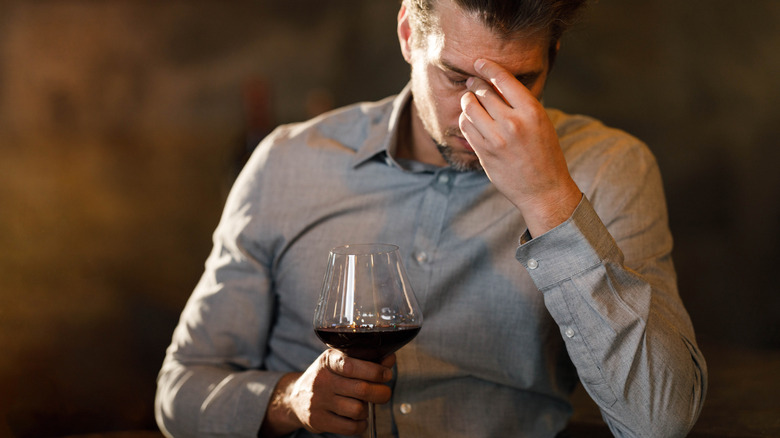
When the week is finally over, what better way to celebrate than treating yourself to a glass of delightfully spicy, earthy Montepulciano or that rich, complex bottle of Shiraz you just bought? So you uncork it, swirl the wine in your glass as you give it time to breathe in order to unlock its full aromatic and flavor profile, only to realize it's missing that beautiful red color you were hoping for.
The color of red wine could vary depending on factors such as vintage, age, winemaking techniques, or the region of origin (even when it's the same variety). So technically, you should avoid ordering wine by the color. However, if your wine appears orange-brown instead of red, it may be a clear sign that it has gone bad. This can be surprising, especially since many believe older wine is always better, but that's largely just a myth in many cases. Regular red wines are often best enjoyed within three to five years. In contrast, wines that do well with long aging are different and are much more acidic, have higher tannins, and boast a higher sugar and alcohol content.
Now, back to our standard red wines – they do have something of an expiration date. But wine can also spoil long before its recommended shelf life despite being sealed, and the reasons include oxidation and contamination, as well as poor bottling and storage. Therefore, the easiest way to tell if your wine has gone bad is to use all of your senses and check for signs of spoilage.
How does spoiled wine look in the glass?
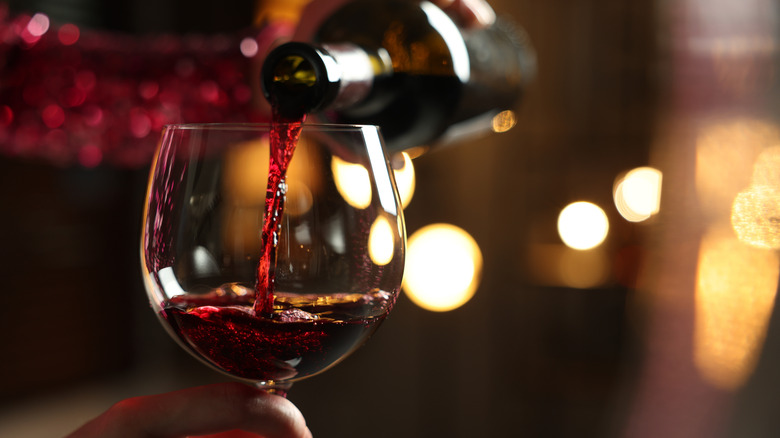
Even though the point of aerating wine is to let it release its full bouquet, exposure to oxygen prior to opening the bottle usually means that the wine has already started to deteriorate. An oxidized wine will typically lose its flavor and brightness. It may also develop a vinegar-like smell with hints of caramelized apple, a change which is mostly caused by acetic acid bacteria (AAB) like Acetobacter and Gluconobacter.
At the same time, contaminants such as fungi that grow in cork or wooden materials can also react with the wine and therefore produce compound called TCA (2,4,6-trichloroanisole). This chemical substance is responsible for cork taint, an organoleptic defect which gives the wine musty aromas that are often described as mold, a damp cellar, or wet cardboard.
A dry cork is also a good indicator that the wine has been exposed to air. In most cases, oxidation occurs because the bottle was not sealed or stored properly, although it can even happen during fermentation or aging. Another problem that can occur during winemaking or bottling is bacterial contamination, which is triggered not only by AAB, but also by lactic acid bacteria (LAB) such as Lactobacillus, Oenococcus oeni, and Pediococcus. Finally, if the yeast remains active at bottling and the wine has a good amount of residual sugar, it can trigger a process known as secondary fermentation. While not inherently bad, secondary fermentation can ruin a red wine when uncontrolled. It can ultimately lead to unwanted carbonation and make the wine taste sharp and yeasty.