

Home Chefs Should Never Skip This Important Weekly Kitchen Cleaning Step. (It Could Save You A Visit From The Plumber)
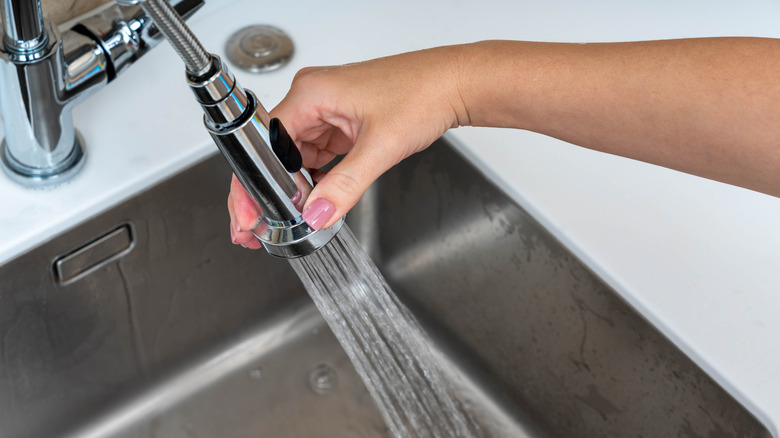
Cleaning the kitchen can be a total nightmare for any home cook, especially when you're facing a neverending pile of dirty dishes after a big meal. Once the dishes are finally done — and you even use flour, the totally unexpected way to polish your sink — it feels like enough cleaning for a whole lifetime. However, there's another simple, effortless, yet overlooked step people often forget that can prevent clogged pipes and expensive plumbing bills in the long run: pouring hot water through the sink.
Jim Parker, owner of Jim's Plumbing Now, a Texas-based plumbing service, revealed in an exclusive conversation that performing a weekly hot water flush in the kitchen sink is essential for keeping the pipes clean and in good working order. "Running hot water down the drain can move grease and soap before it hardens," Parker pointed out. "Most kitchen clogs start with grease that cooled in the pipe and caught food and gunk." However, he emphasized that even though hot water can help reduce odors and funky smells caused by grease and food particles (and sometimes dissolve them as a result of the heat), it doesn't magically clean pipes that already have buildup.
Tyler Pittenger, drain and sewer specialist at Service Force Plumbing, a family-owned plumbing company located in Maryland, supported Parker's advice and noted that it's a smart approach. "Whenever I clear a backed-up sink, I always tell the customer that 'water is your best friend' when it comes to keeping your pipes flowing freely," Pittenger told Chowhound.
Hot water does a great job -- but cold water is also effective
A hot water rinse is among the best hacks for clearing a clogged kitchen sink drain. But, even though the water you pour down the sink should be hot, exceeding 175 degrees Fahrenheit is not recommended because it can damage pipes and worsen the situation. When asked whether the water needs to be boiling hot to be effective, Jim Parker explained that while temperature matters, many people take it too far. "Regular hot tap water is all you need," he stated, and pointed out that boiling water can, in fact, soften the pipes and loosen the fittings over time. "You don't want to pour boiling water down the drain, especially if you've got PVC pipes, which most homes do."
Tyler Pittenger said that temperature matters less than the amount and pressure of water used to clean the sink. "The temperature of the water probably won't even have time to make a difference before the sinkful of water has been emptied," Pittenger continued. He then strongly advised against pouring boiling water down the sink. "PVC and other plastic pipe has a rating (at best) of 140 degrees Fahrenheit, so regular exposure can damage those pipes and also potentially weaken the glue that holds the joints together," he elaborated. Although steel pipes can handle heat better, older or weakened pipes are more vulnerable since boiling water can raise the risk of leaks or failure. At the same time, higher water temperatures speed up oxidation, which promotes corrosion.
Hot water and dish soap make a great cleaning combo
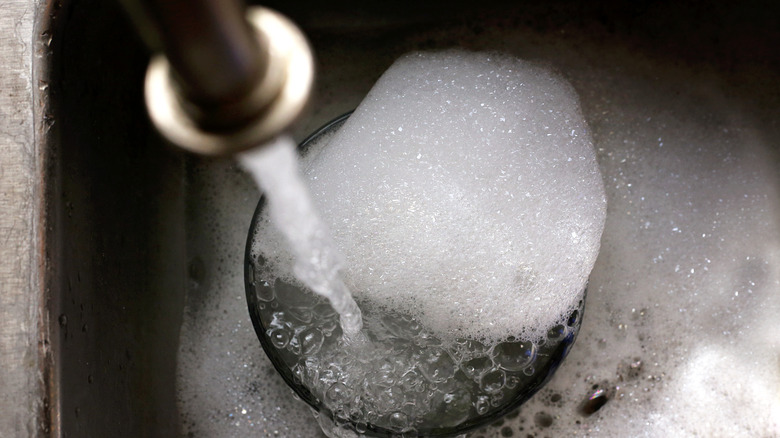
The science-backed way to make those dirty dishes a breeze to clean is to soak them in warm, soapy water. But few people are aware that this same pair can work wonders for the sink. Jim Parker said that adding some dish soap to the hot water doesn't hurt. "If you want to help things along, dish soap with the hot water can be more helpful than vinegar or baking soda," Parker revealed. "It breaks down grease instead of just fizzing."
Tyler Pittenger highlighted that plain water is all you need. "It's the volume and force of the wave, so to speak, that make the big impact," he said. "When you fill your sink with water then release it, it maximizes the force." He explained that 1 gallon of water weighs about 8 pounds. So, if you fill the sink with 5 gallons of water and pull the stopper, you have more than 40 pounds of water rushing through a small, 2-inch drain. "That's what creates force and velocity," he continued.
Both Parker and Pittenger agreed that harsh chemicals have no place in drain cleaning. "You don't want any residual chemicals [like Drano] sitting in your pipes waiting for the next flush," Pittenger said. Apart from corroding the pipes, chemical cleaners can also release toxic gases and even cause a fire. "If you can, be careful about what goes down the sink in the first place, that's best," Parker concluded. "If something starts draining slowly, don't ignore it."