

The Simple Sauce-Making Rule That Balances Flavor Without A Recipe In Sight
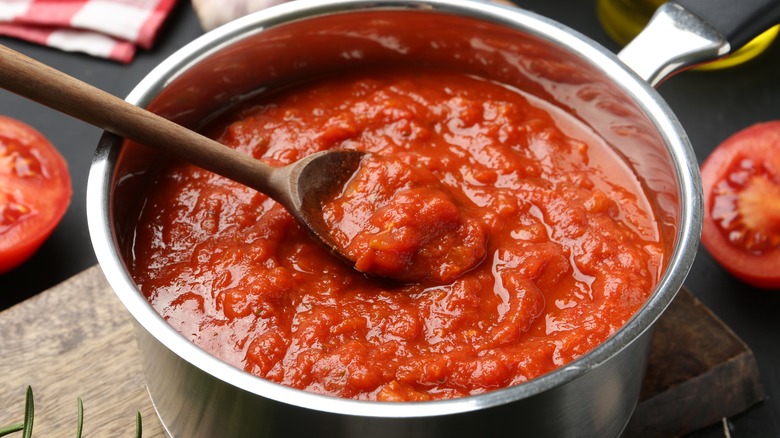
Most sauces don't fail because the ingredients are wrong per se, they fail because something is missing. A sauce can look fine, smell fine, and still feel weirdly hollow and "unfinished" once it hits your mouth — and that's your clue. Nearly every sauce that works well has some version of salt, fat, acid, and sweetness going on even if it doesn't feel intentional or exaggerated, and if you miss one, then the whole thing will feel a bit off. But if you follow this simple rule of adding salt, fat, acid, and sweetness, you will be making perfect homemade sauces every single time, whether you're trying to whip up a well-balanced hot sauce from scratch or throwing together a quick dressing because your meal needs some moisture.
This rule works because it adds balance to your sauce. For example, acid without sweetness can taste too tangy, and salt without acid or a sweetener just sits there being far too saline and heavy. And once you've learnt this, fixing a sauce that's gone too far in one direction becomes less of a panic and more about your own instinct... added too much salt? Just balance it out with acid or a sweetener. It's a rule that encourages creativity and confidence in the kitchen — add a squeeze, a drizzle, a pinch then taste again and repeat if needed.
How to apply this rule to your sauces

Fat is usually the part people under-think; it's a crucial element that stops a sauce from tasting harsh, but it doesn't have to come from oil alone. Nut and seed pastes do a lot of quiet work here, which is why a great fat source is tahini, a creamy condiment that works fantastically in salad dressing. It smooths things out without announcing itself too loudly and gives acidity from vinegar or lemon juice somewhere to land. Salt also shows up in more places than you may realise: soy sauce, anchovies, cheese, and olives all add salinity to your sauce while also giving it depth, and thinking this way makes it easier to avoid over-salting. Acid comes from places like vinegar, citrus, and wine which brighten things up, but they also need something to balance them out, which is where sweetness comes in: just a small spoon of honey, maple syrup, or sugar will do.
The next trick is to make the method even easier. Every element does not need its own ingredient; i.e., you don't need a separate source of salt, fat, acid, and sweetness every time. Plenty of things already do more than one job, so it makes sense to get creative and use one ingredient for two, like adding pickle juice to a salad dressing which will bring both salt and acid. It's not just clever for the sake of it — it works. Mustard also brings both salt and acid, and capers can pull a similar double duty when blended into a sauce or dressing. Once sauces are built this way, recipes stop being as necessary because you'll have learned to taste and adjust yourself.