

Cloudy-Looking Stainless Steel Pots And Pans? Here's Why It Happens And How To Fix It
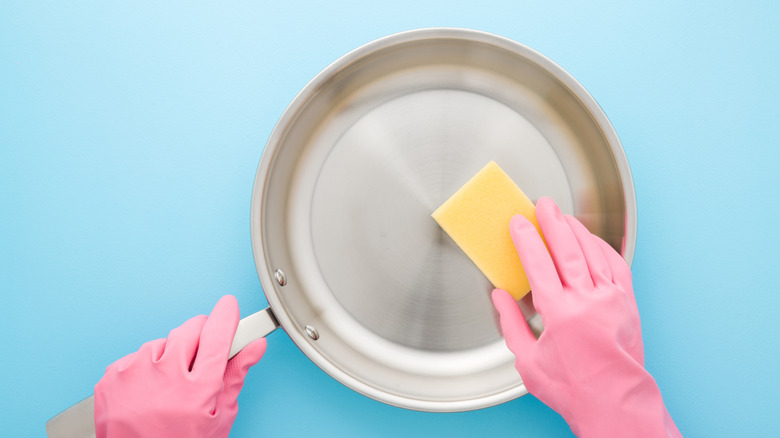
Stainless steel pots and pans are the workhorses of any kitchen, both commercial and at home. They're durable, versatile, can provide nonstick results, and won't react with acidic foods the way carbon steel and aluminum do. Best of all, they work on any kind of burner, from gas to electric and even induction, so they come in clutch no matter where you cook. They aren't entirely infallible, however, and over time they can develop a cloudy, spotty appearance. If this happens to your pricey pans, there's no need to panic and throw away a perfectly good vessel. This is simply a buildup of calcium from the hard water you use to cook and clean. When hard water is exposed to heat (whether by just boiling water in the pot or washing it in a dishwasher), it leaves calcium deposits, also known as limescale, on the steel. Thankfully there's a quick fix, and you probably already have it in your cabinets: distilled white vinegar.
The trick to removing the white deposits is simple. Fill the pot enough to cover the affected area with a diluted mixture of white vinegar and warm water. A solution of 1 part vinegar to 3 parts water will work well. Boil the liquid in the pan, then let it sit for a few minutes off-heat till it cools down. Finally, dump the solution and wipe the pan with a soft cloth to see how it turned out (skip the paper towels, which can cause scratches). The mild acidity of the vinegar will react with the calcium deposit and break it down so that it washes away. If the clouds are still there after the first try, repeat the process and wait a little longer before dumping the water and vinegar out.
Preventing cloudy stainless steel
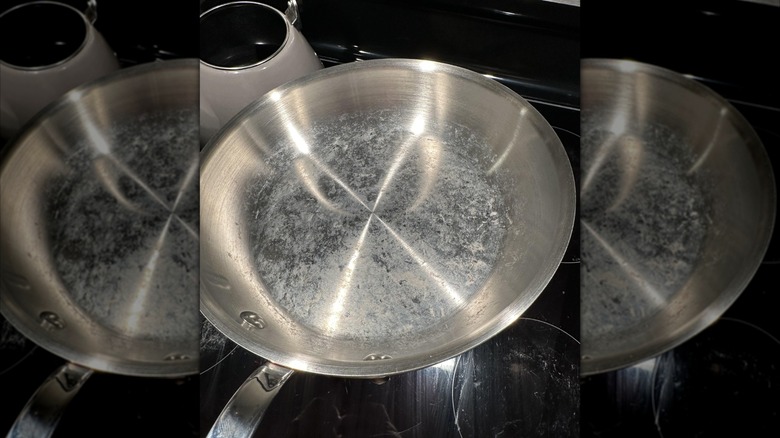
Of course, the easiest way to fix cloudy stainless steel is to avoid it in the first place. There are a few good habits to keep your steel pots and pans looking their best. The first step is to always dry your cookware immediately after washing. This prevents the minerals in hard water from settling onto the surface. Also, stainless steel is much more durable than most metals, but it's not indestructible. If you're a fastidious scrubber, less is actually more in this case. Try to avoid using harsh cleansers and abrasive tools like steel wool. These methods can create micro scratches that can make the pans look dull. Even worse, these micro abrasions can encourage pitting, which is when the protective layer of chromium oxide starts to break down, then leaves the steel underneath exposed and vulnerable to rust. If you do happen to have a scratch, however, there are foolproof ways to remove them from your stainless steel.
Stick to using gentle dish soap, warm water, and a soft sponge for cleaning stainless steel, and keep a bottle of vinegar handy under the sink for the occasional refresh. When cooking, try to wash your pans as soon as you can so that any residue from water used during the process doesn't have a chance to set in. Be mindful, but practice a little restraint, and your stainless steel cookware will look as good as new for decades to come.