

A Sneaky Reason Your Tomatoes Aren't Thriving And How To Fix It
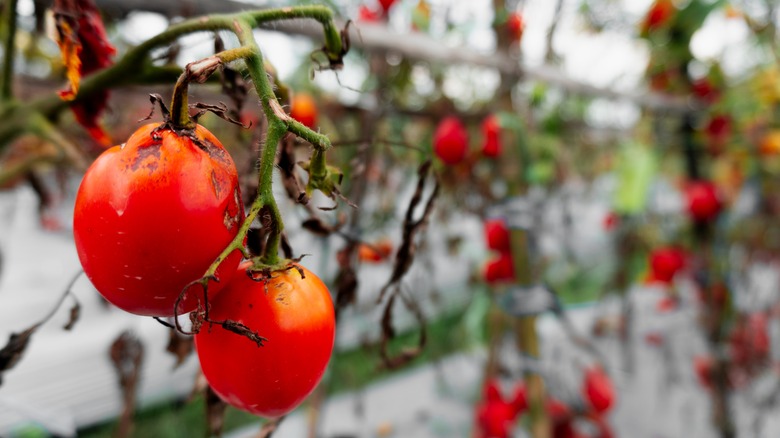
If you're new to gardening, chances are tomatoes will be among the first crops you'll decide to plant. But even cherry tomatoes, a common first choice and one of the easiest tomato varieties for beginners to grow, can be surprisingly sensitive. Hence, if your plant isn't thriving as expected, it may help to understand how tomato types differ, and whether they're determinate or indeterminate. While determinate tomatoes, also known as bush varieties, remain compact and produce their fruit typically within a few weeks, indeterminate ones grow taller and continue producing throughout the entire season.
Maksim Kazakou, resident botany expert at Plantum, an app that helps users identify plants and improve plant care, revealed in an exclusive conversation with Chowhound that one of the biggest mistakes gardeners make is treating determinate and indeterminate tomatoes the same, especially when it comes to pruning. "Determinate and indeterminate tomatoes require different growing techniques," Kazakou told Chowhound, and added that sucker removal is crucial for indeterminate cultivars to improve their airflow and increase fruit size. "In contrast, determinate cultivars need suckers to produce higher yields," he continued.
Kazakou emphasized that removing all the suckers from a determinate tomato plant leaves only a few fruit clusters on the main stem and reduces the plant's yield. "However, if you don't remove suckers of an indeterminate tomato, the shrub will become dense, which will result in smaller, unripe fruits and a higher risk of disease," Kazakou elaborated. He added that indeterminate cultivars need greenhouses that are taller since they keep growing upward throughout the season, and they also need strong support. "In low greenhouses, indeterminate plants won't have enough space for growth," he said.
The clear signs your tomato plants are receiving the wrong care
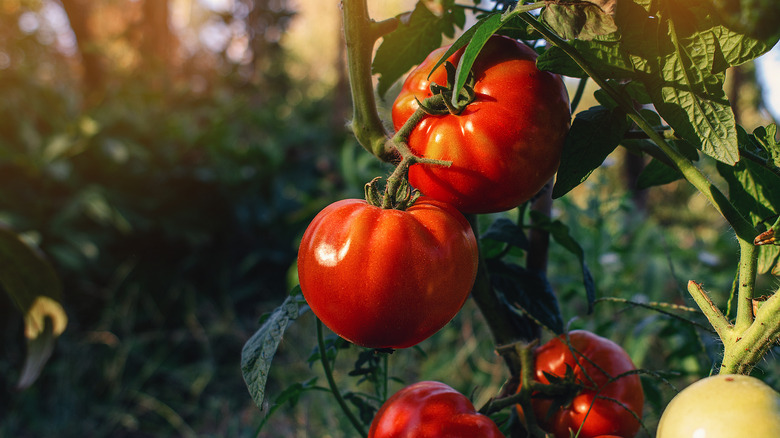
According to Maksim Kazakou, the most obvious symptoms your tomato plants aren't getting proper care are ovary drop, blossom end rot, leaf chlorosis or necrosis, leaf deformation, as well as fruit cracking and yellow shoulders. However, these signs aren't directly linked to the tomato type, as both determinate and indeterminate plants share nearly identical physiological needs. Instead, they are simply signs that you're going wrong somewhere in caring for your plants. "Low yields, on the other hand, can be caused by applying indeterminate pruning techniques to determinate varieties," Kazakou pointed out.
Meanwhile, Kazakou also pointed out that improper watering, incorrect fertilization, and poor temperature conditions (as tomatoes thrive when daily temperatures reach between 65 and 70 degrees Fahrenheit) are among the most common reasons home gardeners' tomato plants underperform, even when they follow all the right steps in practice. "Greenhouses are often too hot," Kazakou continued. "Inexperienced gardeners also tend to add too much nitrogen fertilizer, which promotes lush foliage at the cost of fruit production."
An excessive amount of fertilizer can not only harm your tomato plants' health, but it can also cause their leaves to turn pale and yellow. In addition, it can disrupt beneficial soil bacteria and create nutrient imbalances that hinder the plant's water and nutrient absorption. So instead of relying solely on fertilizers, gardeners hoping to grow the sweetest, juiciest home-grown tomatoes might be surprised to learn that baking soda is the ultimate pantry staple that can help improve your tomatoes' flavor when used correctly.
What to do if you realize you've made a mistake too late?
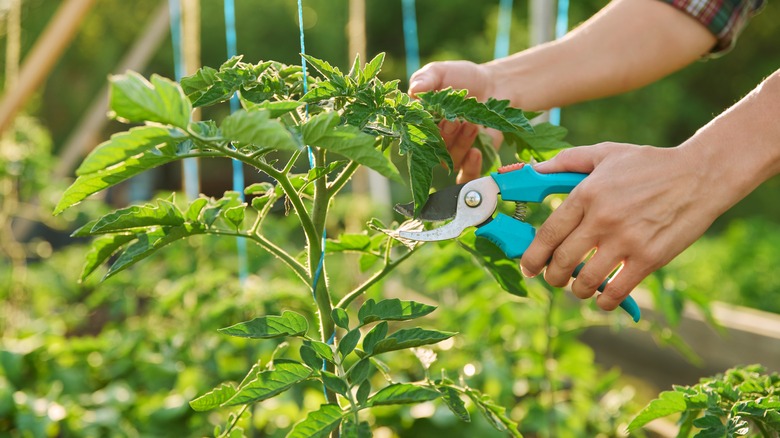
Pruning wet tomato plants is a common tomato mistake that can ruin your harvest. Over-pruning, along with failing to clean pruning tools between cuts, is also a wrong move, as it increases the risk of spreading common fungal and bacterial diseases. But when asked what adjustments to make after realizing midseason that a mistake has been made and how to help the tomato plants recover, Maksim Kazakou noted that the first step is to stop panicking and assess what went wrong. "It's important to identify the problem as soon as possible and correct it," he revealed. "The goal of growing tomatoes is to get a good harvest, so it's easier to fix mistakes with indeterminate cultivars because they produce fruit throughout the whole season."
At the same time, because determinate tomatoes have a short fruiting period after which they reach the end of their life cycle, you might not always have enough time to fix the mistake with them. "For example, if determinate plants suffered from a lack of moisture and calcium, leading to blossom end rot, they might lose nearly all their fruit," Kazakou elaborated. He also explained that things are quite different when it comes to indeterminate varieties, because they keep growing and producing new fruit over a longer period. This, in turn, gives them more time to recover. "Indeterminate ones, however, will continue forming new fruits," Kazakou concluded. "If the problem is corrected, they'll develop without rot."