

This Umami Ingredient Makes Pot Roast Taste Like A Million Bucks
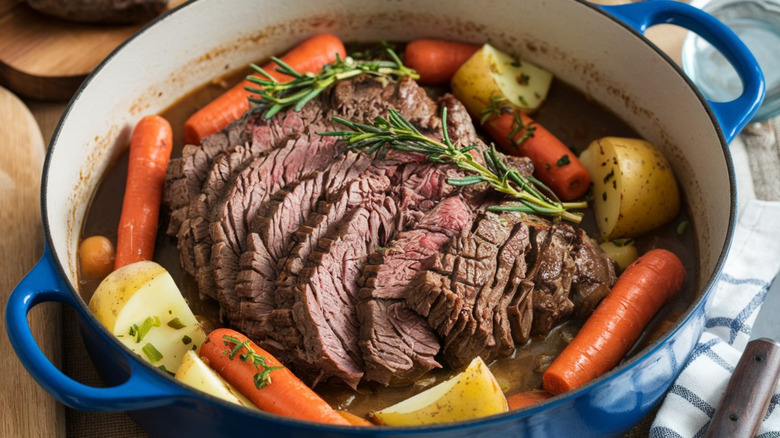
At one point or another, we've all enjoyed a classic pot roast, especially during the cooler months. While it's true that this hearty meat and vegetables dinner is delicious and reliable, its flavors may have begun to feel predictable. In order to make this trustworthy meal more exciting, all you'll need is the umami flavor of soy sauce.
A standard pot roast includes basic ingredients like beef, carrots, potatoes, savory broth, and, in some cases, red wine. These elements are combined and cooked at a low temperature for an extended period of time (depending on size and type of meat), commonly in a slow cooker. When it comes to the primary protein component, many go for chuck or brisket, though beef shoulder also works great. Meanwhile, for the vegetarians in your life, you can easily make a meatless version: just try jackfruit or mushrooms.
Soy sauce wonderfully complements the flavors in a pot roast, as its fermented, salty qualities enhance the beefy, earthy taste with its umami flavor. When considering how to incorporate it, try making a soy sauce marinade, allowing your meat to soak for eight to 24 hours before adding it to the slow cooker. This will help with the transference of the umami flavor and result in an even more delicious and tender final product.
When preparing the final liquids for your pot roast, you can also simply add some soy sauce to the broth. This way it will infuse into both the beef and vegetables, creating a balanced and well-seasoned dish. For those who simply don't have the time for a low and slow meal, try this faster way to make a pot roast by skipping the slow cooker: use an Instant Pot instead.
Lean into Asian-inspired flavors

If you're enthused by the prospect of adding soy sauce to your pot roast, you don't have to stop there. Your variation of this dish could feature a slew of other Asian-inspired flavors, too, which will really kick your dinner up a few notches. Other compatible ingredients from Asian cuisine include garlic, ginger, sesame oil, mirin, scallions, and cilantro.
Daikon is another versatile vegetable you could incorporate to add some variety. This radish is common in Japanese cuisine, but used all over Southeast Asia as well. This ingredient has a vague bite of pepper and even more depth when cooked, as it takes on an additional sweetness. Instead of red wine, you could incorporate sake, a variety of rice wine that will nod to the other flavors in your dish more seamlessly. Before you start grabbing any old rice wine, you'll want to remember that soju isn't a worthy swap for sake in recipes; mirin or shochu are better options.
If you're still looking to make this dish stand out, you could serve your Asian-inspired pot roast with rice or use udon noodles to create a nice textural variety. Just make sure you wait to add your rice or noodles until the end, or else they'll cook down with the other ingredients and quickly become too soft and inedible. For even more excitement, you may decide to incorporate one of these 12 traditional sauces you can find in Japan, though it all starts with soy sauce.