

Why It's Never A Good Idea To Freeze Raw Sweet Potatoes
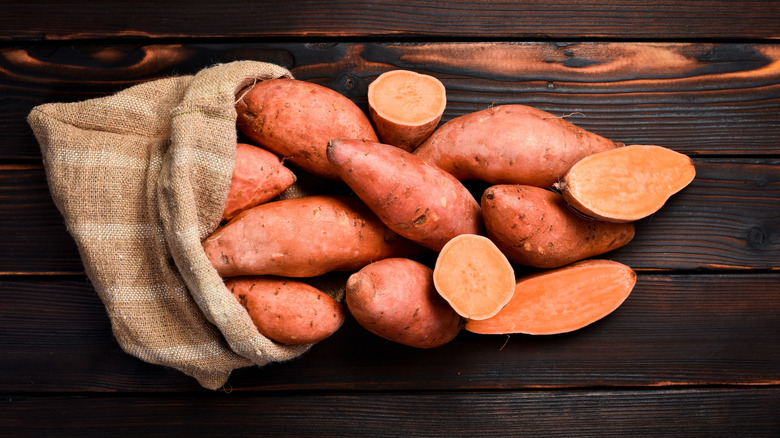
When it comes to cold weather comfort foods, sweet potatoes check all the boxes. They're sweet enough to be the main ingredient in a sweet potato pie elevated with luxe spices, but not so sugary that you can't reinvent your favorite shepherd's pie recipe with a sweet potato crust. Crisp sweet potato fries are incredibly delicious dipped in garlic aioli or honey mustard, and there's possibly nothing more filling and satisfying than a baked sweet potato draped in tangy, spicy chili, like white chicken chili with pickled jalapeños.
Sweet potatoes, like most root vegetables, are also a good winter-hardy crop to grow in your garden. Aside from their versatility, they're also loaded with potassium, vitamin A, and other nutrients that boost the immune system during cold and flu season. The only dilemma is how to store them. Freezing them is an automatic no-go, as it actually accelerates spoilage in sweet potatoes. This happens because the process of freezing causes ice crystals to form and break down the sweet potatoes' cells, bursting the cell walls and allowing rot to run rampant.
Additionally, ruptured cell walls also ruin a sweet potato's texture once it's thawed. Even if it's at peak freshness when you toss it in the freezer, it'll thaw into a pocket full of mushy, watery, mealy flesh that's unsuitable for anything but the compost pile. The fridge is also out of the question, as raw refrigerated sweet potatoes tend to harden and develop a bad taste before slowly succumbing to the same issues they'd face in the freezer.
How to store sweet potatoes (raw and cooked)
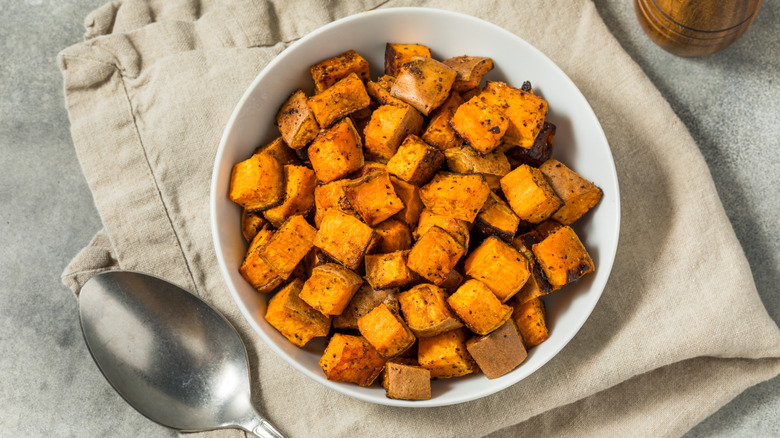
Whether storing sweet potatoes from the grocery store or freshly harvested from your garden, they'll stay fresh longest in a cool, dry environment. Root cellars and cold storage greenhouses are best, as they'll keep your sweet potatoes fresh for up to a month. However, a cool shelf in the back of your pantry or a cleverly situated produce drawer with a ventilated front will also protect their freshness for several weeks.
Try not to pile them on top of each other, as air circulation is crucial to preventing mold growth and other signs of spoilage. If you have enough space, set them in rows spaced several inches apart. If not, check on them regularly and make sure to use them in the order you purchased or harvested them. Storing them in a mesh or wicker basket rather than a bowl will also help preserve freshness, as it will prevent moisture buildup that can cause the whole batch to spoil.
If you're struggling to use your sweet potatoes fast enough, you can freeze them provided they're cooked first. Peel, steam, and mash them to make a sweet potato puree, then freeze it either in flattened freezer bags or ice cube trays. You can then grab what you need from the freezer to make autumn harvest smoothies, sweet potato pancakes, cookies, or bisque. This is also a great way to stock up on sweet potatoes for making winter holiday favorites like sweet potato casserole.