

How To Cook Your Dry-Aged Steak For A Steakhouse-Quality Dinner
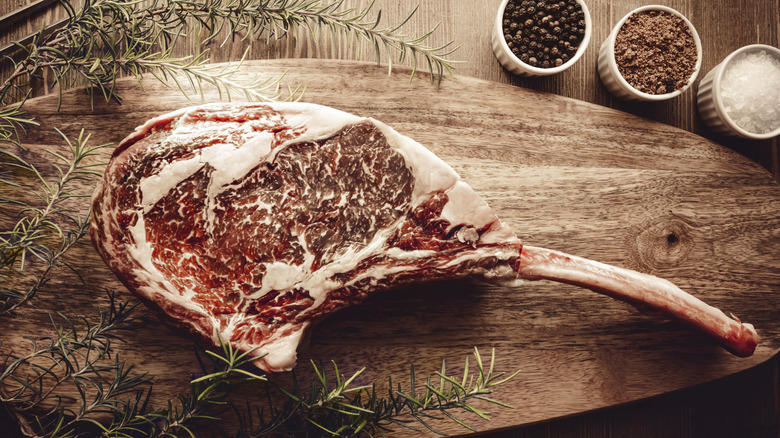
Although they could, perhaps, pass for one another in the blink of an eye, dry-aged steaks are quite a bit different than their conventional kin. First, steak is left to mature in a carefully calibrated environment. Then, whether it's a porterhouse or a T-bone, or even a considerably daintier cut, weeks (or even months) of aging cause moisture to escape the meat, which creates both a richer color and flavor, the latter of which many ultimately describe as funky. But, before the final result reaches your palate, you need to cook the steak. And for a steakhouse-quality finish, you'll do this just a little bit differently than from what you might be used to.
The moisture loss that takes place in the flavor development phase makes dry-aged steaks cook faster than their everyday counterparts. The good news is you can still use the preparation method of your choice; you'll just want to start checking its temperature with a meat thermometer earlier than usual. If you're used to perfectly searing your steak in a screaming hot pan for about four minutes on each side (depending on size, of course), for instance, then you should begin probing a dry-aged steak for doneness after only two minutes on each side. As usual, the ideal temperature for rare, medium, and (inadvisably) well-done steaks is around 120, 135, and 155 degrees Fahrenheit respectively.
More dry-aged steak cooking tips for restaurant-quality results

What makes one steakhouse great may vary from the next, even at the highest echelon, but they're always starting with quality cuts, so prepare to spend a bit more for that restaurant-worthy steak. They also likely have access to hotter heat than you do at home thanks to commercial-grade equipment, so unless you're willing to install an industrial range, just get your pan as sizzling hot as you can to create a nice, crisp sear. A lot of typical steak preparations call for salt, pepper, an allium like garlic, and an aromatic like rosemary — and still consider that a minimalist approach. But you've probably sought a dry-aged steak to taste the concentrated notes you wouldn't otherwise get from sirloin. So you should really minimize those flavor enhancers. Skip the herbs and cloves just this once and hit your steak with simply a whisper of those most essential seasonings, instead. Keep your fat unobtrusive with a neutral, high smoke point oil, too.
You'll want to eschew the traditional accoutrements once the steak hits your plate as well, at least until you've had your first few bites. The dry-aging process itself should be doing a lot of the work in the flavor department here, rather than some cheaper, easier varieties that could use a bit of dressing up with blue cheese, béarnaise, or a simple, homemade steak sauce. Of course, after you've gotten a sense of the beef's true essence, anything goes, steakhouse etiquette be damned. As long as you promise not to blast it to well done.