

Sam's Club Sells This Fresh Fish For Half The Price Of Costco
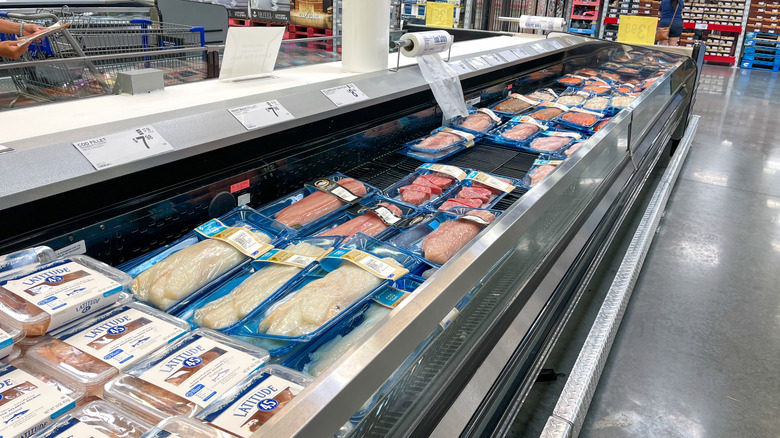
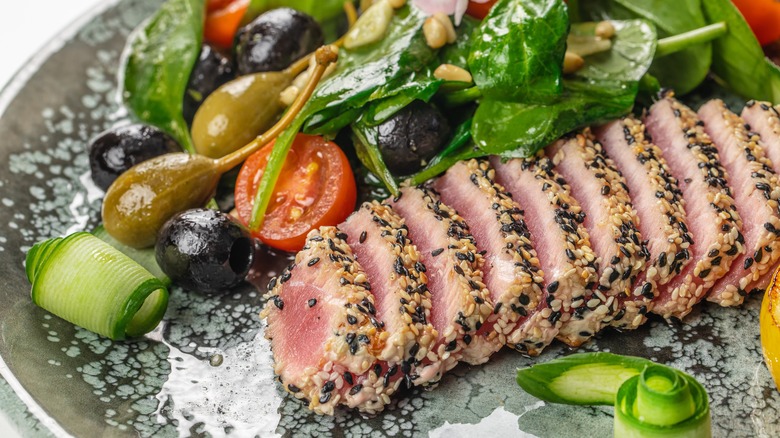
Whether you like it rare or fully cooked, on its own or on top of a crunchy salad, ahi tuna (also known as yellowfin tuna) is fantastic — but it's usually pretty pricey. The upscale fish is perfect for bougie Gordon Ramsay-style tuna salad, seared tuna tacos, or on its own. If you're a Costco shopper and fan of ahi tuna, you've likely noticed that fresh tuna steaks aren't exactly cheap. If you've got a Sam's Club nearby, however, you're in luck. It seems that the two big-box stores offer the same (or at least very similar) tuna steaks, but you can score them at Sam's Club for nearly half the price.
Packages are available in varying sizes, so the total cost will vary at both retailers depending on how much tuna you purchase. That being said, there's a serious difference in per-pound cost. At Costco, you can expect to pay about $19 per pound, while Sam's Club sells ahi tuna for about $9 per pound. The nearly half-price ahi tuna at Sam's sounds almost too good to be true, so we dove deep to find out what differences — if any — there are between the two products.
Are the ahi tuna fillets at Sam's Club and Costco the same?
Great news, ahi tuna fans with a Sam's Club nearby — it appears that the two products are nearly identical in every way, except price. Both are wild caught (as most ahi tuna is — the species is notoriously difficult to farm). It's possible that the Costco version is a higher grade of tuna than the Sam's Club version. It's also possible that Costco's tuna supplier uses pricier fishing practices than Sam's Club, but this seems unlikely, as the Sam's Club ahi tuna package indicates that it meets sustainable sourcing standards.
Regardless of whether you choose to get your tuna at Sam's Club, Costco, or a fishmonger at a local seafood shop (they'll even debone your fish for you, if necessary), there are a few things you'll want to look out for when you're picking out ahi tuna steaks. If you see sushi-grade tuna, scoop it up. While "sushi grade" isn't a term that's regulated by the FDA, it generally indicates high-quality fish. Ahi tuna graded as #1, #2, or #2++ are also high-end options.
In addition to grading, visual cues can help you pick out a great tuna steak. Look for bright pink fish, and stay away from anything that looks dry. Finally, you shouldn't notice a strong scent. If your tuna smells like the ocean, you're good to go. If you notice anything overpowering, you're better off asking someone at the seafood counter for fresher options.