

Why You Probably Shouldn't Use Wire Shelving In Your Kitchen
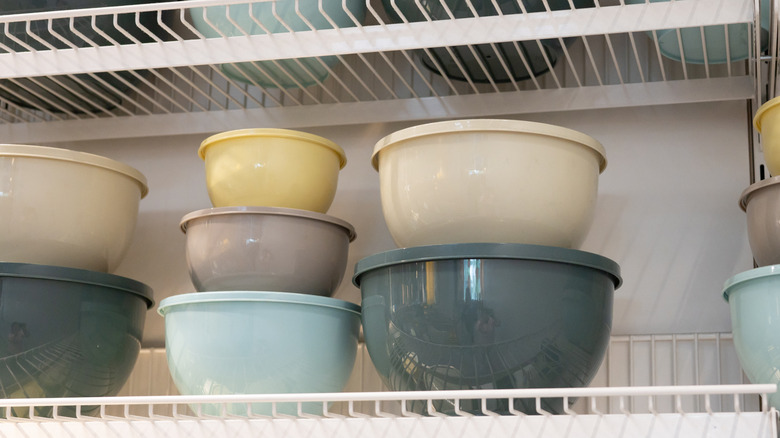
An organized kitchen isn't just clean and tidy — it's also efficient, safe, and overall easy to enjoy. That's why projects like decluttering your pantry with uniform storage containers are so satisfying. Not only does reorganizing make everything look cleaner, but it also makes it much easier to find the ingredients you need and replenish your favorite snacks. The same idea goes for the type of shelving you use throughout your kitchen. The right shelves create a feeling of serene organization, while the wrong kind can make it harder to keep things neat.
That's why lots of homeowners are ditching wire shelving. Sure, it's cheap, easy to install, and allows for better airflow that helps keep packaged food fresher. However, it's also unforgivably utilitarian, can become bent and misshapen over time, and is extremely difficult to keep clean. Once the individual wires on these shelves become covered in dust and grime, the only way to clean them is to run over each one with a cloth — and no one has the time to spare for that.
These shelves also aren't the most reliable when it comes to storing narrow bottles and small appliances like slow cookers and waffle makers. Wire shelving can't bear too much weight and may bend and become less sturdy under the stress of bulkier items. Additionally, the gaps between wires can catch the rubber feet on these appliances and damage them. Meanwhile, narrow glass bottles of vinegar and olive oil can tilt into these gaps, where they're a wayward jostle from falling and shattering.
Sturdy and stylish alternatives to wire shelving
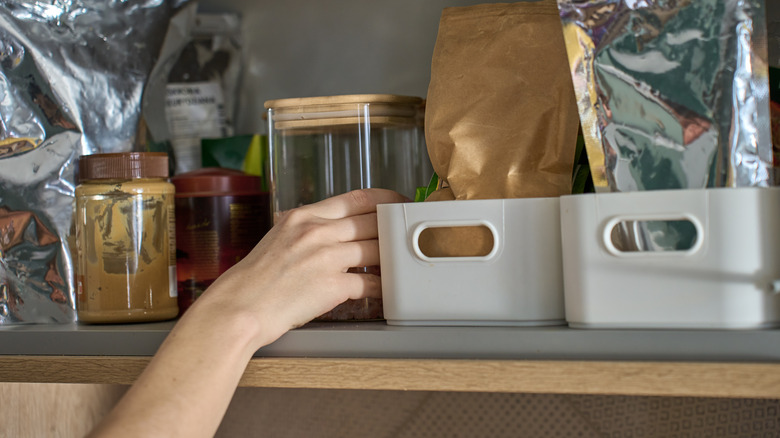
Whether you're installing pantry shelving for purely practical purposes or embracing open shelving to display your prettiest storage containers, solid shelving will always be superior to wire, mesh, or latticework shelving. While mesh and lattice are sturdier than wire, they have many of the same disadvantages in terms of cleaning and stability. That's why shelves made from solid wood or pressed wood coated in melamine are much better choices.
Wood also has the added advantage of aesthetic appeal, and even melamine-coated wood still looks great in colors that coordinate nicely with various kitchen designs. Coordinating shelves will fade into the background of your decor rather than standing out, allowing you to spruce them up a bit with wicker or fabric baskets, and showcase artisanal, shelf-stable items like bottles of wine or beautiful tea tins. Melamine-coated wood is also the perfect material for maximizing your kitchen storage with cubbies, as it's versatile, durable, and inexpensive enough that you can easily create a custom cubby storage system.
Wooden shelves with exposed grain are more expensive and timelessly stylish, making them the best choice for open shelving in kitchens that need an aesthetic focal point. Shelving sets in the form of free-standing hutches are gorgeous in transitional spaces, while floating shelves with raw, unfinished edges work well in more modern and rustic kitchens. Just be sure that any wood you use is well sealed with varnish to protect it from moisture damage and make it a cinch to clean.