

The Chinese Way To Make Bacon Yields A World Of Flavor
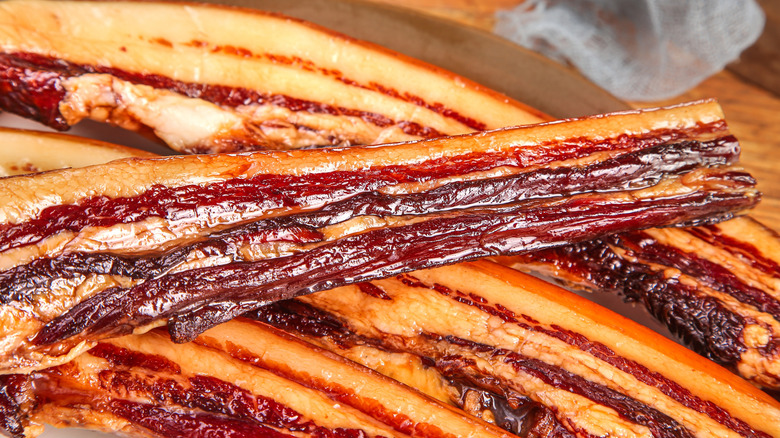
According to the cult-favorite movie "Pulp Fiction," no matter how you make it, "bacon tastes good." Most often cooked on the stovetop in American households, letting its meaty and sweet aromas waft through the house, conventional bacon is a thinly sliced processed pork product that comes from the pig's belly or side. An alternative to this typical sliced bacon is Chinese bacon, which is made from pork belly, or the underside of the pig, and cut in thicker slabs that feature rich bits of meat, a fair amount of fat, and still has the rind (skin) attached. Unlike fresh pork belly (what's the difference between pork belly and bacon?), Chinese Sichuan bacon is air-cured, sometimes with wine or fish sauce, and can even be bought already smoked with warming spices like clove, star anise, and cinnamon.
If you've ever had Chinese fried rice or noodles studded with delectable pieces of sweet and tantalizing bits of pork, you've already tasted the goodness that is Chinese bacon. But, if you've seen Chinese bacon in the grocery store or Asian market, you may be wondering how these juicy and crunchy bits are extracted from a product that seems hard and almost jerky-like. The answer is Chinese bacon must be soaked before cooking. In fact, it takes at least five hours (and up to overnight) to soften the meat and make it palatable.
How to prepare Chinese bacon
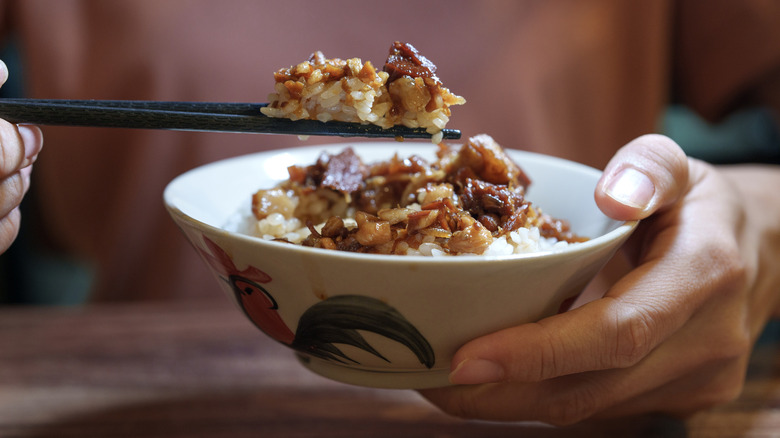
Once your Chinese bacon has been rehydrated, it is ready for its sweet-and-heat glow-up. Cut the softened meat into small pieces, dip them in brown sugar, and bake in the oven. As the bacon fat and brown sugar heat up, they caramelize together in a stroke of pork genius that is similar to glazing your bacon. This method of cooking Sichuan bacon in the oven renders the meat tender while the edges of each piece become slightly crispy.
Traditional sliced bacon can be cooked in the oven in much the same way (either with or without the sugar treatment). Just make sure to follow these tips when cooking bacon in the oven, like starting with a cold oven to force fat out of the meat, lining the baking sheet with parchment, and leaving plenty of room between bacon pieces.
If you are feeling ambitious, you can buy pork belly and cure it yourself, rather than buying pre-made Chinese bacon. This process is actually an annual Chinese tradition done in wintertime to preserve the meat, which is often then served at Lunar New Year. Known as làròu, Sichuan-style wind-cured pork has a long history, spanning more than 2,500 years.