

Ever Wonder How Restaurant Steaks Get Their Crispy Sear? Here's The Trick
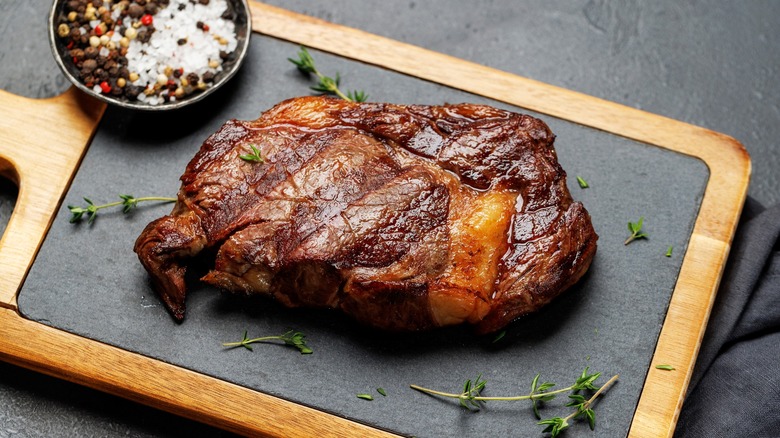
One hallmark of an excellent, restaurant-quality steak is a golden-brown, crispy crust — that thin layer of caramelized, slightly charred beef that deepens the meat's flavor profile while making it feel even juicier through contrasting textures. The moment you hear the sound of a steak searing perfectly on a sizzling pan, you just know that you're going to get a beautiful crust on it. That is, until you rest your steak.
Resting is a crucial step to getting your steaks to their ideal temperature, so it's definitely something you want to do. Residual heat continues to cook the meat when it's off the pan, and cutting into your steak too soon can interrupt this process. Resting, however, can also soften your steak's surface, especially if you make the incredibly common, crust-ruining mistake of tenting it in foil. So how are you supposed to get that restaurant-worthy sear on your steak if the best way to get a perfect cook on it messes up the crisp exterior? A technique known as flashing.
Before serving a steak, many restaurant cooks put their steaks in a hot oven, broiler, or on a grill for a final sear, giving the meat a last-minute dose of the Maillard reaction to basically re-crisp the crust. If you want to cook a restaurant-quality steak at home — especially one with a beautiful sear — make sure to add flashing to your repertoire of techniques.
Why flashing your steak gives it a restaurant-level crust
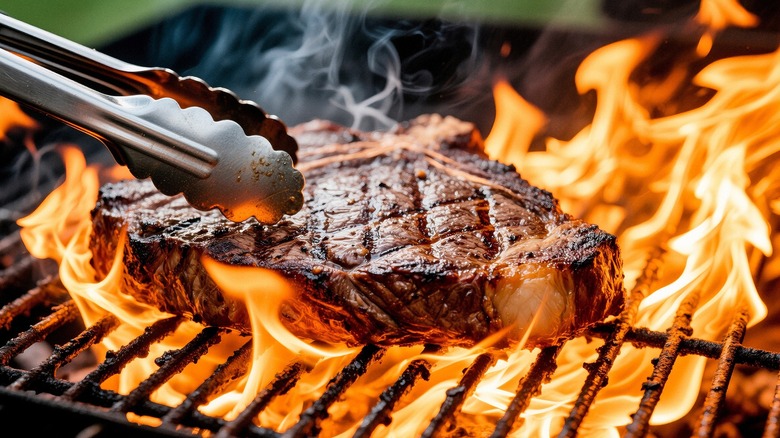
It's all about one of a steak crust's worst enemies: steam. The main reason why it's recommended to pat a steak dry before cooking it is to eliminate as much surface moisture as possible. That moisture will turn into steam as the steak cooks, lowering the surface temperature and preventing a good crust from forming.
When you rest a steak, it continues to steam as the temperature around it slowly drops, softening the crust and creating more moisture on the surface. This is also why you'll notice that the side of the steak closest to the plate often has the worst crust; there's more steam and moisture trapped there. Flashing blasts the surface with enough heat to make up for all these changes, giving you a perfectly crisp sear on your steak.
To really maximize your crust, you can also try resting it on a wire rack or resting board. This allows for better air circulation underneath your steak, which in turn reduces the steam that comes into contact with the crust. It's for this same reason that searing your steaks in an oven can give you a better crust — the better the air circulation, the less moisture sticks to the meat. For the absolute best results, however, you may want to try a relatively new technique for searing steaks: fat-flashing.
Try fat-flashing to get better than restaurant-quality steaks
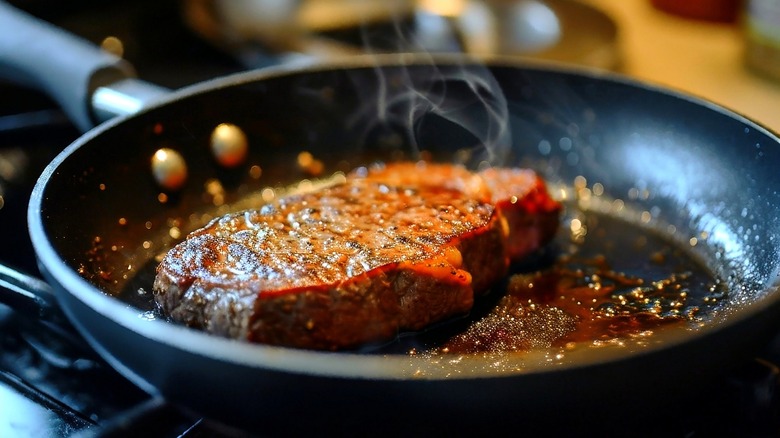
To fat-flash a steak, you want to pan-sear and rest your steak as normal, and then pour the piping-hot leftover fat and juices in your pan over it just before serving. The method, brought to the cooking world's attention by author and culinary consultant J. Kenji Lopez-Alt, heats the steak's crust just enough to re-crisp it without overcooking the beef below the surface. The main difference with fat-flashing is that hot fat works more efficiently than hot air, so there's a lower chance of accidentally overcooking your steak, while also giving the meat an additional boost of flavor thanks to the extra fat on the surface.
The key to doing this technique correctly is to make sure that your oil is hot enough before you pour it over the steak. This way, it's at a temperature that induces the Maillard reaction, however briefly it's in contact with the beef. Just keep in mind that this may not pair well with other steak finishing techniques like lacquering, since the sizzling fat can burn some of the more delicate ingredients you may be using.