

This Is Why Your Pie Crust Shrinks (And What To Do About It)
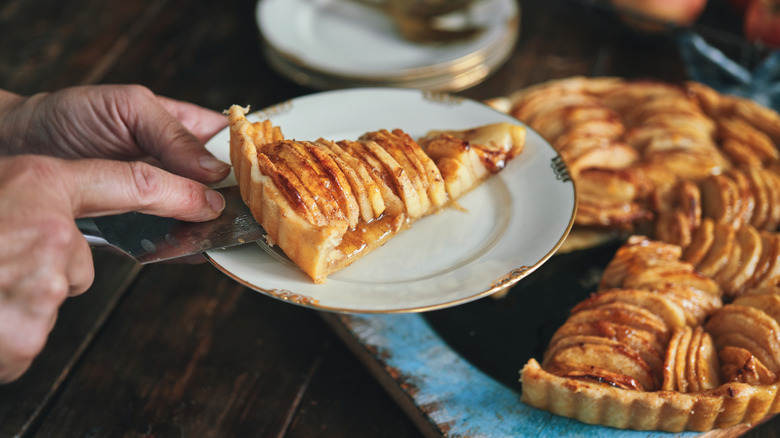
Ah, the joys of baking — a flour-covered counter, a cinnamon-scented fruit filling on the stovetop, and an eager baker ready to delight guests with a warm and aromatic pie. What isn't on this home baking bingo card is a crust that starts out magazine-worthy but somehow ends up looking like a sweater that shrank in the wash. Heat can cause overworked and under-rested pastry dough to shrink in the oven, leaving you with a less-than-ideal filling-to-crust ratio.
You are certain to avoid this unwanted result if you start with a solid recipe and give your crust time to rest and chill before baking. The goal is to craft a pie crust that has the right balance of fat, roughly 60% to 80%, and the minimum amount of water possible to bring it all together. The best fat to use is cold butter because it gives the crust a desirable fork-tender feel — using hot butter is a mistake that keeps you from the flakiest pie crusts. However, butter has a lower melting point than a fat like shortening, so it can seize up during baking. One way to combat this is to use a combination of butter and shortening, which provides greater stability to the finished crust.
A cold, firm crust is a winning crust
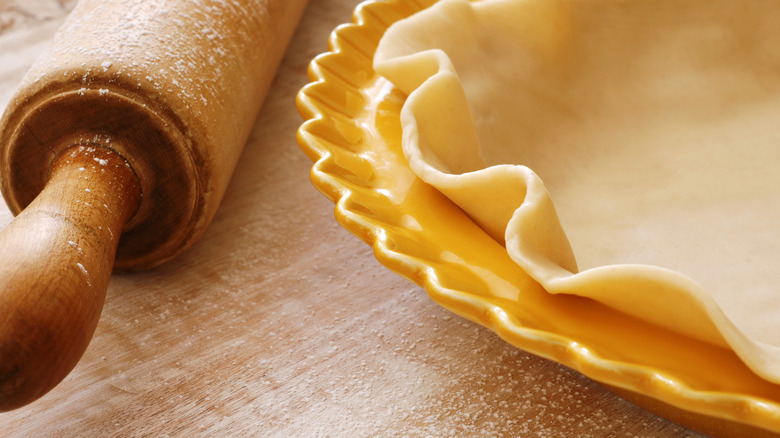
Reliable dough recipe in hand, you may be ready to barrel your way towards pie success, but rushing the process would be a rookie mistake. Temperature, and in this case, making sure your pie-crust is chilled properly in the refrigerator, is going to be your crust's best friend. If you try to fast-track the endeavor by chucking it in the freezer, that would also be a no-go. You want the crust to be as cold as possible but still moist and pliable. The time in the fridge serves two important goals: Letting the gluten in the flour relax and chilling the fat in the crust, which makes the structure more sound.
From there, be intentional with your chilled dough. Use just enough flour to prevent the dough from sticking to the surface, and flatten it with a rolling pin. Leave an ample amount hanging over the pie pan as you press it into place, and chill it in the refrigerator for at least 30 minutes to further safeguard the whole enterprise from shrinking in the oven. Blind-baking pie crusts is another way to ensure a golden, flaky exterior and prevent unwanted sogginess. But if all else fails, you could always call on one of the best store-bought pie crusts to save the day.