

Don't Toss Out That Frying Oil Just Yet — Store And Reuse It Like This
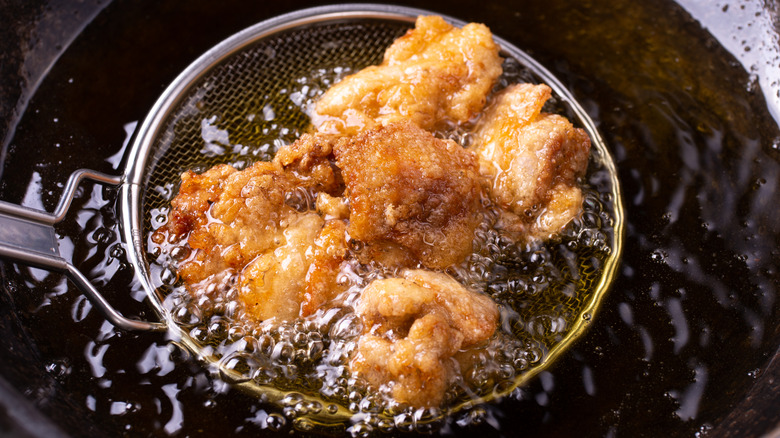
If you're throwing away oil every time you fry food, then you're wasting money. Deep-frying often requires a lot of oil because you need to fully submerge anything you're cooking, so if you do it frequently, the cost of constantly buying oil can add up. One deep-frying mistake you're making is not reusing your cooking oil; instead of tossing it, preserve it.
To properly store leftover frying oil, let the oil fully cool, clean the oil (more on this later), then seal it in an airtight container like a metal tin or glass bottle. It will stay good for several months in the refrigerator, or you can store it in the pantry or a cabinet. The freezer is a good spot, too, where it can last up to two years. Don't defrost it and re-freeze it, though, or you risk water particles getting into the oil, which can lead to bacterial growth. To reuse it, thaw the oil at room temperature prior to adding it to the pan, then deep-fry your food as normal.
Depending on what you're frying and the oil's impurities, you can reuse oil up to eight times. Just beware you might want to label leftover oil so you don't use what you fried fish in to fry donuts in the future. For signs it has gone bad, check the oil's color. If it's darker than it should be, it could be dirty and past its prime. If the oil burns before it reaches its typical smoke point, then the impurities have rendered it too old as well; this also applies if you see the oil foaming as it heats. And finally, note its smell. Any kind of unpleasant odor means the oil should be tossed.
Tips for getting the most out of leftover oil
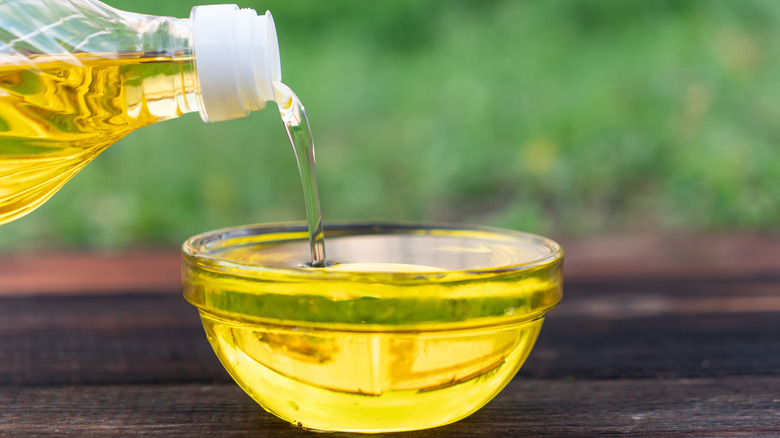
Preserving your frying oil starts with choosing the right oil. When frying foods, choose a neutral oil like canola or vegetable oil because of the high smoke point and neutral flavor (you want to avoid imparting the oil's flavors into the food). After you add your oil to the pan, do not overheat it. If you burn the oil, those fat molecules will break down, changing the oil's small and flavor, meaning your food won't taste the way it should. It's best to keep an oil thermometer in the pan at all times, and adjust the heat as needed.
As food fries, it releases crumbs and particles. Remove these particles as you go so they don't overheat and add a burnt flavor to the oil. To best avoid these crumbs, batter the food instead of flour-dredging or breading it. Once you're done frying, let the oil cool fully, then clean it by removing any remaining bits of deep-fried debris. The best way to do this is by filtering the used oil through a fine mesh strainer. To catch even more impurities, line the strainer with cheesecloth. From there, you can store your leftover frying oil to reuse later.